Island Peak Climbing is one of the most rewarding high-altitude adventures in Nepal for trekkers who want to step into real mountaineering. Standing at 6,189 meters, Island Peak sits in the heart of the Everest region and combines classic Everest trekking routes with a proper summit climb. The journey takes you through famous Sherpa villages, high mountain valleys, and glaciated terrain, ending with a technical but achievable ascent to the summit.
Island Peak is popular because it offers a clear progression from trekking to climbing without demanding extreme technical skills. With a well-paced Island Peak climbing 18 days itinerary, strong acclimatization, and professional Sherpa support, it becomes a realistic goal for fit trekkers who want more than just walking trails. If you are planning your first Himalayan summit, this Island Peak Climbing Package is a proven and reliable choice.
Talk to our local team from Dolpo Caravan Treks to see how we manage logistics, safety, and climbing support from start to finish.
Overview of Island Peak (Imja Tse)
Island Peak is also known by its original name, Imja Tse, a name given before it was renamed Island Peak by early Everest expeditions. The peak lies in the Imja Valley of the Everest or Khumbu region, surrounded by some of the highest mountains in the world.
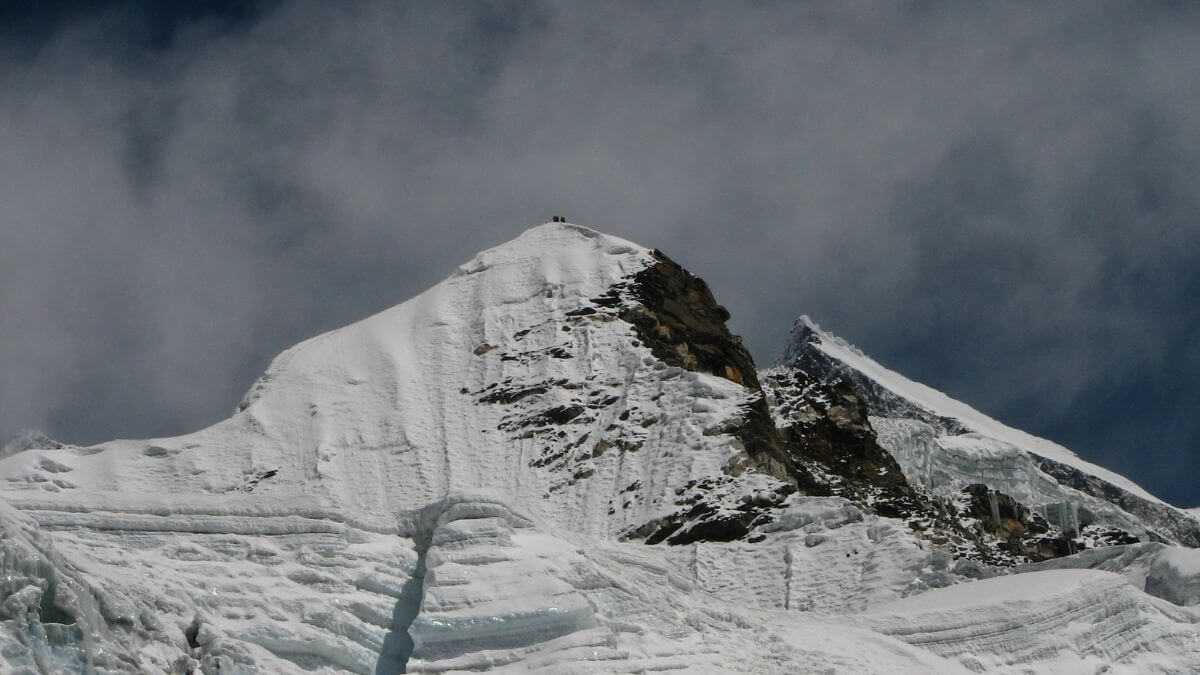
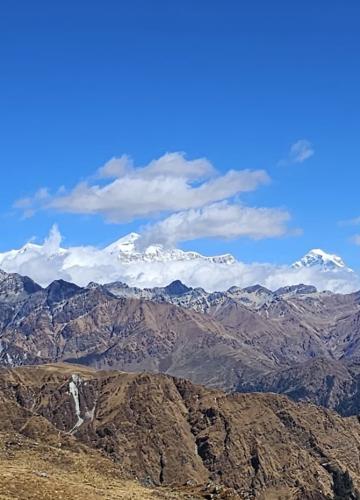
From the trail, Island Peak rises sharply above the surrounding glaciers, framed by Lhotse, Nuptse, Ama Dablam, and Makalu. The climb itself blends long days of high-altitude trekking with sections of fixed rope climbing on snow and ice. This mix makes Island Peak Climbing both accessible and serious, ideal for those who want to experience real Himalayan mountaineering without moving into extreme expedition-style climbing.
Trip Facts – Island Peak Climbing
- Peak Name: Island Peak (Imja Tse)
- Region: Everest / Khumbu
- Maximum Elevation: 6,189 m / 20,305 ft
- Climbing Grade: PD / PD+ (Alpine)
- Trip Duration: 18 Days
- Start / End Point: Kathmandu
- Best Seasons: Spring and Autumn
- Accommodation: Teahouse + Camping
- Maximum Altitude Reached: 6,189 m
- Trekking Style: Lodge trek with camping climb
- Permit Required: Yes
- Fitness Level: Good physical fitness recommended
Island Peak Height, History, and Climbing Classification
Island Peak has an official height of 6,189 meters and is internationally recognized as one of Nepal’s trekking peaks under the Nepal Mountaineering Association. Its alpine grading of PD to PD+ means it involves moderate snow and ice climbing, use of fixed ropes, and basic mountaineering skills without advanced technical difficulty.
Despite being called a trekking peak, Island Peak is a true mountain climb. The classification reflects its accessibility rather than its seriousness. The name “Island Peak” came from its appearance as an island rising from a sea of ice when viewed from Dingboche. The first ascent was made in 1953 by members of a British Everest training team, and since then, Island Peak expedition Nepal programs have played a major role in training climbers for higher Himalayan objectives.
Island Peak Climbing Route
The standard Island Peak Climbing route follows the classic Everest Base Camp trail up to Dingboche before branching off toward Chhukung and the Imja Valley. This approach allows for gradual altitude gain and strong acclimatization.
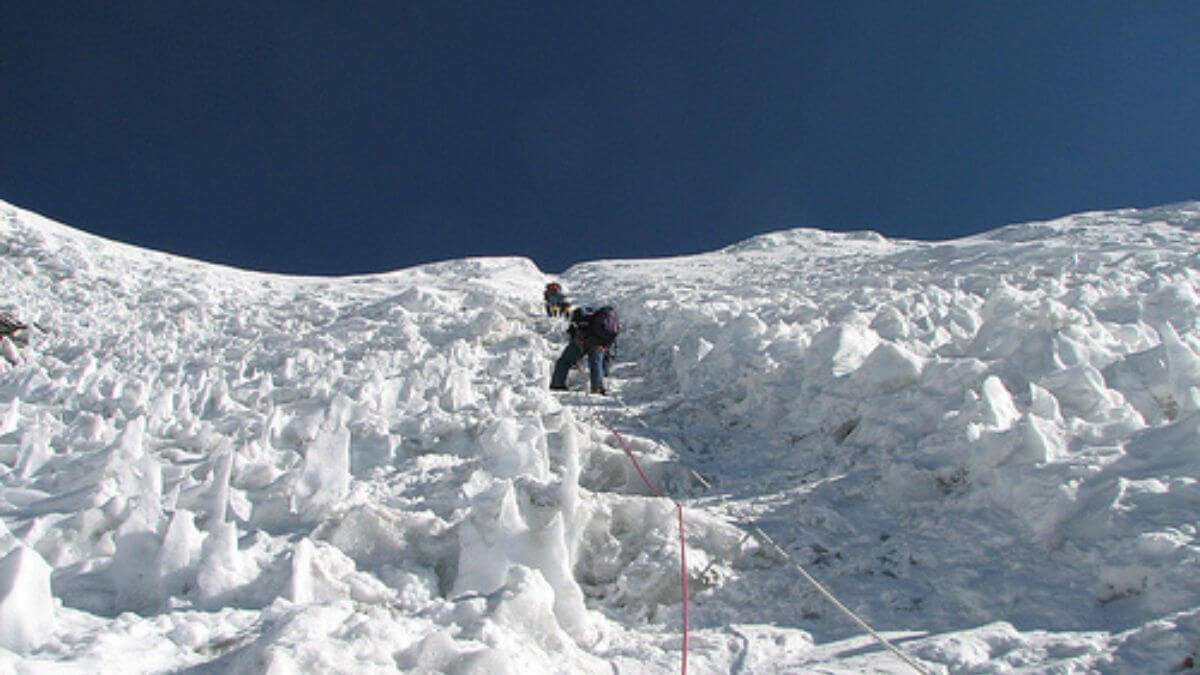
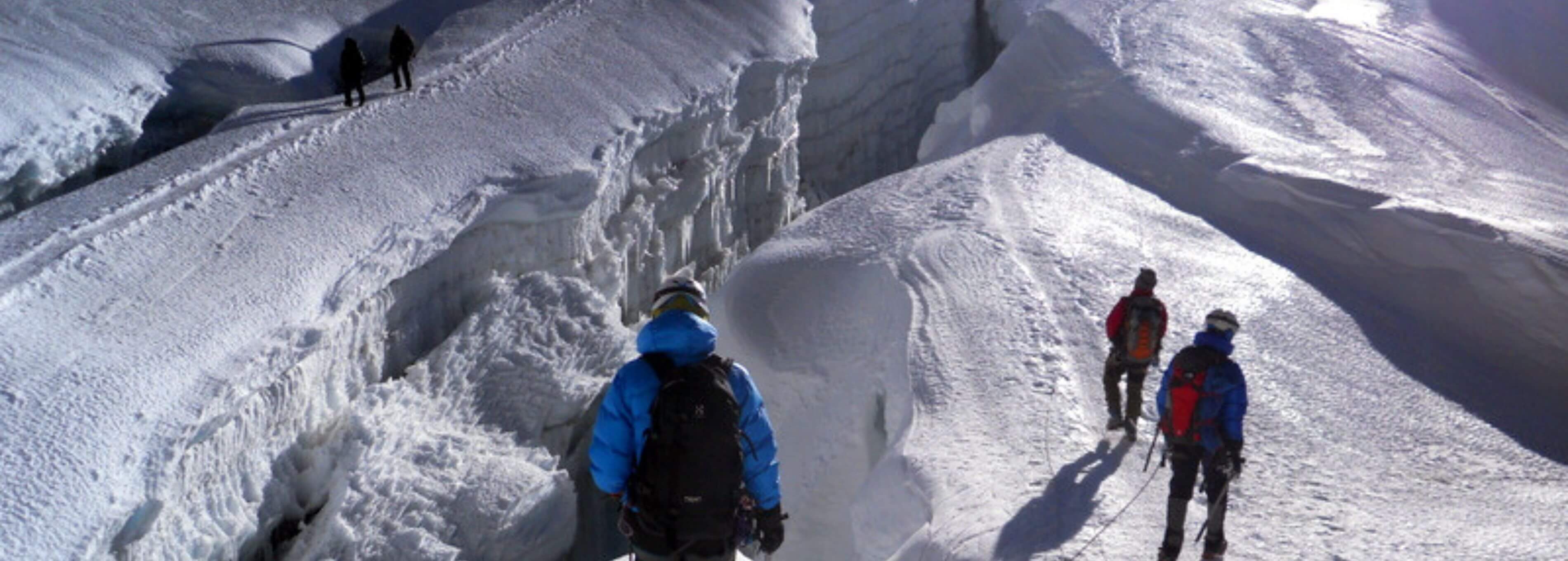
From Chhukung, climbers move to Island Peak Base Camp and then to High Camp, which sits just below the glacier. High Camp shortens summit day and improves safety. The final ascent includes glacier travel, ladder crossings over crevasses, and a steep headwall climbed using fixed ropes, all managed under Sherpa guidance.