
Yarsagumba: The High-Altitude Treasure of Dolpo
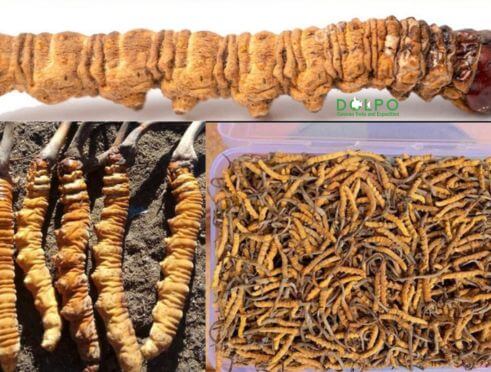
Yarsagumba is a rare and valuable fungus found high in the Himalayas. It grows from an infected ghost moth larva, and the fungus and caterpillar together are known as Ophiocordyceps sinensis.
Dolpo is one of the main places in Nepal where Yarsagumba is collected. For a short period each year, people travel up to the high alpine pastures to search for it. It is expensive because it is difficult to find and collect; the harvesting season is short, and the supply is limited while demand remains high.
The Yarsagumba season also gives travellers a chance to see a part of everyday life in remote Dolpo that is not usually seen during regular trekking seasons.
Quick Answer: Dolpo Yarsagumba♦ What it is: A rare fungus that grows out of ghost moth larvae in the high Himalaya, Dolpo included. |
What Is Yarsagumba?
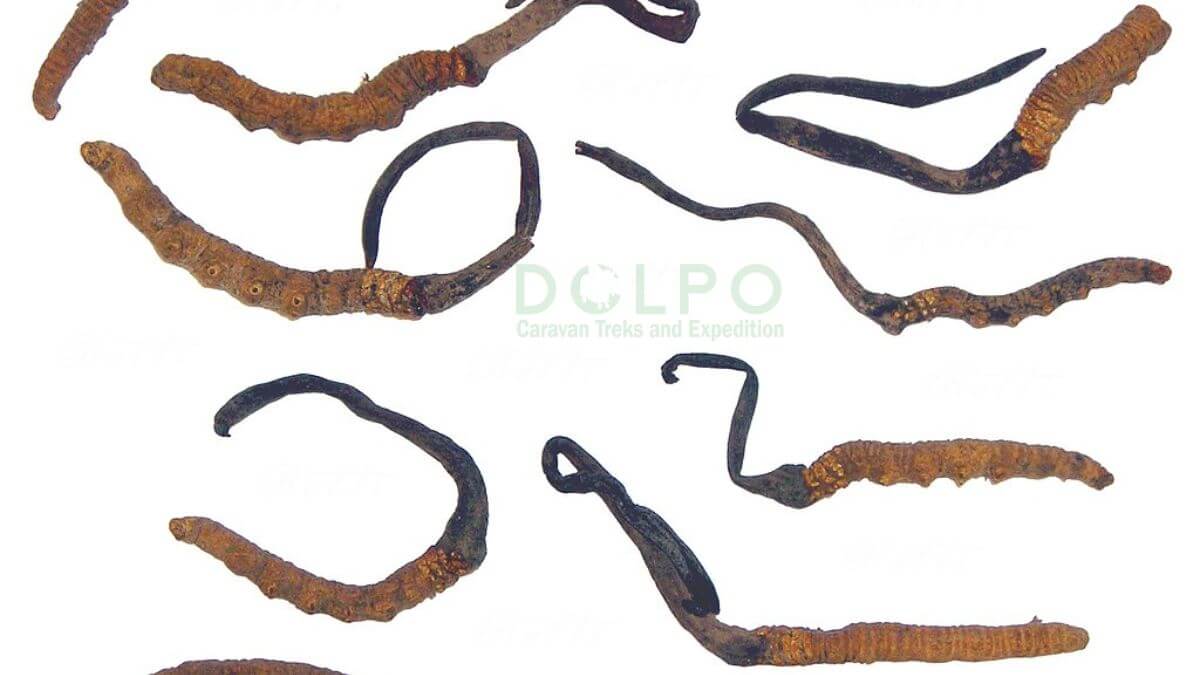
Yarsagumba is the common name for Ophiocordyceps sinensis, a fungus that grows on ghost moth larvae. It lives in cold, high places, mostly in the Himalayas and on the Tibetan Plateau.
The name is usually translated as "winter worm, summer grass." The caterpillar stays underground, and the fungus pushes up through the soil above it.
Here's how it happens:
- The fungus infects the moth larva.
- It grows inside the larva while the insect is still underground.
- The fungus eventually kills and mummifies the larva.
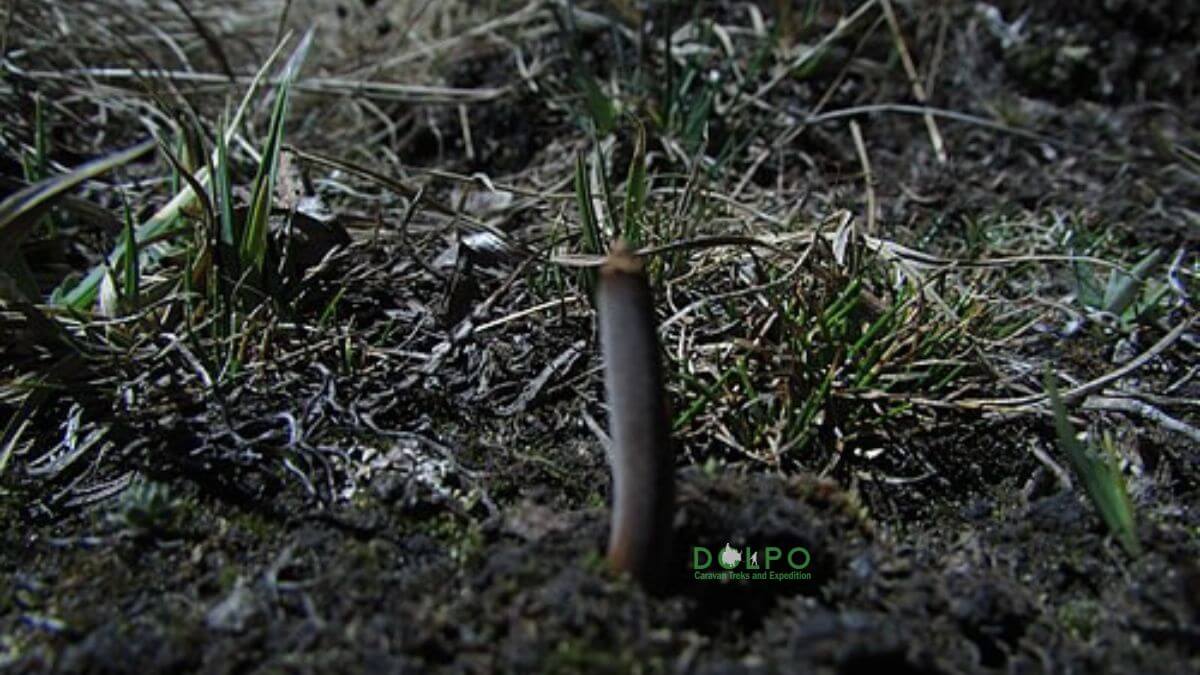
- A dark fungal stalk pushes up out of the ground.
- Collectors pull the whole fungus-caterpillar out of the soil.
That's why it's usually called a fungus-caterpillar complex and not simply a mushroom.
Want to experience Dolpo during Yarsagumba season? Explore Dolpo Caravan Treks to plan an Upper Dolpo or Lower Dolpo trek based on current seasonal conditions.
Where Is Yarsagumba Found in Dolpo?
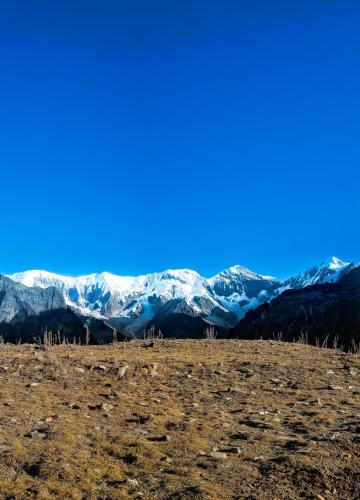
Yarsagumba grows in the high alpine pastures of Dolpo, where the elevation, climate, soil, and host insects suit it. It is mainly found in high-altitude meadows rather than around lower villages or in ordinary forests.
These collection areas are often in remote mountain pastures and can be difficult to reach. Yarsagumba is generally harvested from mid-April to July, with May and June being the main collection months.
Some of the main collection areas are:
♦ Shey Phoksundo National Park meadows
♦ Upper Dolpo valleys near the Tibetan border
♦ High pastures around the Dho Tarap valley
♦ Slopes near Shey Gompa monastery
What Makes Dolpo Region Areas Suitable for Yarsagumba?
For the growth of yarsagumba, the area needs to be high and cold, with alpine grassland, snow that covers the ground for part of the year, the right soil, and ghost moth larvae living in it.
The small stalk also blends into the surrounding grass and soil, so searching is slow. Collectors can spend hours studying the ground to find a single specimen.
Yarsagumba Harvesting in Dolpo
Harvesting is a short seasonal activity. When collection opens, people go up to the high pastures and live in temporary camps while they search.
The official collection period can change from year to year. In 2026, Dolpa opened designated collection areas from May 24 for one month, with different permit fees for local and outside collectors.
When Is Yarsagumba Harvested?
The main season for harvesting Yarsagumba usually falls around May and June. The exact timing depends on local conditions and on decisions by the authorities.
The seasonal pattern is
Snow melts → alpine pastures open → collectors move uphill → Yarsagumba is collected → season closes
If you're planning to visit Dolpo during the season, check the latest local rules and opening dates first.
How Is Yarsagumba Harvested?
Yarsagumba harvesting takes patience. Collectors spend days or weeks in remote high pastures, going over the ground by hand.
Here is the regular process of harvesting Yarsagumba:
- Walk up to the collection area with food, tents, and supplies.
- Scan the ground for the small stalk poking out of the soil.
- Loosen the soil around it and lift out the whole thing.
- Brush off the dirt.
- Dry it before storing.
- Sort it by size, condition, and whether it's complete.
- Sell it to local traders.
What Challenges Do Yarsagumba Hunters Face?
Yarsagumba hunters work in some of the harshest conditions in the Himalayas. They deal with high altitude, cold and unpredictable weather, steep ground, altitude sickness, and long walks. Food and shelter are limited, and medical care is hard to reach. They compete with other collectors for the good spots, never know how much they'll find, and can't count on the price.
There's real financial risk too. Collectors spend money getting to remote areas and staying there for weeks, and nothing guarantees they'll find enough to cover it.
Yarsagumba Benefits and Uses
Yarsagumba has been used traditionally for several health complaints. People have commonly used it for things like weakness, tiredness, and breathing problems.
Some of the traditional uses include:
♦ Helping with weakness and tiredness
♦ Used for breathing-related problems
♦ Traditionally used for kidney complaints
♦ Taken as a general strength or energy tonic
There is also scientific research on Ophiocordyceps sinensis. Researchers have looked at its compounds and their possible effects on the body. Some findings are interesting, but that does not mean all traditional claims have been confirmed.
So, claims that Yarsagumba can cure serious diseases, slow ageing or guarantee better sexual performance should be treated carefully. There is not enough good medical evidence to make those claims as facts.
How to Eat Yarsagumba
Yarsagumba is taken in small amounts, and the preparation is simple. Most people do one of these:
♦ Eat it dry, a little at a time
♦ Drop it into soup or broth while it cooks
♦ Simmer it in hot water and drink it like tea
♦ Soak or simmer it in a drink
♦ Mix it into traditional preparations
What about Yarsagumba Whiskey?
Yarsagumba Whiskey usually means whiskey or another alcoholic drink infused with Yarsagumba. It's a traditional or commercial preparation, not a medically proven treatment.
There's also no universally accepted medical dosage. If you're thinking of taking it for a specific health condition, talk to a qualified healthcare professional.
Yarsagumba Price in Nepal and Why Is It So Expensive?
There's no single price. What a collector gets in the mountains is often different from what a trader pays later in the market, and the price also moves with size, condition, cleanliness, supply, demand, and where it's sold.
In 2026, collectors in Dolpa and other parts of Karnali reported getting about NPR 700 to 1,000 per piece. The year before, reports from Dolpa put it at roughly NPR 2 to 2.4 million per kilogram. These are reported figures, not a fixed market rate.
Two specimens can be worth very different amounts. Buyers tend to look at:
| Factor | Why it matters |
| Size | Bigger pieces usually fetch more. |
| Condition | Whole, unbroken pieces are preferred. |
| Appearance | A good-looking piece can raise the price. |
| Cleanliness | Clean pieces sell better. |
| Supply | A poor harvest pushes prices up. |
| Demand | Strong demand pushes the prices even more. |
| Market | Collectors and traders rarely get the same price. |
The main reason it costs so much is that it's hard to find. It only grows in certain high-altitude areas, and collectors search the ground by hand, often camping for weeks in remote pastures during a short season. Food, transport, and permits add to the cost.
Collectors also don't keep the full selling price. What they actually earn depends on how much they find, what the trip costs them, and what traders offer.
Experience Yarsagumba Season in Dolpo: Late Spring to Early Summer
Yarsagumba season in Dolpo mainly falls in May and June. Once the snow starts to melt, local families head up to the high pastures and stay in temporary camps. Depending on your route, you might pass these camps and alpine meadows or walk through traditional villages.
The dates change each year. In 2026, collection was allowed from May 24 to June 23 in designated areas of Dolpo.
For many local people, yarsagumba collection is an important source of income. If you come across collectors, give them space and follow local rules. Ask before taking photos, stay out of restricted areas, and don't try to collect yarsagumba yourself.
You may not see collectors during your trek. It depends on your route, the weather, and which areas are open that year.
Upper Dolpo Trek in Late Spring to Early Summer
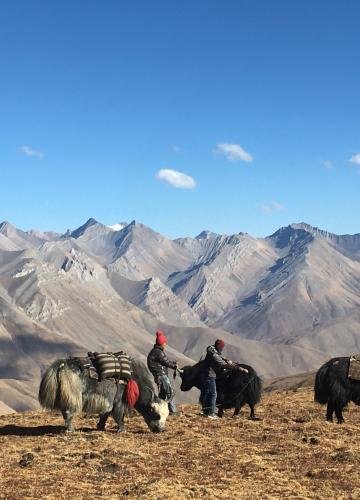
The Upper Dolpo Trek goes into one of the more remote parts of the region. Along the way, you can expect high mountain passes, remote villages, alpine scenery, Tibetan-influenced culture, long trails, and traditional settlements.
Going during Yarsagumba season adds a seasonal element. You may meet communities heading toward collection areas or see how the harvest fits into local life. Access to specific collection grounds depends on current regulations and local conditions.
Lower Dolpo Trek in Late Spring to Early Summer
The Lower Dolpo Trek is another way to see the region. Depending on the itinerary, it can take in mountain villages, forested trails, high passes, alpine landscapes, local culture, and remote Himalayan settlements.
A trek during Yarsagumba season can help you understand the seasonal rhythm of the region as you travel through its landscapes and communities. Don't plan the whole trip around seeing Yarsagumba, though.
Can Tourists Take Yarsagumba Through Airport Customs?
Not easily. Yarsagumba is a regulated Himalayan resource, so collecting, transporting, and exporting it can all need government permits. A receipt from a local seller doesn't mean you're allowed to take it out of the country.
If you can't show the right documents at the airport, customs can stop it or confiscate it. Small amounts aren't automatically exempt either.
Before you travel:
♦ Check the current Nepal export rules for yarsagumba.
♦ Ask the seller for papers that show it was bought legally.
♦ Find out whether you need a separate export permit.
♦ Don't assume a small amount is allowed.
♦ If you can't confirm the rules, leave it out of your luggage.
Choose Dolpo Caravan Treks for a Yarsagumba Season Trek
If you want to see the Yarsagumba season in Dolpo, Dolpo Caravan Treks can plan the trip around the season, route conditions, and local regulations. On a remote trek like this, local knowledge helps, because conditions can change quickly.
A Yarsagumba-season plan can include:
♦ Upper Dolpo or Lower Dolpo routes
♦ Local trekking guides
♦ Permit arrangements
♦ Remote-area logistics
♦ Seasonal route planning
♦ High-altitude preparation
♦ Accommodation and camping arrangements
♦ Respectful interaction with local communities
The point isn't just to find Yarsagumba. It's to see Dolpo during an important time of year while respecting the people, the environment, and the local rules.
Final Thoughts
Yarsagumba is tied to the high-altitude landscape and seasonal life of Dolpo. There's a lot more behind it than its price: the odd life cycle of the fungus-caterpillar and the hard work of collecting it. Its importance in traditional medicine is well established, while modern research is still looking at many of the health claims made for it.
For travellers, the season can also be an interesting and best time to visit Dolpo and see how collecting fits into local mountain life. If you want to go then, an Upper Dolpo or Lower Dolpo trek can be planned around current collection dates, route conditions, and local regulations.
Have questions about trekking in Dolpo during Yarsagumba season? Contact Dolpo Caravan Treks to discuss your route, timing, and current local conditions.
All About Dolpo
Dolpo Region | Dolpo History | Dolpo Himalaya | Dolpo Geography | Dolpo People & Ethnic Groups | Dolpo Flora & Fauna | Bon Religion in Dolpo | Shey Festival | Shey Gompa | Shey Phoksundo National Park | Phoksundo Lake | Dolpo Caravan Trade
Popular Dolpo Trekking Packages
Upper Dolpo Trek | Lower Dolpo Trek | Beni Dolpo Trek | Phoksundo Lake Tea House Trek | Phoksundo Bon Cultural Trek | Mugu Dolpo Trek | Jumla Kagmara Dho Tarap Culinary Trek
FAQs
Who collects Yarsagumba?
Yarsagumba is mainly collected by people from Himalayan communities. In Nepal, collectors travel to high-altitude pastures in places such as Dolpa during the short collection season, usually around May and June.
What are the benefits of Yarsagumba?
Yarsagumba has a long history of use in traditional medicine for weakness, tiredness and other complaints. Research has found compounds such as cordycepin and adenosine in Ophiocordyceps sinensis, but this does not prove all of the traditional health claims.
Can you buy Yarsagumba online?
Yes, some Nepal-based sellers offer Yarsagumba online. If you are buying it, check its stated origin, seller information, and proof of legal sourcing. Availability is also limited because wild Yarsagumba is collected only during a short season.
Is Yarsagumba a fungus or a caterpillar?
Yarsagumba is both the fungus and its infected insect host. Ophiocordyceps sinensis grows inside a ghost moth larva and eventually produces a dark stalk from the larva's head. The dried product is the fungus-and-caterpillar combination.
How many pieces of Yarsagumba are in 1 kg?
There is no fixed number because Yarsagumba pieces vary in size and grade. Smaller specimens can make up more pieces per kilogram, while larger ones make up fewer. For that reason, piece counts should be treated as estimates rather than a standard measurement.
Where is Yarsagumba found outside Nepal?
Yarsagumba, or Ophiocordyceps sinensis, occurs across parts of the Himalayas and Tibetan Plateau. Outside Nepal, it is associated with high-altitude areas of China, India, and Bhutan.
What is in Yarsagumba?
Researchers have identified compounds including cordycepin, adenosine, polysaccharides, sterols, and other bioactive substances in Ophiocordyceps sinensis. Finding these compounds does not by itself prove that Yarsagumba can treat a particular disease.
How can you tell real Yarsagumba from fake?
A natural Yarsagumba specimen normally has the body of a ghost moth larva with a dark fungal stalk growing from its head. The shape, color, and condition can vary, so appearance alone is not a reliable way to confirm authenticity. Laboratory methods can identify Ophiocordyceps sinensis and its host species more reliably than visual checking alone.
What permits are needed to visit Dolpo during the Yarsagumba season?
You’ll need a Shey Phoksundo National Park entry permit and Upper Dolpo restricted area permit. Local guides assist with arrangements.


Leave Your Comment