
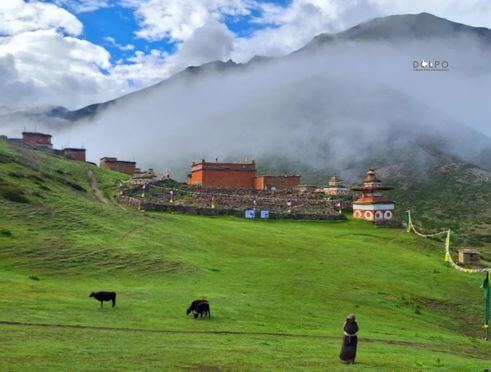
Dolpo Trek Nepal – Dolpa, A Remote Region
Dolpa District, officially the largest district of Nepal with an area of 7,889 square kilometers, lies in the remote northwestern corner of Karnali Province. Enclosed by towering Himalayan peaks and bordering Tibet to the north, Dolpa is a high-altitude region where dramatic landscapes meet centuries-old traditions. Most of the district falls within Shey Phoksundo National Park, Nepal’s biggest national park, which protects rare wildlife such as snow leopards, blue sheep, and Himalayan wolves.
The administrative headquarters is Dunai, but the cultural heartbeat of Dolpa lies in its high valleys like Tarap, Panzang, and Tsharka, where the Dolpo-pa people live a semi-nomadic lifestyle shaped by Bon and Tibetan Buddhist traditions. Because of its extreme isolation, Dolpa remains one of the least developed and least populated districts in Nepal, with around 36,700 residents (2011 census). Trekking routes here, often called Dolpo treks, cross windswept plateaus, turquoise Shey Phoksundo Lake, and ancient monasteries like Shey Gompa, giving travelers a rare chance to step into a world that feels frozen in time.
Dolpo in Nepal is not just a trek, it is a journey/trip into one of the most hidden/secret Himalayan regions. With turquoise Shey Phoksundo Lake, centuries-old Bon monasteries, and the resilient Dolpo people, this remote region offers culture and adventure like no other.
Dolpo is a remote region in northwestern Nepal, famous for Shey Phoksundo Lake, Bon monasteries, and a unique Tibetan-influenced culture. Dolpo is one of Nepal’s best-kept secrets and a hidden place.
Tucked away in the majestic Himalayas bordering Tibet, this mystical trans-Himalayan region offers one of the most authentic cultural experiences in the entire Himalayas.
The Dolpo trek will take you through stunning valleys, clear blue lakes, and ancient monasteries that have stood for centuries. You’ll hear prayers from old Bon monasteries and experience the lively traditions of nomadic people, all part of Dolpo’s rich Tibetan culture.
The Dolpo trek is physically demanding and requires a high level of fitness, experience, and mental resilience due to its remote location, high altitude, and rugged terrain. The trekkers encounter tough passes at an altitude of over 5,000 meters, rocky tracks and unpredictable climatic conditions and proper preparation is the only way to enjoy a safe and rewarding experience.
The friendly and warm local Dolpo people make your trip even more special, turning it into a meaningful cultural journey. Dolpo remains largely untouched by modern development, making it adventurous if you seek something extraordinary. This is why Dolpo isn’t for first-time trekkers!
This guide will help you with the best trekking routes, preparation tips, and insights for the Doplo Trek in Nepal.
Thinking about exploring one of Nepal’s most untouched regions? Start planning your Dolpo trek today with Dolpo Cravan!
Dolpo Facts – Quick Overview
| Fact | Details |
| Location | Northwestern Nepal, bordering Tibet |
| Elevation | You’ll be trekking anywhere between 3,000 and 5,200 meters so get ready for some serious altitude adventures. |
| Best Time to Trek | May to October |
| Trek Duration | 18-30 days, depending on chosen route |
| Difficulty Level | Most Challenging to Extreme Difficcult |
| Daily Permit Cost | USD 20 per week plus USD 5 for each additional day |
| Population | Approximately 36,700 (According to 2011 census) |
| Main Religion | Bon and Tibetan Buddhism |
| Famous Attractions | Shey Phoksundo Lake, Crystal Mountain, authentic Tibetan culture |
| Area Size | About 7,889 square kilometers |
| Language | Tibetan dialects and Nepali |
| Conservation Status | Mostly inside Shey Phoksundo National Park, largest in Nepal |
Overview of Dolpo
Dolpo is a remote and mountainous area in western Nepal, near the border with Tibet. It is famous for its rugged Himalayan landscapes, deep valleys, tall mountains like Dhaulagiri, and rich culture. Much of Dolpo is inside Shey Phoksundo National Park, Nepal’s largest protected area, known for the beautiful Phoksundo Lake and rare animals like snow leopards and musk deer.
The region has four main valleys: Tsharka, Tarap, Panzang, and Nangkhong, where Tibetan-influenced people live semi-nomadic lives. They follow Bon and Tibetan Buddhism and move between high pastures in summer and valley villages in winter. Because Dolpo is hard to reach and surrounded by high mountains, it has kept its ancient Tibetan culture and traditions very well. With fewer tourists than other places like Everest or Annapurna, Dolpo offers a special experience if you want to see authentic culture and untouched nature and beauty of Nepal.
Historical Background of Dolpo
Dolpo's history is deeply rooted in Tibetan migration and the Bon religion, making it one of Nepal's most culturally unique regions. It was ruled by various kingdoms, including the ancient Tibetan empires, the 14th-century Kingdom of Lo (Mustang), and finally united under Nepal in 1789. Its strategic location along historic trade routes between Tibet and the Indian subcontinent has significantly influenced its culture for over a millennium.
Dolpo was first mentioned back in the 8th century. The Tibetan Yarlung dynasty dominated the region between 6th-8th centuries. And shaping Dolpo's distinct culture through a blend of ancient Bon beliefs, Nepalese customs, and Tibetan influence. This rich history is reflected in the language, religion, and way of life of the Dolpo people.
Dolpo was recognized for the first time in the world through Peter Matthiessen's 1978 book "The Snow Leopard," which recounts his 1973 journey to the region with biologist George Schaller, capturing its serene beauty. Additionally, the 1999 film "Himalaya" (also known as Caravan), the first Nepalese movie nominated for an Oscar, showcased the traditional lifestyles of local people, particularly their yak caravans, further promoting Dolpo's rich culture.
Dolpo Geography and Natural Landscape
Dolpo is located in Shey Phoksundo National Park in northwestern Nepal near Tibet. This area is a dry high desert terrain similar to the Tibet Plateau. It includes a rugged terrain of deep valleys, towering peaks, and alpine meadows supports rare wildlife. And some of unique cultural heritage that will make it a memorable destination to be explored on the adventurous trekking destination.
Terrain and Topography
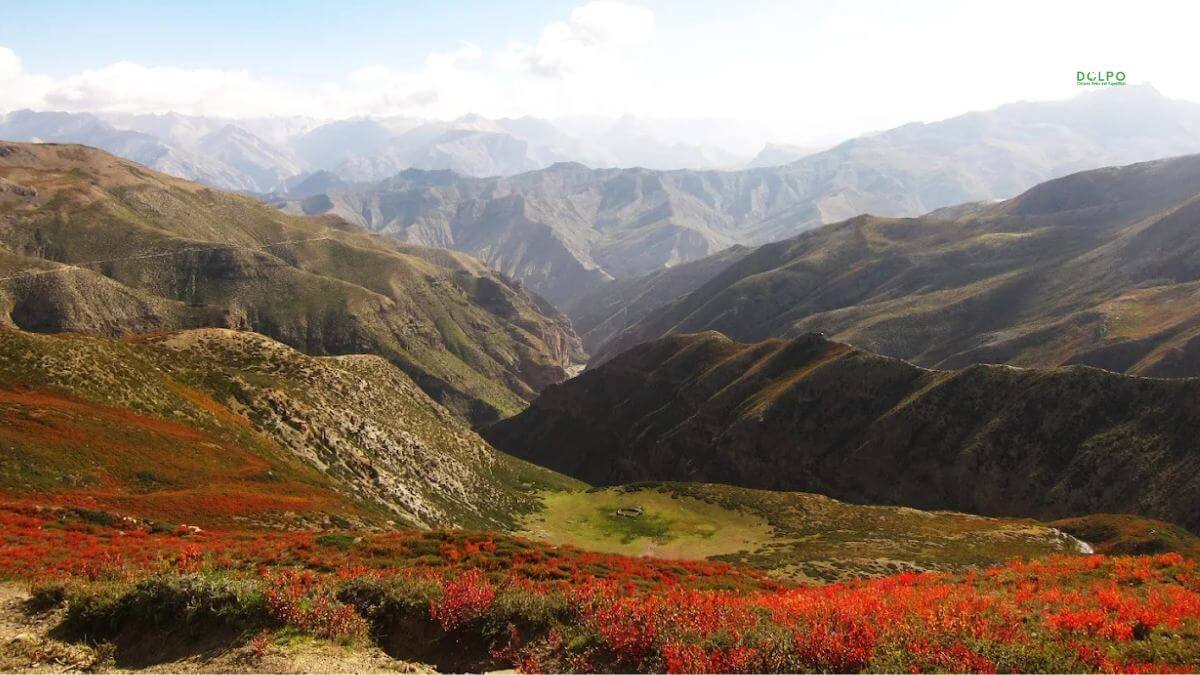
Dolpo has a high altitude dry desert environment containing deep valleys and mountains compared to the usual lush green valleys and mountains in Nepal. It is located in a rain shadow, with yearly receiving below 500 mm (20 inches), like in Tibet and Ladakh This arid environment supports unique plants and wildlife adapted to harsh conditions.
The Dolpo region is geologically shaped by glaciers and consists mainly of sedimentary rocks. Landscapes vary from deep river gorges and narrow canyons to high alpine meadows and open, windswept plateaus. Trekkers face a mix of challenging terrains: steep mountain passes, exposed ridges, and winding valley trails. The varied terrain and stunning views make trekking in Dolpo a memorable and unique experience.
Lower Dolpo vs Upper Dolpo
| Feature | Lower Dolpo | Upper Dolpo |
| Elevation Range | Lower valleys and mid-altitude areas (approx. 3,000–4,000m) | High-altitude plateaus and valleys (4,000–5,200m+) |
| Terrain | Gentler valleys, forests, and moderate hills | Rugged mountains, high passes, alpine meadows |
| Climate | Relatively milder with more vegetation | Harsh, cold, and arid with sparse vegetation |
| Major Valleys | Tarap Valley, Shey Phoksundo Lake area | Tsharka, Panzang, Nangkhong valleys |
| Landscape Features | Forested areas, river valleys, farmland | Glacial valleys, steep cliffs, high mountain plateaus |
| Human Settlement | Larger, more accessible villages | Smaller, more remote and scattered high-altitude settlements |
Major Mountains and Passes
- Numa La Pass (5,309m) - Often considered the most challenging pass on the Upper Dolpo circuit, offering spectacular views of the surrounding peaks and valleys.
- Baga La Pass (5,070m) - A technically demanding crossing that connects the Tarap Valley with the inner sanctum of Upper Dolpo.
- Kang La Pass (5,115m) - Known for its prayer flags and spiritual significance, this pass provides access to the sacred Shey region.
- Crystal Mountain (5,365m) - The mountain has a deep spiritual significance to the people rather like Kailash in Tibet. Pilgrims encircle Crystal Mountain, but not in the numbers, you'd see for Kailash.
These passes are not just simple geographical features but means of spiritual communication and are usually marked with prayer flags and grant panoramic views that motivate one to take the difficult challenges of climbing these mountains.
Rivers and Lakes
Shey Phoksundo Lake is the most beautiful and important natural feature in Dolpo. Located high up at 3,611 meters, it is Nepal’s deepest lake and stretches almost 5 kilometers long. People who follow Bon and Buddhist religions see the lake as sacred. Its clear blue-green color comes from minerals and glacial sediments, making the water look like a clear mirror that reflects the surrounding mountains.

The rivers in Dolpo, like the Suligad River and Tarap Khola, have shaped the deep valleys found throughout the region. These rivers are very important because they provide water for the small villages and settlements that live in this dry and rugged area.
Shey Phoksundo National Park
Shey Phoksundo National Park is known as the largest national park of Nepal. It was established in 1984 and covers 3,555 square kilometers. It shelters Dolpo high altitude ecosystem together with its culture systems such as the ancient monasteries as well as traditional settlements.
Flora:
- Vegetation ranges from temperate forests with juniper, pine, and birch at lower elevations to alpine meadows with medicinal herbs.
- More than 200 plant species can be found, including a few in which the plants are endemic to the area Others include 155 flowering plants, 275 bryophytes, 205 ferns, 41 conifers and 98 other species
Fauna:
- The park is home to elusive wildlife like the snow leopard, though sightings are very rare.
- Blue sheep (bharal), the main prey of snow leopards, are more commonly seen on rocky slopes.
- Other notable animals include Himalayan wolves, musk deer, and various high-altitude birds such as the Himalayan snowcock and golden eagle.
Dho Tarap Monastries
Dho Tarap Valley has old monasteries where people follow Tibetan Buddhism. These places are important for local people’s spiritual life and keep old traditions alive. Visitors can see prayers and quiet, peaceful surroundings.
Panzang Valley
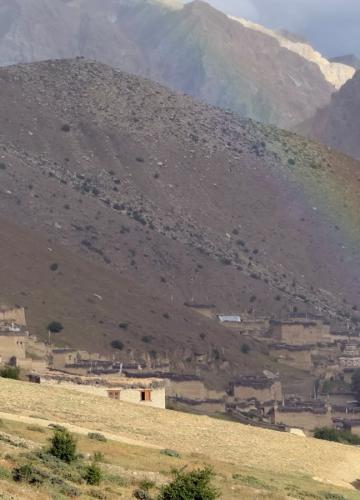
Panzang Valley is one of Upper Dolpo’s main valleys with beautiful, rugged landscapes. People live in traditional villages and farm in this high mountain area. The valley shows how locals live in harmony with nature.
Chharka Pass
Chharka Pass is a high mountain path at about 5,050 meters. It connects different valleys and gives amazing views of the mountains. It is the important trekking route. Crossing this pass is hard and takes physical strength and experience with high altitude.
People and Culture of Dolpo
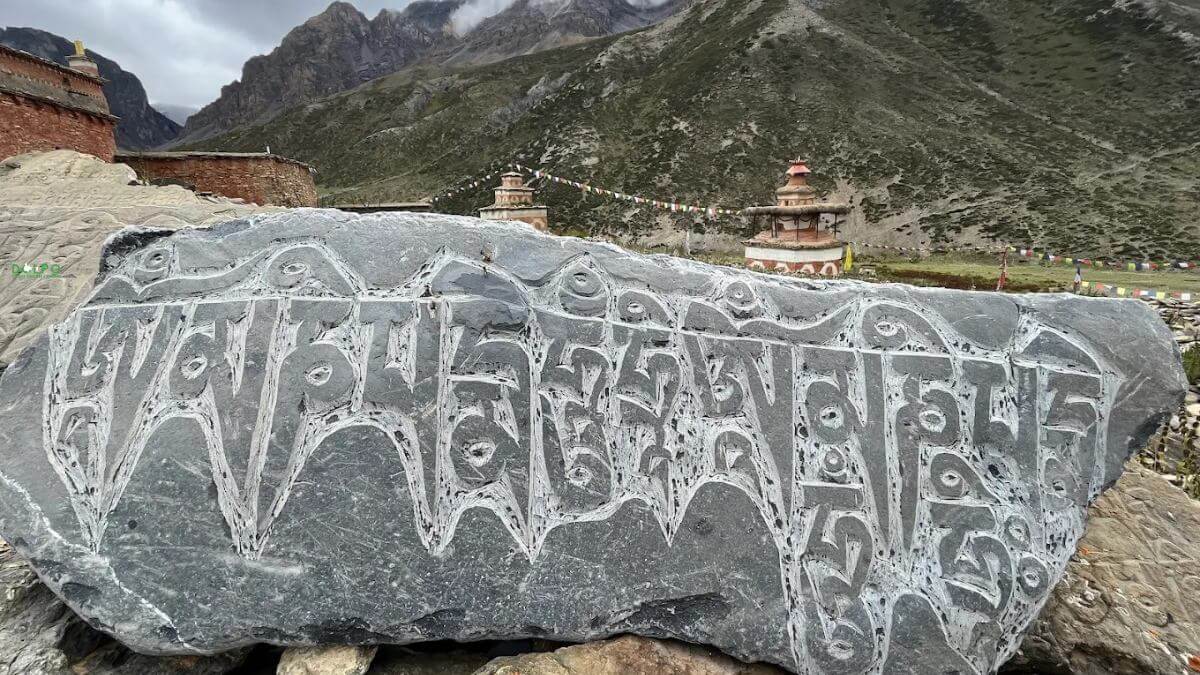
The Dolpo people have preserved their old Tibetan culture for hundreds of years in one of the toughest places on Earth. They practice Buddhism and the ancient Bon religion and move with their yaks and sheep between villages and high mountain pastures depending on the season. Even though they face modern problems like climate change and being far from towns, they keep strong family ties and traditions. Visitors can see a true and unique way of life in the Himalayas.
Dolpo People
Dolpo-pa are the people of Dolpo, numbering about 36,700 as per 2011 census. Most Dolpo-pa follow Buddhism and are of Tibetan descent. They live in high-altitude, remote villages separated by long trekking routes. Major villages include Saldang, Ringmo (near Phoksundo Lake), and Dho Tarap Valley.
Dolpo way of life relies on agriculture, herding of animals and trade. A large number continue living a semi-nomadic lifestyle, shifting between winter houses and summer fields. They experience modern problems like limited healthcare, education, climate change, and fewer traditional trade opportunities. Tourism is increasing, offering economic benefits but yet there are difficulties in how to maintain their culture.
Religion and Tradition
The Bon religion is older than Buddhism in Tibet and has its own special practices, symbols, and rituals. Some of the ancient texts and rituals that have been lost in other regions of the world have been preserved in Bon monasteries such as Samling Monastery found in Dolpo. Bon focuses on living in harmony with nature and has unique traditions, such as walking around sacred sites in the opposite direction to Buddhist customs.
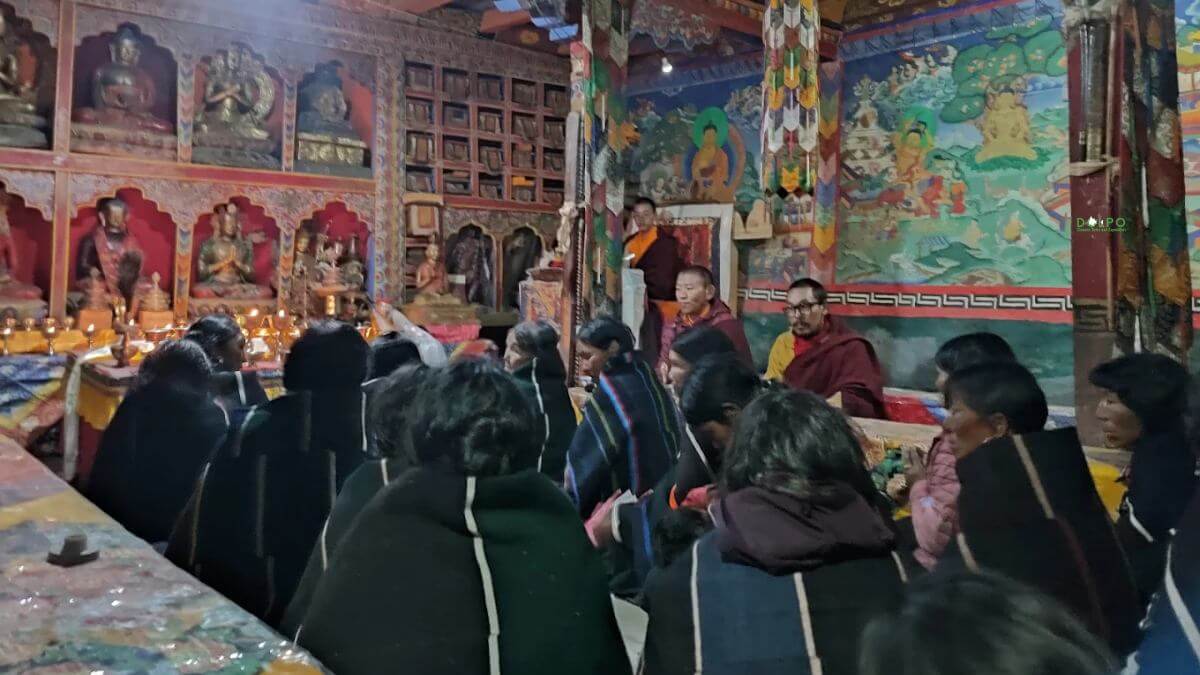
Tibetan Buddhism is also very important in Dolpo, with monasteries like Shey Gompa near Crystal Mountain being popular places for pilgrims. The mix of Bon and Buddhist traditions in the area creates a special spiritual feeling that many visitors find very moving.
Festivals and Rituals
Shey Gompa Festival represents Dolpo's most significant religious celebration, occurring once every 12 years during the Year of the Sheep according to the Tibetan calendar. It last was in 2014 (next in 2026).
This rare festival draws pilgrims from across the Tibetan cultural sphere and offers visitors an incredibly rare glimpse into centuries-old traditions.
Yartung Horse Festival celebrates the region's equestrian culture and typically occurs in late summer. Local riders demonstrate traditional skills while communities gather for rare social celebrations in this sparsely populated region.
Recommended Read: Shey Gompa (Shelri Dugdra)
Daily Life in Dolpo
The Dolpo people focus on surviving tough high-altitude conditions with a seasonal migration lifestyle called samadrok. Theymove between lower villages and high mountain pastures (4,000–5,000 meters) depending on the season.
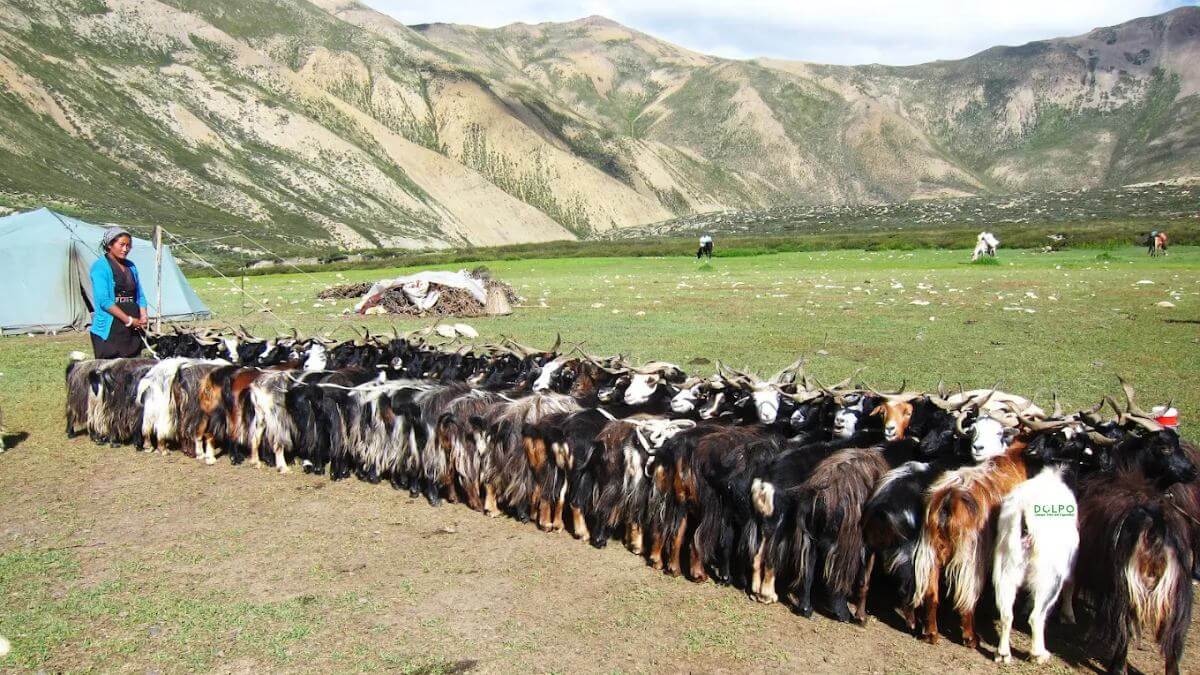
Traditional jobs include yak and sheep herding, barley and buckwheat farming, salt trading, and handicrafts like weaving and metalwork.
They spend winters in lower villages, warming by fires, repairing tools, and spinning wool and summer in high pastures, grazing animals, harvesting medicinal plants, and preparing for winter.
Their daily life is challenging due to extreme altitude, harsh weather, and isolation, making fuel, water, and warmth hard to find. Dolpo people have strong community bonds, rich oral traditions, and a deep connection to nature, inspiring visitors.
Want to witness centuries-old Bon monasteries and Tibetan-style villages? Dolpo Caraven offers Dolpo Trek. Contact Now
Trekking in Dolpo Nepal
Trekking in Dolpo takes isnot a beginner friendly circuit. This remote region offers everything from challenging high-altitude circuits to simple cultural routes from Nepal's all crowded trails. Whether if you are seeking for spiritual experiences at ancient monasteries or wild mountain adventures, Dolpo provides the authentic experience of a lifetime.
Upper Dolpo Trek
The Upper Dolpo Trek is a 25-30 day journey through one of the most remote and culturally rich areas in the Himalayas. It crosses high mountain passes, ancient villages, and shows deep Tibetan Buddhist culture.
Route Highlights:
- Shey Phoksundo Lake, Nepal’s deepest and most beautiful alpine lake.
- Crystal Mountain, a sacred pilgrimage site with 360-degree mountain views.
- Shey Gompa, an ancient monastery complex with centuries of history.
- Multiple high passes above 5,000 meters offering amazing Himalayan views.
- Traditional villages that feel like stepping back in time.
- The trek involves crossing tough passes such as Kang La (5,115m), Sela La (5,094m), and Ngadra La (5,375m).
- It is a moderate to challenging trek that tests physical and mental strength.
- Most days include 6-8 hours of walking with steep climbs and descents.
- This trek requires good fitness and previous experience with high altitudes it's not suitable for beginners.
Wondering about difficulty, learn on the blog "How Difficult is Upper Dolpo Trek?"
Lower Dolpo Trek
The Lower Dolpo Trek is an easier way to explore the region while still enjoying authentic culture and beautiful nature.It takes 18-21 days and focuses on the southern part of Dolpo, including Shey Phoksundo Lake and Tarap Valley villages.
Route Highlights:
- Shey Phoksundo Lake and its surrounding forests.
- Ringmo village and its Bon monastery.
- Dho Tarap Valley is one of the world's highest valleys where people live year-round.
- Traditional farming communities and ancient monasteries.
- Some high passes to cross are lower and less complicated than those on the Upper Dolpo trek.
- Lower Dolpo requires fewer permits and costs less than the Upper Dolpo trek.
- It is physically easier and well-suited for trekkers with moderate high-altitude experience.
- Provides an authentic cultural experience while being more accessible for many trekkers.
Other Dolpo Treks & Variants
You can connect the Dolpo trek with these other treks.
Mugu Dolpo Trek Via GHT
This Mugu Dolpo Trek Via GHT trek route links Dolpo with the remote Mugu district using parts of the famous Great Himalaya Trail. It passes through rarely visited valleys, offering trekkers an amazing chance to experience wild, untouched nature and strong feelings of isolation. It’s perfect for adventurers who want to explore off-the-beaten-path areas and see rarely seen landscapes and wildlife.
Dolpa Three Pass Trek
This Dolpa Three Pass trek is a tough circular trek that crosses three high mountain passes. Along the way, trekkers visit important cultural sites in Dolpo. This trek is suited for experienced hikers who want a mix of serious physical challenge and deep cultural immersion in remote Tibetan-influenced villages.
Dhorpatan Dolpo Trek Via West Dhaulagiri
This adventurous trek comes into Dolpo from the south, going through the Dhorpatan Hunting Reserve. Trekkers can enjoy unique wildlife viewing (including rare animals) and see Dolpo from a different geographical perspective. It’s ideal for those who want to combine trekking with nature and wildlife exploration.
Explore our package Page: Dhorpatan Dolpo Trek Via West Dhaulagiri
Dolpo Jomsom Trek
This Dolpo Jomsom Trek connects Dolpo with the famous Annapurna Circuit trek via Jomsom. It offers a fascinating cultural comparison between the developed part of Annapurna, filled with tourism resources and equipment and Dolpo which is still pure wilderness. This trek suits trekkers interested in diverse experiences from more accessible routes to remote wild areas.
Inner Dolpo Trek
This Iinner Dolpo trek is the most restricted and most difficult trek, reaching the core Dolpo areas close to the Tibetan border. It is expedition-style, requiring special permits and lots of planning and support. Trekkers here experience the most remote and traditional parts of Dolpo, often inaccessible to casual visitors. It is recommended only for highly skilled and well-prepared trekkers.
Practical Information for Dolpo Trekkers
Trekking in Dolpo requires serious training and practice in high altitude and in fitness. With strict permits, extreme weather, and challenging terrain, it is one of the Nepal's of-the-beaten-path adventures. To more seasoned hikers, the pay-off is an unmatched hike through the pristine sceneries of another time.
Dolpo Trek Difficulty
Dolpo isn’t your average trek it’s tough, remote, and wildly rewarding if you’re up for the challenge.You've got to be keen to want to go to Dolpo. Trekkers from Ladakh will be interested a similar culture and location. It's a trek for people who've trekked elsewhere in the Himalaya. It's not a trek for first-timers. Trekking in Dolpo is very hard and best for experienced hikers.
It’s similar to trekking in places like Ladakh, so those who have been there might enjoy it. It’s not a good choice for people doing their first trek.
Physical Challenges:
- You have to cross very high mountain passes over 5,000 meters, some of which require climbing skills.
- Trekking days are long, often 8 hours or more.
- It is a high altitude and one has hardly time to acclimatise.
- Weather can change quickly with storms and cold temperatures.
- There is no simple aid to be found in the case of emergencies since the place of residence is highly remote.
Technical Challenges:
- Trails are not always clear, and you may cross glaciers.
- Rivers have to be crossed without bridges.
- You will camp on rocky, uneven ground.
- You need to carry everything yourself for many days without places to restock.
What You Need:
- You should have done other big Himalayan treks like Everest Base Camp before.
- You need to be very fit and have experience trekking in high mountains (above 4,000 meters).
- You should be mentally ready to be alone and face tough conditions for a long time.
Due to Dolpo’s high passes (above 5,000m), trekkers should carry Diamox and trek with a licensed guide for safety.
Permits and Restrictions
Dolpo is a restricted area, so getting permits is complex and costly.
| Permit Type | Cost | Region |
| Upper Dolpo | $500 (10 days) | Restricted area |
| Lower Dolpo | $20/week | General trekking |
- Special rules:
- Minimum group size is 2; solo trekking is not allowed.
- A licensed guide is mandatory for the entire trek.
- Before you lace up your boots, you’ll need to grab a special permit in Kathmandu it’s not a trek you can just show up for
- Police checkpoints will check permits several times along the route.
- Permit processing:
- Allow 2-3 days in Kathmandu for permit processing.
- Dolpo Caravan helps apply, but you must be in Kathmandu for final approval and photo.
Contact Dolpo Caravan Treks to arrange your Dolpo permits hassle-free. Book Your Dolpo Trek Nepal Now!
Cost of Dolpo Trekking
Trekking in Dolpo is one of the most expensive adventures in Nepal because it is remote and has special permit rules.The total cost usually ranges from $2,000 to $3,500 per person.
| Expense Category | Estimated Cost (Per Person) |
| Permits | $200 - $400 (depending on duration) |
| Flights (Kathmandu - Nepalgunj - Juphal and return) | $300 - $500 |
| Guide Fees | $30 - $35 per day |
| Porter Fees | $20 - $25 per day |
| Camping Gear Rental | $15 - $25 per day |
| Food | $25 - $35 per day |
| Total Budget | $3,000 - $5,000 (Upper Dolpo)/ $2,000 - $3,500 (Lower Dolpo) |
Money-Saving Tips:
- Join group trips to share costs like guides and porters.
- Travel in less busy seasons for lower prices.
- Rent trekking gear in Kathmandu instead of bringing expensive international equipment.
- Choose the Lower Dolpo trek if you want a cheaper but still great experience.
The overall cost varies seasonally due to factors like:
- Flight prices (Pokhara-Jomsom flights might be more expensive or less frequent during out-of-season, or during poor weather)
- Gear rentals (winter gear, crampons and sleeping bags could be necessary and rented at additional charge)
- Discounts or surcharges based on peak or off-peak tourism seasons
- Accommodation rates, which can rise during festivals or peak months
- Permit fees remain constant, but local transportation and guide fees may fluctuate
- Seasonal weather can impact the availability and price of services, requiring contingency budgets for potential delays or equipment.
Best Time to Trek Dolpo
Dolpo's extreme altitude and continental climate create a narrow window for safe trekking.Dolpo’s high altitude and harsh climate mean trekking is only safe during a short time each year.
| Month | Avg Temp | Trekking Suitability |
| Apr-May | Mild, 10–15°C | Best time, clear skies |
| Jun-Aug | Monsoon, heavy rain | Not recommended |
| Sep-Nov | 8–12°C | Peak season, festivals |
Weather Notes:
- Temperature can change by more than 30°C (54°F) between day and night.
- The weather can change suddenly, so plans must be flexible.
- Strong winds above 4,500m can be dangerous.
For the best Dolpo trekking Nepal experience, travel between May and October.
To learn more in detail, read the blog "Best Time To Trek in Dolpo".
Here is a short month-by-month guide for the best time to travel in Dolpo, Nepal:
- January - February: Very cold, heavy snow, difficult trekking, very few visitors.
- March: Snow melts in lower areas, chilly, early rhododendron blooms begin.
- April - May: Best spring trekking months; mild weather, blooming flowers, clear skies.
- June - August: Monsoon with moderate rain but less than other regions (rain shadow); fewer tourists, lush greenery, occasional slippery trails.
- September - October: Best autumn trekking months; clear skies, stable weather, vibrant landscapes, festivals, good mountain views.
- November: Cooler, possibility of early snow, fewer tourists, trails still accessible early in the month.
- December: Winter sets in, freezing temperatures, snow blocks high passes, trekking challenging.
Best overall months: April, May, September, and October for mild weather, clear views, and accessible trails.
Access and Transportation
Reaching Dolpo requires careful planning and involves multiple transportation modes. It takes two flights to get to Dolpo. You fly from Kathmandu to Nepalganj (on the Indian/Nepal border) and to the airstrip at Juphal the following day. An hour later, you're on the trail.
Standard Route:
- Kathmandu to Nepalgunj: 1.5-hour flight on domestic airlines
- Nepalgunj to Juphal: 20-minute flight on small aircraft (weather dependent) 2-3 hour walk to district headquarters
- Trek Beginning: From Dunai, proper trekking begins
Recommended read: How to get to Dolpo from Kathmandu? and How do I go to Dolpo from Pokhara?
Alternative travel options include:
- Taking a 10-12-hour bus ride overland from Kathmandu to Nepalgunj.
- Using different airstrips depending on the planned route.
Important flight notes:
- Weather may delay the flights, and this can be experienced during rainy season (monsoon season).
- The luggage weight of small planes is limited strictly
- Plans may be interrupted by cancellations of flights.
- It’s best to book flights well ahead, especially during busy trekking seasons.
Accommodation in Dolpo
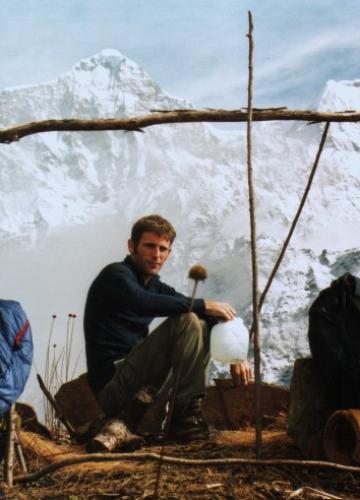
Unlike popular trekking regions with established tea house networks, Dolpo requires full camping expeditions throughout most of the route. We won't be staying in lodges, we will be camping, so there'll be plenty of time to visit the villages and settlements.
- You need full camping gear like tents, sleeping bags, and cooking equipment.
- A professional camping team sets up tents, prepares food, and carries gear.
- Campsites are chosen near water, sheltered from wind, and with beautiful views.
- Managing waste properly and following Leave No Trace rules is very important.
- Few lodges are available, mainly basic ones in Dunai and some larger villages.
- Simple lodges exist in Ringmo near Phoksundo Lake.
- Traditional homestays can be arranged in some villages if planned ahead.
- Facilities in lodges are basic, with shared rooms and simple meals.
- Camping can be tough because the ground is rocky and flat spots for tents are few.
- It gets very cold, so good sleeping gear is needed.
- High altitude can make sleeping difficult.
- Protecting tents from harsh weather is essential.
Ready to experience the unique adventure of camping in Dolpo’s wilderness? Prepare for a truly authentic trek with professional support, comfortable campsites, and opportunities to explore traditional villages up close. Book your Dolpo trekking expedition today with Dolpo Caravan. Reach out now to start your unforgettable journey!
Unique Attractions in Dolpo Region
Dolpo is a land of unique and captivating attractions that reflect its rich cultural heritage and dramatic natural beauty. With holy lakes and ancient pilgrimage monasteries, traditional high-altitude valleys, and rather vibrant villages, each location provides an excellent glimpse into the profound history and strong sense of perseverance of the region.
Trekking Experiences:
You’ll witness local festivals like the Tiji Festival (spring) and Yatrung Festival (monsoon). In spring, rhododendrons and wildflowers bloom along the trail, adding bursts of color while winter brings snow-covered landscapes, creating a magical but challenging environment. Due to its restricted access, Upper Mustang remains less crowded than other popular treks.
Crowd Level & Availability of Tea Houses:
Upper Mustang sees fewer trekkers thanks to permit restrictions. Tea houses are available throughout the route; usually comfortable and clean, though more basic in remote areas. Accommodation tends to be busier during festivals and peak seasons (spring and autumn). Options for luxury camping and teahouse stays exist, with pre-arrangements recommended to ensure availability.
Photography and Instagram-worthy Highlights:
Dramatic desert landscapes contrasted with deep blue skies. Ancient red-walled Lo Manthang and its monasteries. Kali Gandaki Gorge vistas and 8,000-meter peaks. Unique sky caves carved into cliffs. Floral blooms and colorful prayer flags fluttering in the wind.
Shey Phoksundo Lake
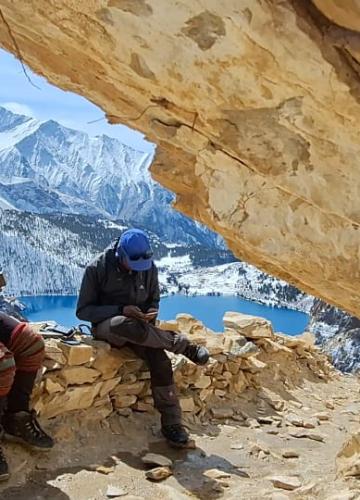
Shey Phoksundo Lake is Nepal’s deepest lake, famous for turquoise waters with a depth of over 145 meters. It supports a unique ecosystem with rare high-altitude aquatic life and is fed by waterfalls cascading from surrounding glaciers. The lake offers breathtaking photographic opportunities, with reflections of rugged peaks, dramatic lighting, and the contrast of turquoise water against the stark mountain landscape.
- Nepal’s highest alpine lake at 3,611 meters altitude
- Nearly 5 km long in a glacial valley with cliffs and snow peaks
- Unique blue-green color from glacial rock flour and minerals, changing with light
- Sacred to Bon and Tibetan Buddhist communities; believed healing and spiritual
- Pilgrims follow ancient ritual paths around the lake; area has religious sites and meditation caves
Quick “Did You Know?” Shey Phoksundo Lake, located at over 3,611 meters, and is believed to have no fish or aquatic plants due to its extreme altitude and freezing temperatures. The icy, glacier-fed waters create a unique, lifeless ecosystem, making the lake a rare natural wonder in the Himalayas.
Shey Gompa (Crystal Monastery)
Crystal Mountain is a sacred pilgrimage site during Shey Festival. Shey Gompa is an important ancient monastery located below Crystal Mountain at 4,390 meters. It is over 800 years old and a popular pilgrimage spot for Tibetan Buddhists from many Himalayan areas.

The monastery holds rare religious artifacts, old texts, and beautiful murals that have lasted for centuries. Monks live here, keep traditional practices, and welcome respectful visitors during certain times of the year. Many pilgrims come from Tibet, Ladakh, and other Buddhist regions.
It stores rare Buddhist books and artwork. The monastery is active, with monks carrying out daily rituals. It is part of the sacred route around Crystal Mountain.
Dho Tarap Valley
The Dho Tarap Valley is one of the highest inhabited valleys in the world at over 4,000 meters. Traditional farming communities here have adapted to extreme altitude over generations.
The valley is known for barley farming, unique irrigation suited to harsh conditions, and preservation of ancient farming methods. Its dramatic valley walls, ancient river terraces, and medicinal plants add natural beauty. Visitors enjoy views of nearby 6,000m+ peaks. Villages in Dho Tarap maintain traditional lifestyles with authentic architecture, farming, and customs.
Ringmo Village & Bonpo Monastery
Ringmo Village is located near Shey Phoksundo Lake and is one of Dolpo’s most picturesque settlements. It has an active Bonpo monastery preserving ancient Bon religious traditions. The village features traditional architecture adapted to harsh mountain conditions. The community maintains ancient customs and language.
Ringmo Villge serves as a hub for Bon religious activities and learning activities. Ringmo is also a training place for Bonpo religious. It symbolizes a interrelation between spiritual and day-to-day living life.
Saldang Village
The largest village of Upper Dolpo is Saldang which is used as the administrative and cultural center of the land. The village demonstrates how communities thrive in extreme mountain conditions through adaptation and cooperation. It has a population of approximately 300-400 residents. Traditional architecture reflects local building techniques.
Saldang is the economic center for the surrounding smaller settlements. It serves as a social centre, preserving local government and traditions. Regional festivals and community get-togethers are held in the village. It keeps up traditional craft and trades. Saldang is poorly educated. It is used as a point of entry to further distant places.
Comparison with Other Treks in Nepal
Dolpo offers a far more remote and genuine experience than well-known treks like Everest Base Camp and the Annapurna Circuit, which draw many hikers and have developed infrastructure. To find unique experiences, Dolpo offers unspoiled landscapes, historic tibetan influenced villages, and a limited number of tourists.
Dolpo vs Mustang Trek
Dolpo and Mustang provide their own unique experience of Tibetan culture, albeit, in their own unique way that attracts different kinds of trekkers.
| Aspect | Similarities | Differences |
| 1. Culture | Authentic Tibetan culture and monasteries | Dolpo is more traditional; Mustang is more developed |
| 2. Landscape | High-altitude desert environment | Dolpo is more rugged; Mustang has easier trails |
| 3. Permits | Both require special permits | — |
| 4. Difficulty | — | Dolpo is very challenging; Mustang is moderate |
| 5. Accessibility | — | Dolpo is remote; Mustang has road access |
Dolpo vs Everest Base Camp Trek
|
Aspect |
Similarities | Differences |
| 1. Culture | Presence of Buddhist monasteries and Tibetan influence | Dolpo has Bon monasteries too; EBC is mostly Buddhist |
| 2. Infrastructure | Limited in some parts, requiring camping | EBC has well-developed tea houses along the route |
| 3. Permits | Both require trekking permits | Dolpo requires special restricted area permits; EBC requires standard permits |
| 4. Difficulty | Both require good fitness and high-altitude experience | Dolpo is more physically demanding with higher passes and a longer duration |
| 5. Accessibility | Both start with flights from Kathmandu | EBC is more accessible with frequent flights to Lukla; Dolpo requires multiple flights and a longer trek-in |
Dolpo vs Annapurna Circuit
| Aspect | Similarities | Differences |
| 1. Nature & Culture | Stunning mountain views and rich cultural experiences in both | Dolpo has a single traditional culture; Annapurna Circuit showcases diverse cultures |
| 2. Infrastructure | Limited infrastructure and some camping | Annapurna Circuit has well-developed tea houses and road access; Dolpo is very remote |
| 3. Difficulty | Both require good fitness and experience at high altitude | Dolpo is harder and longer; Annapurna Circuit difficulty varies |
| 4. Accessibility | Both need permits and careful planning | Annapurna is more accessible with better roads; Dolpo is much more remote |
| 5. Cost | — | Dolpo is more expensive due to logistics; Annapurna Circuit is more affordable |
Why Dolpo is best for off-the-beaten-path trekkers
Dolpo is best for experienced trekkers looking for a true adventure with rich culture and few tourists.
It is perfect for trekkers who want:
- Real local culture with little impact from tourism.
- Very tough physical challenges and remote nature.
- Special spiritual and religious experiences.
- A unique and rare place to explore and take photos.
- To help local communities by trekking responsibly.
It is not good for trekkers who need:
- Comfortable places to stay and good facilities.
- Easy travel plans and flexible schedules.
- Lower costs and shorter trips.
- Quick access to emergency help or rescues.
- Their first experience trekking at high altitudes.
Travel Tips and Preparation For Dolpo
- Physical Training: Train hard with long hikes and cardio to prepare for tough, high-altitude trekking.
- Packing:
- Spring (March - May)
- Lightweight and layered clothing
- Sun protection (hat, sunglasses, sunscreen)
- Trekking boots, trekking poles
- Light rain jacket or poncho (occasional showers)
- Summer Monsoon (June - August)
- Waterproof rain poncho and waterproof backpack cover
- Quick-dry clothes, insect repellent
- Waterproof boots or gaiters
- Warm layers for cold nights
- Autumn (September - November)
- Layered clothing for warm days and cold nights
- Sunglasses, sunscreen, hat
- Good trekking boots, trekking poles
- Light insulated jacket for cold mornings/evenings
- Winter (December - February)
- Heavy insulated jacket and thermal wear
- Gloves, warm hat, and scarf
- Crampons or microspikes for icy sections
- Sleeping bag rated for sub-zero temperatures
- Lip balm and moisturizer for dry skin
- Spring (March - May)
- Guides & Porters: Hiring guides and porters is required in Dolpo’s restricted area; they help with navigation, carrying heavy gear, and local knowledge.
- Safety: Know the signs of altitude sickness and how to prevent it. Helicopter rescue exists but is limited and expensive. Carry emergency contacts and medical supplies.
- Travel Logistics: Book flights early and be prepared for delays due to weather. Bring a small, light baggage since small aircrafts have weight restrictions.
- Sustainability: Follow Leave No Trace rules, avoiding plastic, respecting local traditions, and supporting local communities through responsible tourism.
Final Thoughts
The Dolpo trek in Nepal offers a remarkable fusion of rich Tibetan culture, stunning scenery, and strenuous adventure for hikers looking for an unspoiled Himalayan experience. It offers a distinctive experience away from the congested paths of more well-known trekking areas because of its isolated location, historic customs, and breathtaking scenery. Trekking in Dolpo offers travelers profound cultural immersion, pure natural beauty, and life-changing spiritual experiences, despite being physically taxing and needing careful planning.
Dolpo Trek Nepal is raw, remote, and real. If you dream of an untouched Himalayan journey, Dolpo trek in Nepal should be your next adventure. Contact us to plan your trek today! Plan Dolpo Trek.
All About Dolpo
Dolpo History | Dolpo Himalaya | Dolpo Geography | Dolpo People & Ethnic Groups | Dolpo Flora & Fauna | Bon Religion in Dolpo | Shey Festival | Shey Gompa | Shey Phoksundo National Park | Phoksundo Lake | Dolpo Yarsagumba | Dolpo Caravan Trade
Popular Dolpo Trekking Packages
Upper Dolpo Trek | Lower Dolpo Trek | Beni Dolpo Trek | Phoksundo Lake Tea House Trek | Phoksundo Bon Cultural Trek | Mugu Dolpo Trek | Jumla Kagmara Dho Tarap Culinary Trek
FAQs
What is Dolpo famous for?
Dolpo is famous for its stunning landscapes, remote Tibetan culture, and unique biodiversity. It is home to the Shey Phoksundo National Park, which features the beautiful Phoksundo Lake It offers the traditional lifestyles of the Dolpo people.
How difficult is Dolpo trek compared to other treks in Nepal?
The Dolpo trek is considered one of the more challenging treks in Nepal due to its high altitude, rugged terrain, and remote location. It is more difficult than popular treks like the Annapurna Circuit or Everest Base Camp.
Do I need a guide for Dolpo trekking?
Yes, trekking in Dolpo will require a guide. Since Dolpo is a restricted region, the local government does not recommend a visit to Dolpo during October and November. When you hire a registered guide it will not only help to be in line with the local laws but also adds to your expertise.
When is the best season to trek in Dolpo Nepal?
The best seasons to trek in Dolpo are spring (March to May) and autumn (September to November). These seasons are relatively stable and they are characterized by clear skies and moderately cool weather suitable trekking weather.
How much does Dolpo trekking cost?
The cost of trekking in Dolpo can vary ranges from $1,500 to $3,000 per person. This includes permits, guide fees, accommodation, food, and other expenses, depending on the length.
What kind of accommodation is available in Dolpo?
Basic teahouses and guesthouses, with some options for camping, are available in Dolpo Facilities can be limited, so you should be prepared for a more rustic experience other developed trekking regions.
Who are the Dolpo people?
The Dolpo po are the Dolpo people. They are Tibetan races, known for their unique culture, language, and traditions. This regions people practice a form of Tibetan Buddhism and maintain a lifestyle closely tied to the harsh environment of the Dolpo region.
Can foreigners travel freely in Dolpo region?
Foreigners cannot travel freely in Dolpo due to its status as a restricted area. Special permits are required, and travelers must be accompanied by a registered guide to ensure compliance with local regulations.
What is the difference between Dolpo and Dolpa?
Dolpa is the official district name in Nepal’s Karnali Province, while Dolpo refers to the cultural and geographic region inside Dolpa. Both terms are often used interchangeably, but trekkers usually say “Dolpo trek” when referring to trekking routes in the area.

Leave Your Comment