
Bon in Dolpo: Religion and Traditions - Dolpo Caravan Treks
Introduction to Bon Religion in Nepal
Bon is one of the oldest spiritual traditions in the Himalayas. It began long before Buddhism spread in Tibet and Nepal. Many people call it the indigenous faith of Tibet and Dolpo. In Nepal, Bon is not as large as Hinduism or Buddhism, but in remote places like Dolpo it is still alive.
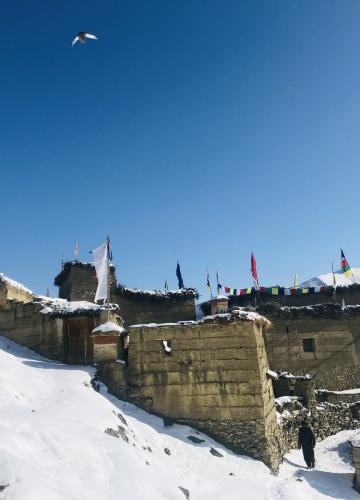
When you walk through Dolpo villages, you will notice prayer flags, stone walls with carvings, and old monasteries. These are not only Buddhist but often Bon. For local people, bőn is more than a religion. It is a way of living close to nature and spirits.
Bon religion in Nepal is not widely known, but in Dolpo it continues as a living faith practiced alongside Buddhism and Hinduism.
History and Origins of Bon in Dolpo and Tibet
Bon has deep roots that go back thousands of years. In ancient times, it was practiced in a kingdom called Zhang Zhung, west of Tibet. From there it spread across the Himalayas, including Dolpo Nepal.
Ancient Zhang Zhung culture and the Tibetan kingdom shaped Bon religion in Tibet, but Dolpo villagers kept many of the original rituals alive
One main branch is known as Yungdrung Bon. This means the eternal Bon. It focuses on wisdom, compassion, and wish-fulfilling practices. Later, when Buddhism entered Tibet, Bon and Buddhism influenced each other. Some traditions mixed, while others stayed separate.
This history shows why Dolpo is unique. It also shows why Bonism religion, sometimes called Bon faith, is considered one of the oldest spiritual traditions of the Himalayas.
Want to experience Bon culture beyond reading? Join our Upper Dolpo Trek and visit sacred Bon monasteries, ancient villages, and the legendary Shey Gompa.
Bon in Dolpo: Religion
A short glimpse of Bon religion
Bon religion can be classified into three types. They are prehistoric Bon, Yungdrung Bon, and New Bon. The activities of prehistoric Bon are akin to central Asian shamanism. Secondly, Yungdrung Bon was founded by Buddha Tonpa Shenrab, who lived on this earth many thousands of years before Buddha Shakyamuni in the land of Zhang Zhung.
During the 8th century, the king of Tibet, Trisong Detsen, invited Padmasambhava or Guru Rinpoche, abbot Boddhisattva, and some priests from China. With the king's and ministers' agreement, the abolishment of Yungdrung Bon was initiated, and when the Yungdrung Bon was on the verge of declination, Bonpo lama, and priests started to hide the crucial texts as treasures in secure caves. A few texts were modified with Indian Buddhism. In the meantime, some Bonpo adapted both the yungdrung Bon and some parts of Indian Buddhist rituals and emerged as a New Bon.
The Yungdrung Bon, founded by the Budha Tonpa Shenrab, is subdivided into Dho (the path of renunciation), Ngag (the path of transformation), and Dzogchen (the path of liberation). These practices have remained intact from Budha Tonpa Shenrab until now and are still practiced by monks, nuns, yogis, and yogis. It is alive and unchanged in Himalayan regions.
Till the 8th century, Dolpo was part of Zhang Zhung province. During the eighth Century, Tibet king Trisong Detsen (755–797 A.D) assassinated the last king of Zhang-Ligmikya, and Dolpo became a free zone. In the 10th century, Dolpo was under the kingdom of Purang, and later on, it was under Los (Upper Mustang) and Jumlang (Jumla).
In the 18th century, the King of Gorkha, Prithvi Narayan Shah, started the unification of Nepal, and Dolpo also became a unified part of the country.
Bonpo community in Dunai:
Starting from Dunai, the district headquarters of Dolpa, there is a Bonpo community—Dolpo Bon School and a beautiful Bonpo Stupa. This community was established with the assembly of Bonpo lamas, prominent people from different Bonpo villages of Dolpa. Old local people used to say that a Bonpo Lama blessed this place by leaving a footprint on a rock, and people named the place Lama Palio in Nepali, which means the footprint of the Lama.
Bonpo village in Barle (Tichurong):
The second Bonpo community near Dunai is Barle Village. There is a principal village monastery named Yungdrung Shuktsal Gon, and every Lama and Yoshi has temples in their houses. The old monastery and some stupas are more than five hundred years old. The present head Lama of the monastery is Lama Namkha Wangden. There are also some holy relics of great yogis in the monastery. The pilgrimage site of the Holy Mount Riwo Walber was blessed by the deity Takla Meber and used to be the meditation and retreat center for many lamas and yogis. So, once a year, many Bonpo and Buddhist peoples from different villages participate in the annual circumambulation of the holy mountain. There are customs to perform various rituals annually and seasonally.
On the way to Dho Tarap, there is a ruin of the ancient Bon monastery Merbu Samten Ling, which used to be the main monastery of the Treton lineage.
These Bon monasteries in Dolpo are more than religious centers. They also hold centuries-old manuscripts and murals.
Bonpo community in Dho Tarap:
Dho Tarap village has a Bonpo monastery called Deden Phuntsok Ling. In ancient times, many Bonpo Dzogchen yogis spent their whole lives in Tarap and attained Rainbow bodies. Around the monastery, many old stupas and prayer stones are engraved with the three hearts mantras. The present head Lama of the monastery is Lama Yonten Pasang. There is another monastery called Riwo Bumpa Gonpa. This monastery is shared by both Bonpos and Buddhists, and the wall paintings in the main monastery contain both Bon and Buddhist divinities.
The stupa of Yungdrung Wobar is an essential and old Bon stupa. In ancient times, Zhang Zhung Yogi, Tonggung Thuchen, Debon Gyimtsa Machung, and many Bonpo came to Tarap and blessed the sacred mountain Pawo Drungnga. There is a cave hermitage on the mountainside and the footprint of yogi Tonggyung Thuchen.
Bonpo community in Tsarka:
From Tarap through Jyagola la pass, we get to Tsarka village. There is an old Phuntsok Ling and a new Phuntsok Ling Bonpo monastery. The original or old monastery was isolated from the village, so it was dangerous, as bandits often attacked there. Therefore, a new monastery was re-established near the village. Menri Ponlob Trinle Nyima Rinpoche, the second most important leader of the Bonpo world, is also from Tsarka village. The present head Lama of the monastery is Geshe Yangton Tashi Gyaltsen Rinpoche.
Samling Monastery in Bicher:
The Samling monastery was founded by the great Dzogchen yogi and zhangzhung nyengyud lineage holder Yangton Gyaltsen Rinchen in 1183 AD. Since early times, this monastery has been the principal educational center of Bon Monastery in Dolpo. Sutra, Tantra, and Dzogchen(great perfection) were taught in the monastery. There are many Holy Scriptures, statues, chortens, and relics of several great Tantra and Dzogchen practitioners. Yangton Sherab Tenzin is the current lineage-holder Lama of the monastery.
Tha-Sung Tso Ling monastery in Tso village:
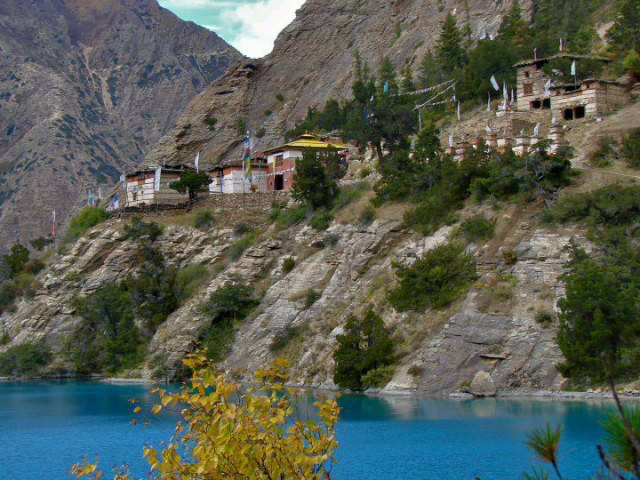
Treton Tsewang Tsultrim founded this monastery in the 15th century. It also used to be the center of the Bonpo monastery of Lower Dolpo. This monastery is on the bank of NepalNepal'sest lake, Phuksumdo. This lake is holy for Bonpo followers as it was blessed by many Treton lamas. Geshe Samdup Nyima and Geshe Sherab Gocha are taking responsibility for the monastery.
Bonpo community in Pukmo village;
The villavillage'sance is the holy Zijyi Wober stupa, which has a beautiful mural of the Bon deity Kunsang Gyalwa Gyatso, a peaceful form of the wrathful deity Walse Ngampa.
In the past, there used to be a shrine, and many animals were regularly sacrificed to the local spirit. Treton Lama Tsewang Tsultrim subdued the spirit and built Namgyal Lhakhang to stop the sacrifice and start peaceful offerings taught by Budha Tonpa Shenrab. Near this village, there is also Pugmo Dechen Ling Monastery, Thegchen Rabgye Ling Monastery, and Shugri Nyishar, a retreat and meditation centre.
In a gist, there are also a few Bon monasteries in significantly lower parts of the Dolpo such as Tsalung Sridgyal monastery a few hours away from Tripurakot, Monri Zursum monastery in Khalibon, and Yungdrung Drodul Ling monastery in Hurikot.
With a complete anti-clockwise (Way of Bonpo) circulation of Dolpo, we can visit the holy Bonpo pilgrimage site and monasteries of Dolpo.
Reference books:
- Gyalshen gi Dungrab by Yanggom Migyur Gyaltsen
- Bayul Bongi Kyareng Sarpa book of Nepal Bon Buddhist Federation
Travelers often ask how to visit Bon monasteries in Dolpo. The best option is to trek through villages such as Samling, Dho Tarap, and Shey.
Beliefs, Practices and Rituals in Bonism
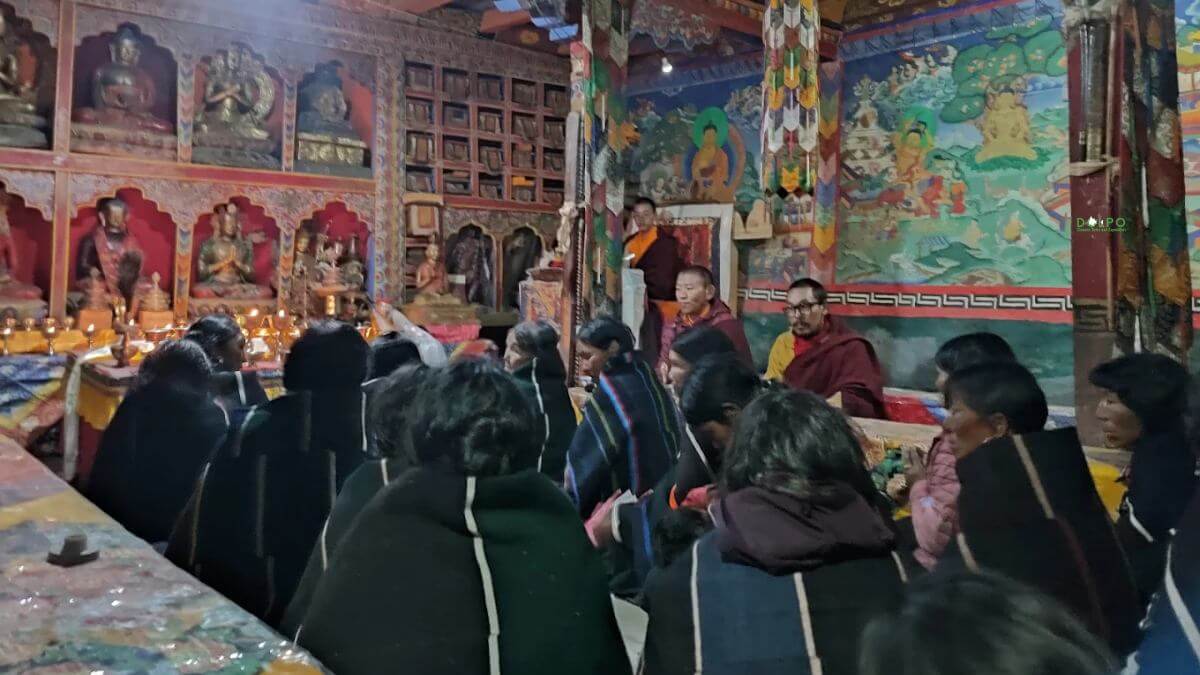
Bon followers believe that the world is filled with spirits and deities. They respect mountains, lakes, and forests as sacred. Many rituals are done to keep harmony between people and nature.
Some rituals are unique, such as Yungdrung Bon wish-fulfilling practice, which focuses on wisdom and harmony.
Festivals often include dances with masks, drum sounds, and chanting. Priests perform rituals to heal illness or bless harvests. While some practices may look similar to Buddhism, the stories and prayers come from Bon texts.
For the people of Dolpo, these rituals are not only about faith. They are also a way to protect their community and environment. This is why many describe Bon Buddhism as both similar to and different from Tibetan Buddhism.
Festivals, Pilgrimages and Sacred Sites
Dolpo is home to many sacred places linked with Bon. The Crystal Mountain near Shey is one of the most important. Pilgrims circle this mountain during special festivals. It is believed to bring blessings and good fortune.
Phoksundo Lake is also holy. Many Bon legends are connected to its turquoise waters. In some caves around Dolpo, lamas meditated for years, and today pilgrims visit these caves to offer prayers.
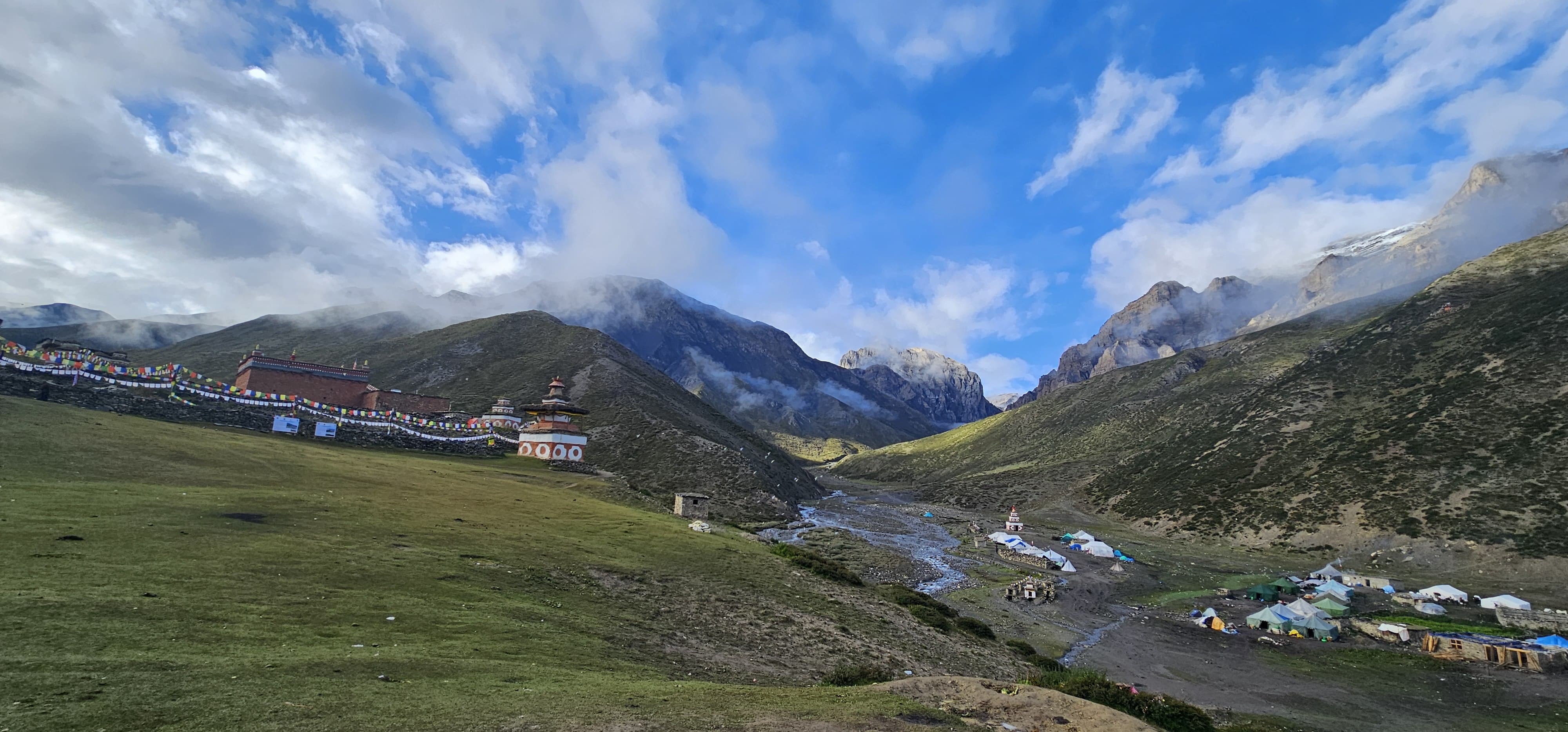
Bon festivals in dolpo bring people from many villages together. They celebrate with songs, dances, and offerings. These events are not only spiritual but also social gatherings that strengthen community bonds.
Planning your journey around the Shey Festival? Our Shey Festival Trek Package takes you deep into Dolpo to witness Bon rituals, masked dances, and pilgrimages around Crystal Mountain.
Practical Guide to Visiting Bon in Dolpo
Travelers can visit bőn monasteries during treks in Dolpo. Most monasteries are on traditional routes like Upper Dolpo trek or Shey Festival trek. To visit, you need special permits since Dolpo is a restricted region.
The best time is from May to October, when the weather is clear. If you want to see festivals, plan your trek during summer. Always show respect when entering monasteries. Ask before taking photos. Dress modestly and follow local customs.
Ready to explore the hidden Bon monasteries in Dolpo? Check our Dolpo Trekking Packages for routes, dates, and pricing.
Preservation, Threats and Modern Context
Today Bon faces challenges. Young people often move to cities or abroad, leaving fewer monks in the monasteries. Tourism brings money but can also bring pressure on local culture. The other issue is climate change. The villages and holy places are being subject to harsh weather.
Still, there are efforts to keep Bon alive. Monks are teaching children. Some monasteries are preserving old texts. Local people also guide visitors to help them understand their culture. Dolpo may be remote, but its Bon traditions continue to survive with pride.
As Nepalese religions evolve, Bon continues to play a small but important role in the cultural identity of Dolpo.
Bon and the Broader Religious Landscape of Nepal
Nepal is home to many religions. Hinduism is the largest, followed by Buddhism. Bon is smaller but still important in areas like Dolpo. In Kathmandu, Buddhism and Hinduism are the main practices.
When people ask what is the main religion of Nepal, the answer is usually Hinduism, but Bonism and Tibetan religion Bon also remain strong in their communities. Nepal is a land of many faiths. Bon adds another layer to this diversity. It shows how Nepal is not only about temples and stupas but also about ancient traditions that connect humans with nature.
Related Treks and Cultural Journeys
If you want to explore bőn culture, plan treks that pass through Dolpo villages. The Upper Dolpo trek will bring you to such monasteries as Shey Gompa and Samling. Another time you can come is the Shey Festival, when thousands of pilgrims come together.
Other journeys like the Phoksundo Lake trek or the Dho Tarap trek also give you a close look at Bon communities. These trips are not only scenic. They are a chance to meet people who carry on one of the oldest spiritual traditions in the Himalayas.
Dolpo is more than mountains. It is living Bon tradition. Explore monasteries, meet Bon lamas, and trek through stunning landscapes on our Dolpo Phoksundo Bon Cultural Trek.
All About Dolpo
Dolpo Region | Dolpo History | Dolpo Himalaya | Dolpo Geography | Dolpo People & Ethnic Groups | Dolpo Flora & Fauna | Shey Festival | Shey Gompa | Shey Phoksundo National Park | Phoksundo Lake | Dolpo Yarsagumba | Dolpo Caravan Trade
Popular Dolpo Trekking Packages
Upper Dolpo Trek | Lower Dolpo Trek | Beni Dolpo Trek | Phoksundo Lake Tea House Trek | Phoksundo Bon Cultural Trek | Mugu Dolpo Trek | Jumla Kagmara Dho Tarap Culinary Trek
FAQs
Is Bon different from Buddhism?
Yes. Bon started before Buddhism in Tibet and Nepal. Both share some rituals and images, but Bon has its own scriptures and deities. It is an independent religion with unique roots.
Can tourists attend Bon ceremonies?
Tourists are welcome, but they should have a permission. There are those festivals that embrace outsiders and others which are reserved by the villagers. Wear simple clothes, do not disrupt people, and obey the instructions of the locals.
Do I need a permit to visit Bon monasteries in Dolpo?
Yes. Dolpo is a restricted trekking region of Nepal. You must apply for a special permit and travel with a licensed guide. These rules help protect the culture and environment.
When is the Shey Festival held?
The Shey Festival happens once every 12 years at Crystal Mountain. It brings thousands of Bon and Buddhist pilgrims together. Smaller Bon festivals in Dolpo happen each year in villages.
How to visit Bon monasteries in Dolpo?
The only way is trekking. Routes such as Upper Dolpo Trek or Shey Gompa Trek pass through important Bon monasteries. A guide can arrange visits and explain the traditions.
What is the religion of Nepal?
Hinduism is the largest, followed by Buddhism. Smaller groups practice Bon and other indigenous traditions. Together they make Nepal one of the most religiously diverse countries in Asia.
What religion are Nepalese people?
Most Nepalese people follow Hinduism or Buddhism. Bon, Christianity, Islam, and other faiths also exist. Dolpo is one of the few places where Bon is still widely practiced.
What is Yungdrung Bon wish-fulfilling practice?
It is a Bon teaching that emphasizes compassion, wisdom, and balance with nature. Rituals, prayers, and meditations are done to achieve spiritual fulfillment. This practice is central to Bon monasteries in Dolpo.

Leave Your Comment