Lower Dolpo Trek

Trip Facts

Duration:
18 days
Trekking Region:
Dolpo Region
Max. altitude:
5200m
Grading:
Moderate to Demanding
Best Time:
May through November
Group size:
Min. 2 Pax max 10
Accomodation:
Camping & Limited Teahouses
Meals:
Breakfast, Lunch & Dinner
Trasportation:
Domestic Flights + Private Vehicle

Trip Highlights

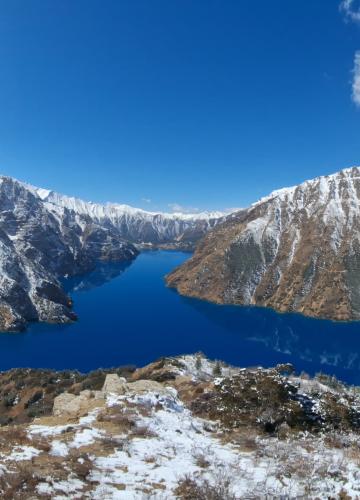
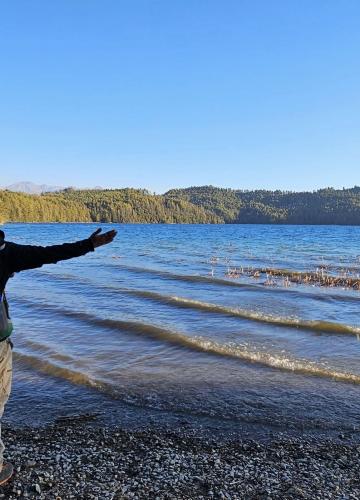
  • Stand at the edge of Phoksundo Lake, one of Nepal's most beautiful alpine lakes
  • Cross two dramatic high passes: Numa La (5,190m) and Baga La (5,070m)
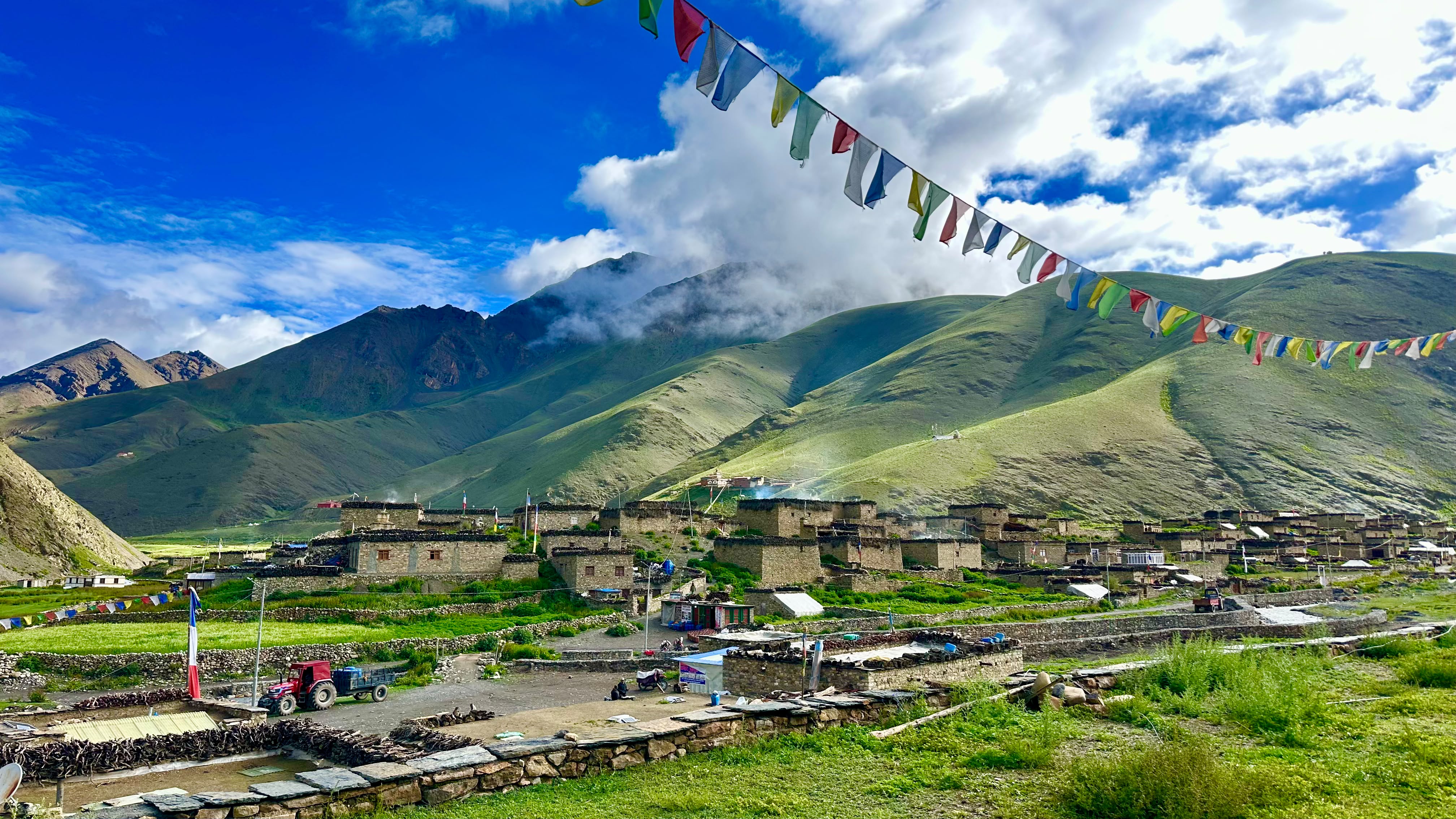
  • Walk through Dho Tarap Valley, one of the highest inhabited valleys on Earth at 4,100m
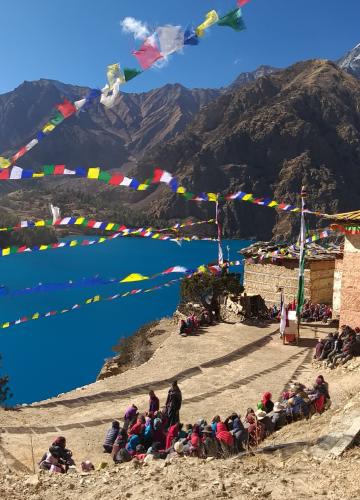
  • Visit ancient Bon and Tibetan Buddhist monasteries in Ringmo village
  • Camp under crystal-clear Himalayan skies, far from crowds and noise
  • Spot blue sheep, Himalayan griffons, and if you're very lucky, snow leopard tracks
  • Experience the living culture of the Tibetan-influenced Dolpo people
  • Trek through Shey Phoksundo National Park, Nepal's largest national park
  • Virtually zero crowds, you may go entire days without seeing another trekking group

Trip Overview

The Lower Dolpo Trek is one of the most remote and untouched trekking adventures in Nepal. Located in western Nepal, this trek takes you through ancient Tibetan villages, deep valleys, high mountain passes, and the stunning turquoise waters of Phoksundo Lake. Unlike crowded trekking routes, Lower Dolpo offers peaceful trails, raw Himalayan scenery, and unique Tibetan-influenced culture.

This 18-day trek passes through Shey Phoksundo National Park and crosses two major passes: Numa La Pass at 5,190 meters and Baga La Pass at 5,070 meters. Along the route, you visit traditional villages like Dho Tarap and Ringmo Village, where ancient Bon and Tibetan Buddhist traditions are still alive.

The trek is moderate to challenging and is best suited for trekkers with good fitness and some high-altitude experience. With fewer crowds, remote camping trails, and dramatic mountain landscapes, the Lower Dolpo Trek offers a true wilderness experience in Nepal.

Lower Dolpo Trek Overview

The Lower Dolpo Trek is one of Nepal's best-kept secrets: a raw, remote wilderness adventure in the far western corner of the country that very few trekkers actually do. The region sits inside Shey Phoksundo National Park, the largest national park in Nepal, and it's a restricted zone, which means you need special permits, and you need a registered guide. That also means the crowds never come.

The route takes you from Juphal through river gorges, past traditional Magar and Tibetan villages, up into the high plateau of Dho Tarap Valley, over two serious mountain passes, and down to the jaw-dropping beauty of Phoksundo Lake before looping back out through Juphal. It's a classic camping circuit with some teahouse support along the way.

You'll cover about 130+ km of trail over 14 trekking days. The terrain is varied, everything from low river valleys to exposed high-altitude passes above 5,000m. The culture shifts dramatically as you gain altitude, moving from Magar communities in the lower valleys to fully Tibetan-influenced villages like Dho Tarap and Ringmo higher up.

Best suited for trekkers with prior high-altitude experience. Fitness and mental preparation matter here more than technical skill.

Why Choose the Lower Dolpo Trek?

The Lower Dolpo Trek is one of the few remaining trekking experiences in Nepal where solitude, untouched wilderness, and authentic Himalayan culture come together in a single route. Very few trekking destinations in Nepal can still offer this combination, and that is precisely what makes it worth choosing.

  • No crowded tea houses
  • No long queues at checkpoints
  • No trail that feels like a managed tourist corridor
  • Deep river gorges
  • High-altitude plateaus
  • Barren pass crossings above 5,000 m
  • Phoksundo Lake
  • Bon religion actively practiced in villages like Dho Tarap
  • Ancient monasteries that are lived-in, not museum pieces
  • A way of life that has stayed largely unchanged for centuries
  • Genuine immersion in local culture

The cultural depth, remote landscapes, and solitude make the Lower Dolpo Trek one of the most unique trekking experiences in Nepal.

Ready to experience one of the most remote and untouched trekking regions in Nepal? Explore more hidden Himalayan adventures, expert-led expeditions, and authentic journeys across Dolpo with Dolpo Caravan Treks.

trekking-through-phoks...

Itinerary Overview

This Dolpo to Mugu trekking itinerary includes acclimatization days, isolated camping sections, and gradual altitude gain for safer trekking.

Detail Itinerary

You land at Tribhuvan International Airport. Our team picks you up and takes you to your hotel. We use clean, comfortable 3-star properties in Thamel. Once you've settled in, your guide meets you in the afternoon for a full trip briefing: gear check, route overview, permit paperwork, and what to expect. In the evening, have dinner together at a local restaurant.

  • Travel distance: Tribhuvan International Airport to hotel ~6-8 km 
  • Travel type: Private Vehicle 
  • Meals: Dinner (Depending upon arrival time)
  • Accommodation: Hotel in Kathmandu

A short one-hour domestic flight takes you from Kathmandu to Nepalgunj, the gateway city to western Nepal. It's a different world down here: hot, flat, and busy after the mountain air of Kathmandu. Check into your hotel, rest up, get an early dinner, and sleep early. Your flight to Juphal departs at first light.

  • Travel distance: ~500 km by air 
  • Travel type: Domestic flight 
  • Meals: Breakfast, Lunch, Dinner 
  • Accommodation: Hotel, Nepalgunj

The Nepalgunj to Juphal flight is one of the most dramatic in Nepal. Thirty-five minutes in a small prop plane, climbing rapidly from the lowland heat into thin Himalayan air. You'll fly over ridgeline after ridgeline until the tiny Juphal airstrip appears on a narrow strip of hillside. It's a landing you'll remember.

Breakfast at the airport, then we start trekking down to Dunai for 2 to 3 hours along the Bheri River valley. Dunai is the administrative center of Dolpa District, a small but lively town with a few shops and local life happening on the main street. In the evening, the full team gathers for introductions.

  • Travel distance: ~149 km by air, ~8 km trekking 
  • Travel type: Domestic flight + trekking 
  • Meals: Breakfast, Lunch, Dinner 
  • Accommodation: Teahouse / Lodge, Dunai

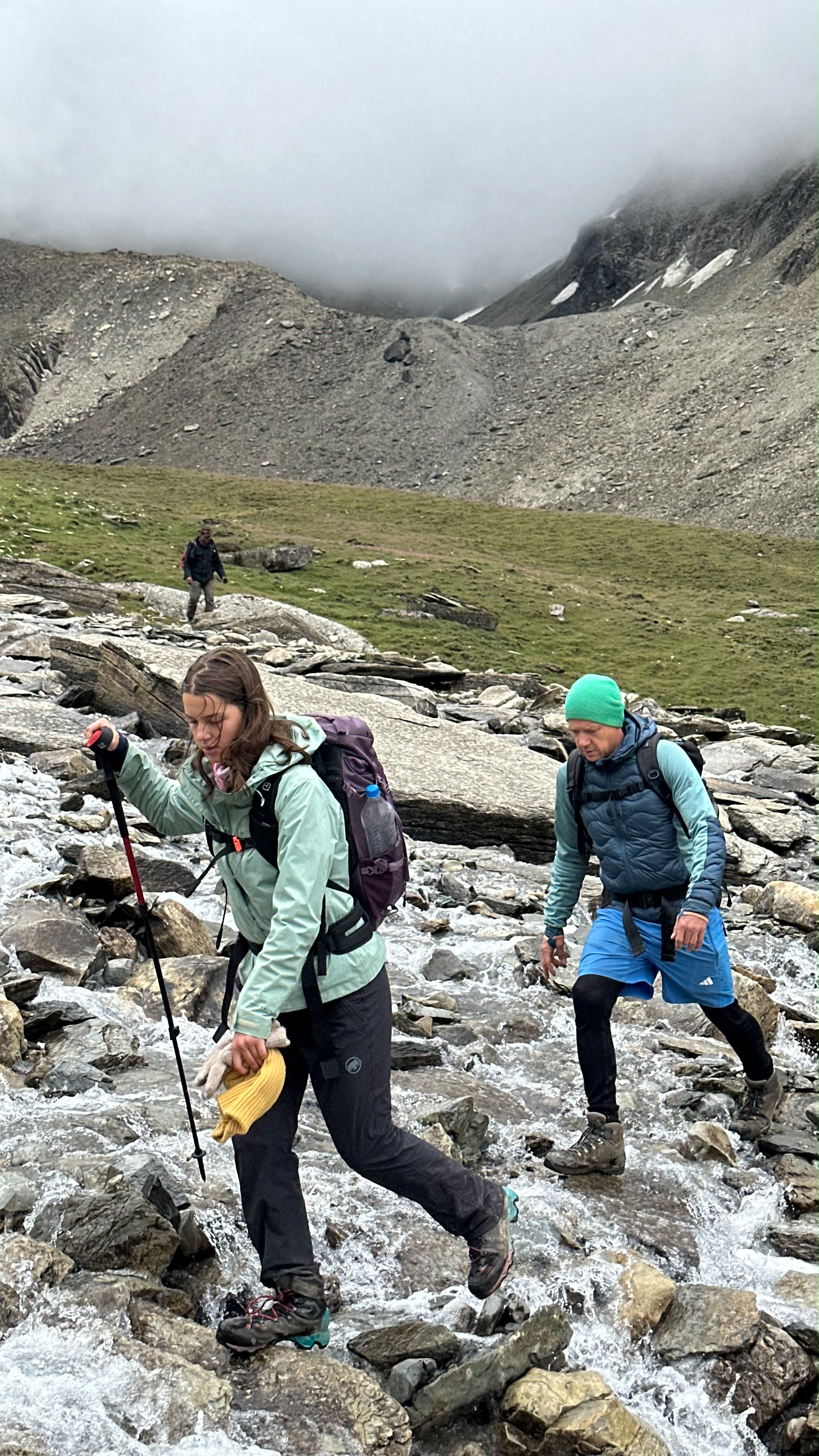
Today the trek begins properly. You follow the Bheri River upstream, moving through river gorges and past small settlements. The deep-cut valleys in this section are impressive, steep walls of rock closing in on both sides, the river loud below.

Tarakot sits at the head of the Kaike Valley and is home to the Magar people, who speak their own rare Kaike dialect, distinct from both Nepali and Tibetan. You'll see traditional stone-walled houses, prayer flags, and the occasional health post or police checkpoint that serves the local community. A fascinating introduction to the changing cultures of the Dolpo corridor.

  • Travel distance: ~15 km 
  • Travel type: Trekking 
  • Meals: Breakfast, Lunch, Dinner 
  • Accommodation: Tented Camp

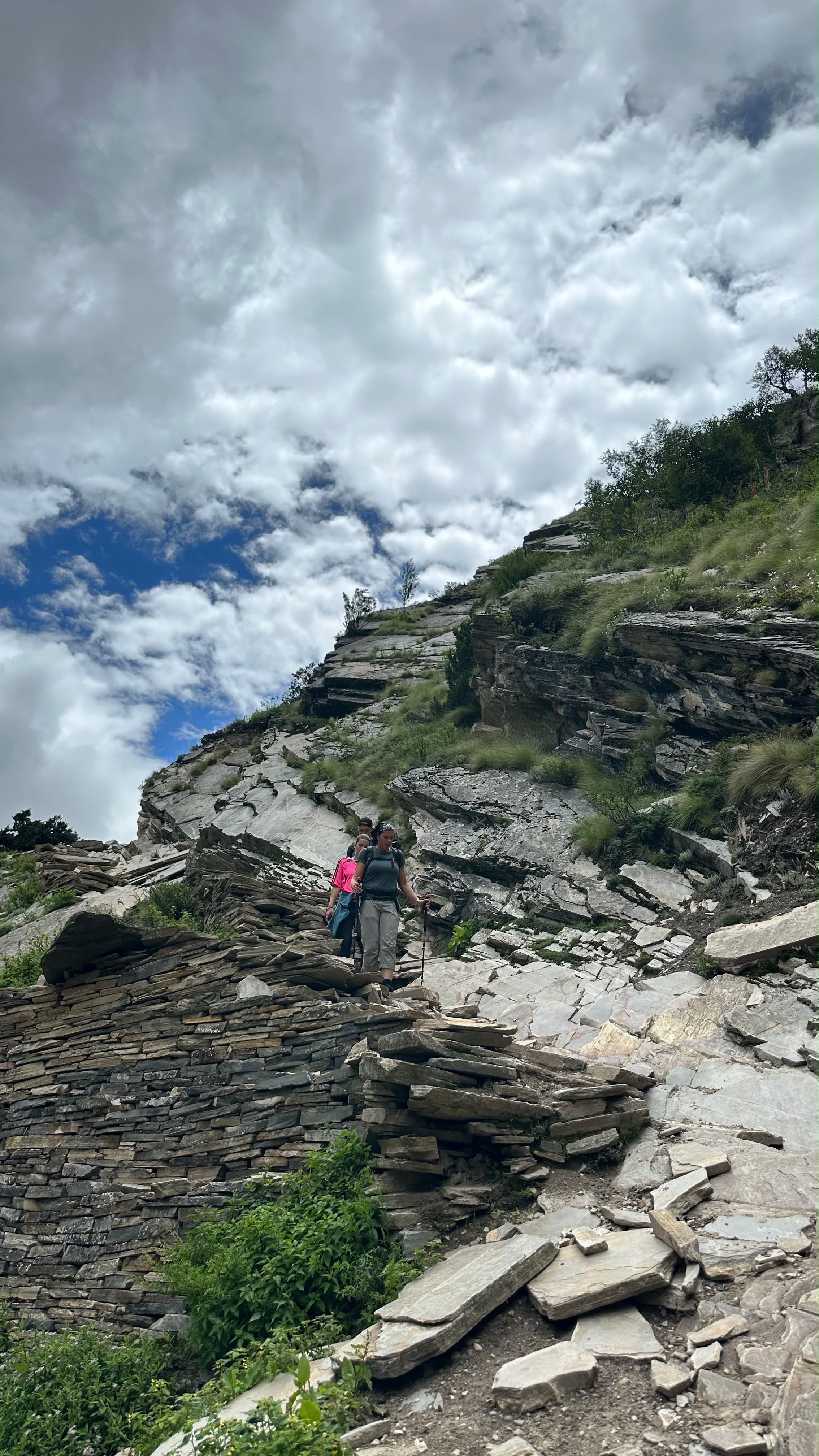
A longer day with solid altitude gain. You leave the Kaike Valley behind and begin climbing into the Dho Tarap drainage: narrower trails, deeper forest, and the sound of a river echoing up steep gorge walls. The path winds through narrow rock passages in places, with some exposed sections that make you feel properly small against the landscape.

Laini Odar is a small settlement with a couple of basic teahouses and good camping spots beside a stream. The air is noticeably thinner up here. Worth slowing your pace, drinking more water than you think you need, and getting to sleep early.

  • Travel distance: ~10 km 
  • Travel type: Trekking 
  • Meals: Breakfast, Lunch, Dinner 
  • Accommodation: Tented Camp

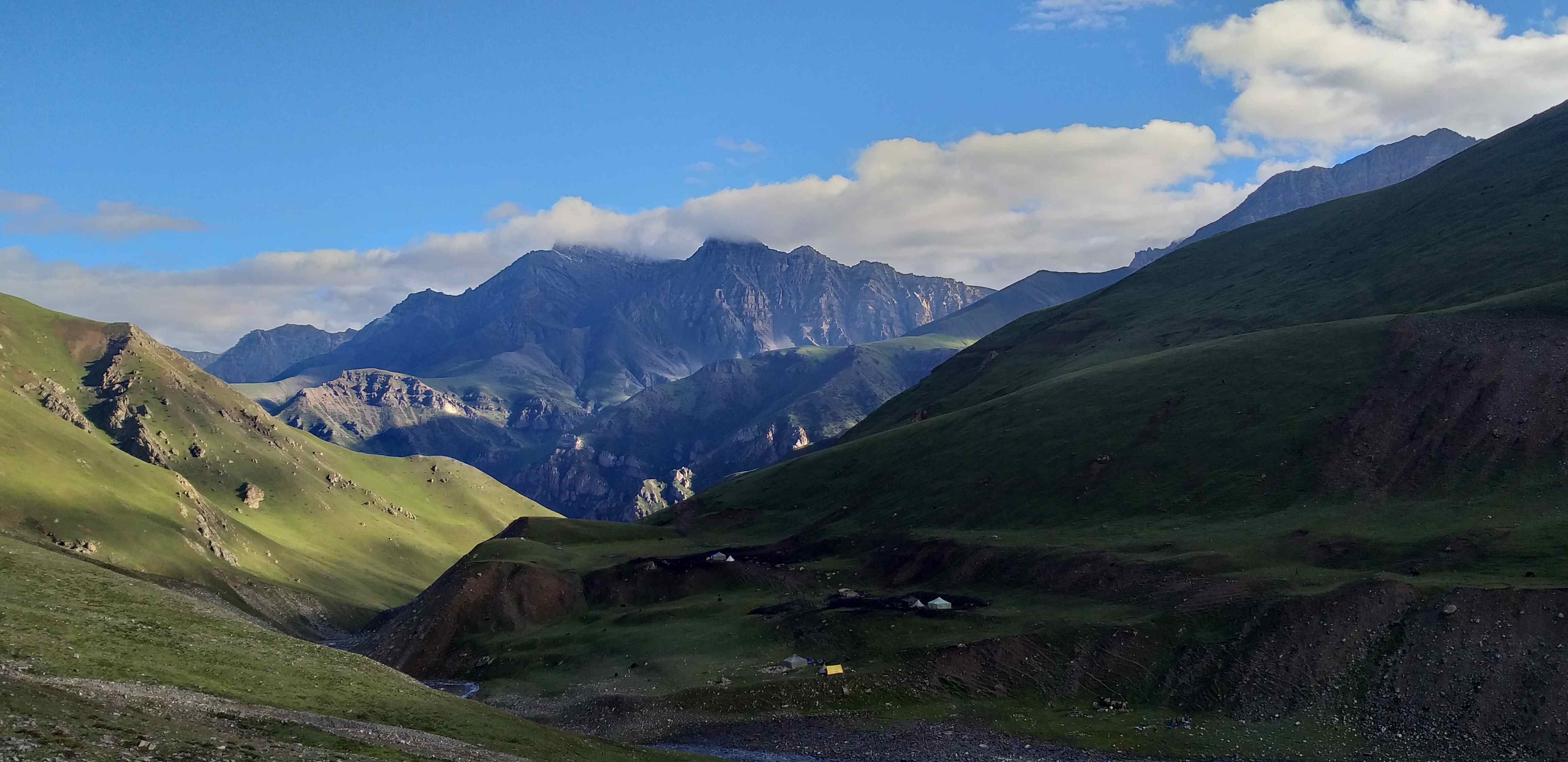
The trail today moves through more varied terrain, sometimes high on a ridge with open views, sometimes dropping back into the valley. You'll cross streams and push through brushy sections before the landscape starts to open up as you gain altitude. Small nomad encampments dot the hillsides, and you'll start seeing yaks.

Nawarpani is a small nomad camp used by herders who bring their animals to the high pastures in summer. A few seasonal teahouses operate here. After the day's walk, find a stream, take off your boots, and dip your feet.

  • Travel distance: ~10 km 
  • Travel type: Trekking 
  • Meals: Breakfast, Lunch, Dinner 
  • Accommodation: Tented Camp

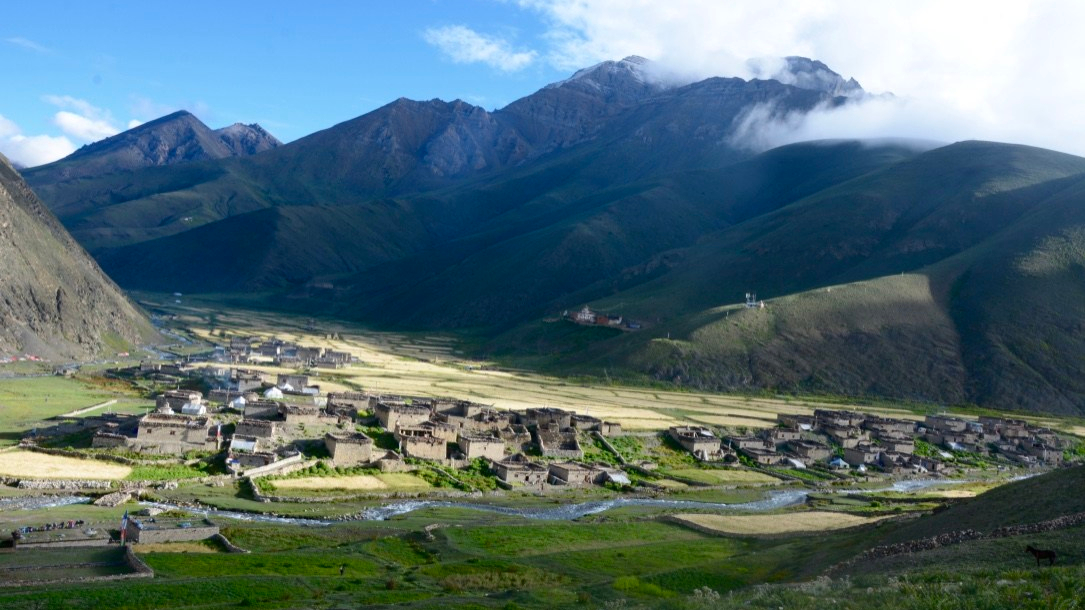
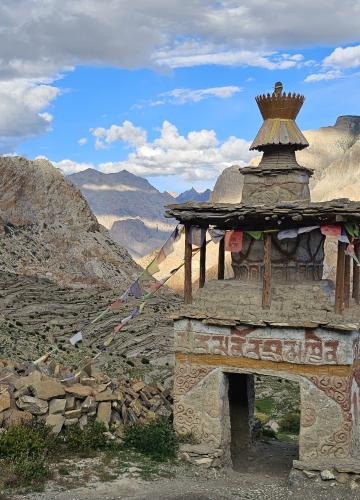
The flat, wide valley floor of Dho Tarap comes into view long before you reach it, a huge surprise after days of narrow gorges and steep trails. The approach is along the Tarap River, and as you enter the valley, a massive white stupa carved with mantras welcomes you in.

Dho Tarap is one of the highest inhabited valleys in the world at around 4,100 m, and it's stunning. Tibetan stone houses, mani walls, Bon monasteries, and prayer flags everywhere. The local people, mostly of Tibetan origin, live a semi-nomadic pastoral life here. This is where the cultural immersion really starts.

  • Travel distance: ~19 km 
  • Travel type: Trekking 
  • Meals: Breakfast, Lunch, Dinner 
  • Accommodation: Tented Camp

At 4,100m, your body needs time to adjust before you push higher. But "rest day" here doesn't mean boring, Dho Tarap is endlessly interesting.

Spend the morning visiting Ribo Bumpa Monastery and the Bon gompa nearby, you can sit and watch monks go about their daily rituals, something that feels genuinely sacred rather than performed for tourists. Walk to the neighboring village of Tokyu, where traditional weaving and farming still happen in a totally unchanged way. Take photos. Write in your journal. Eat well. Drink lots of water. Talk to your guide about the next few days, the passes are coming, and it helps to know what's ahead.

  • Travel distance: Short exploratory walks only 
  • Travel type: Acclimatization rest day 
  • Meals: Breakfast, Lunch, Dinner 
  • Accommodation: Tented Camp

You leave the valley floor and start climbing toward the first big pass. The trail leaves Dho Tarap heading south through wide pastureland, following the Taksi River drainage before turning toward the Numa La. The landscape becomes more barren and dramatic as you gain altitude.

Numa La Base Camp sits at 4,440m, a high camping spot with sweeping views back over Dho Tarap Valley and the peaks beyond. It gets cold quickly after sunset up here. Have a good hot meal, check your gear for tomorrow's pass crossing, and get to sleep early.

  • Travel distance: ~9.5 km 
  • Travel type: Trekking 
  • Meals: Breakfast, Lunch, Dinner 
  • Accommodation: Tented Camp

The climb to the pass is steep and steady, a couple of hours of hard uphill on loose scree and rock before the pass itself opens up. At the top, you're at 5,190m, surrounded by Himalayan giants. Kanjirowa Himal dominates to the west, and on a clear day you can see deep into Tibet. It's genuinely one of the stunning views in western Nepal.

Descent on the far side is long and knee-heavy, dropping almost 1,000 m to camp at Danigar, a small nomad camp used by Phoksundo herders during summer. Your legs will know about this day. Worth every step.

  • Travel distance: ~11 km 
  • Travel type: Trekking (high pass crossing) 
  • Meals: Breakfast, Lunch, Dinner 
  • Accommodation: Tented Camp

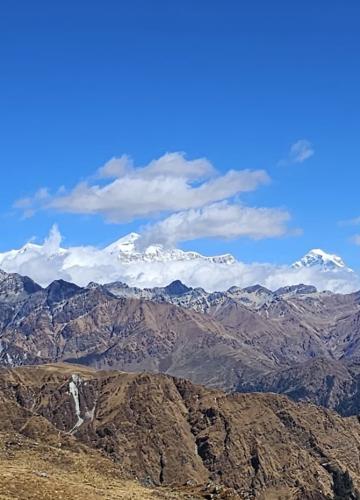
Two passes in two days. This is the heart of the trek. Baga La is slightly lower than Numa La but no less dramatic. The climb starts early from Danigar, winding up through yak pasture land before hitting the final push to the pass. Views here look south toward the Dhaulagiri massif, on a clear morning, the light on those peaks is extraordinary.

The descent takes you down to Yak Kharkha (also called Temche), where the landscape softens again into wide meadows. You can already feel the Phoksundo drainage pulling you downward. Camp here for the night, the hardest two days of the trek are behind you.

  • Travel distance: ~10.5 km 
  • Travel type: Trekking (high pass crossing) 
  • Meals: Breakfast, Lunch, Dinner 
  • Accommodation: Tented Camp

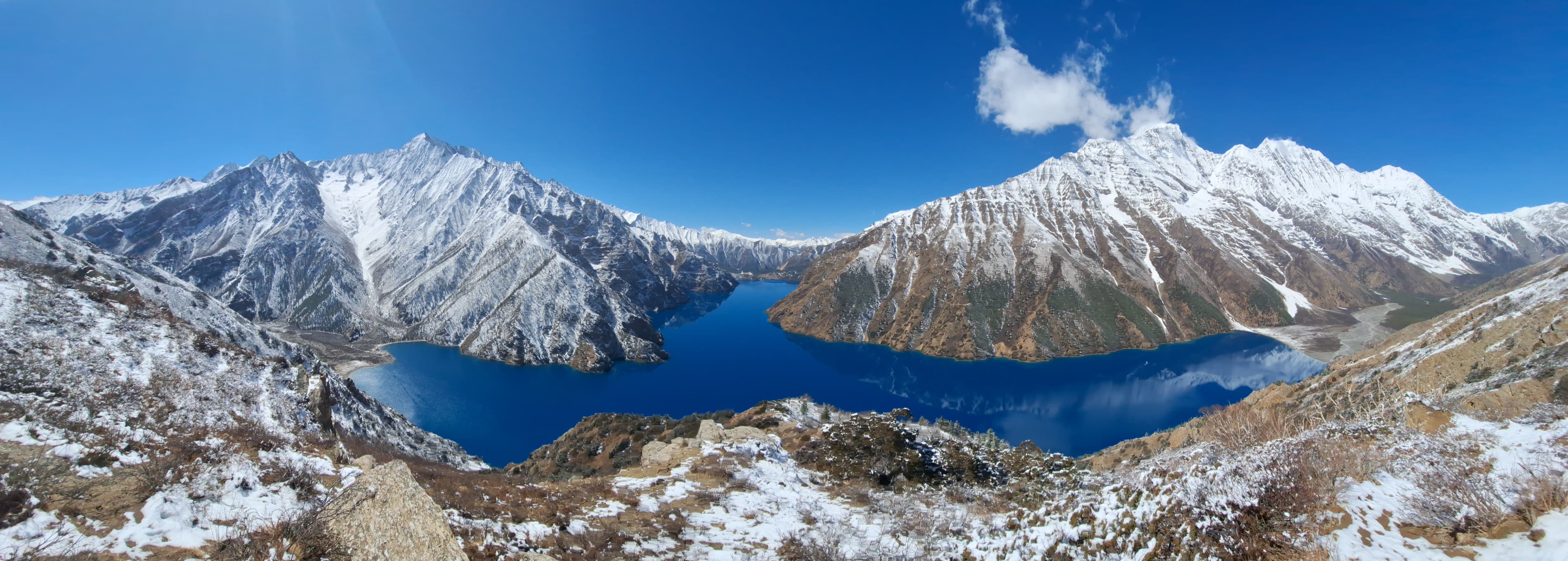
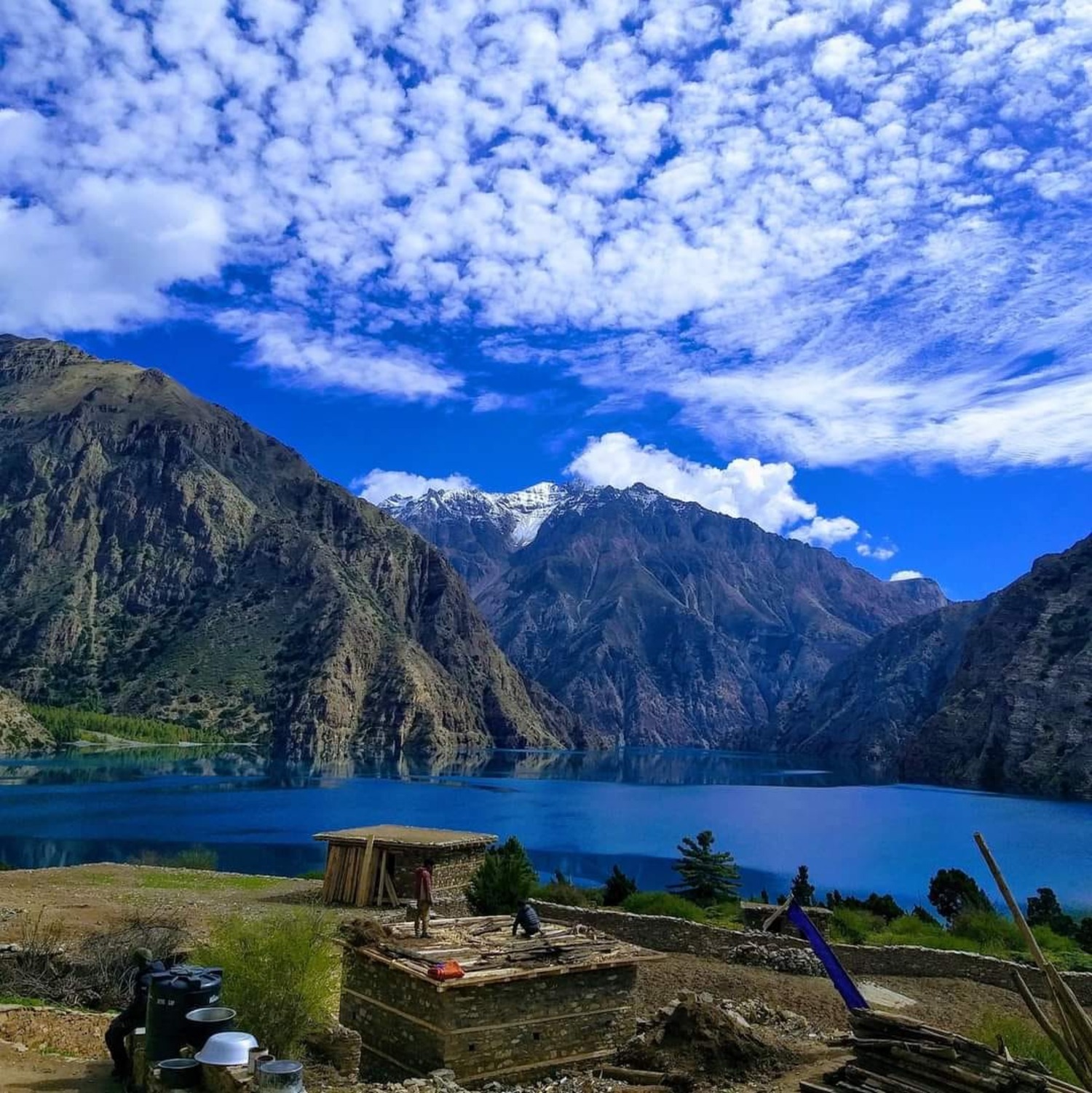
The trail descends steadily through the Phoksundo River valley, and then it just appears. Phoksundo Lake. Nothing prepares you for how blue it is. The lake sits in a bowl of cliff and forest at 3,611m, and it's one of the most beautiful things you'll see anywhere in Nepal. Possibly anywhere at all.

Ringmo Village sits on the lakeside, a small Tibetan community with a monastery, a few teahouses, and the kind of peaceful atmosphere that makes you want to stay longer than planned.

  • Travel distance: ~8 km 
  • Travel type: Trekking 
  • Meals: Breakfast, Lunch, Dinner 
  • Accommodation: Teahouse, Ringmo / Phoksundo

Take your time today. Walk around the lake shore. Visit the 9th-century Bon monastery above the village. Sit and watch the water change colour through the day. Talk to the locals. Your guide can take you on a short hike above the lake for an overview perspective that shows just how dramatically the lake sits in its landscape.

This is also a good day to dry out gear, charge devices (solar charging panels where available), and mentally process the fact that you just crossed two 5,000 m+ passes back-to-back. You earned this rest.

  • Travel distance: Short exploratory walks only 
  • Travel type: Rest day 
  • Meals: Breakfast, Lunch, Dinner 
  • Accommodation: Teahouse, Ringmo / Phoksundo

Long day heading back toward the Juphal exit. The trail drops out of the Phoksundo Valley, descending through the stunning Phoksundo Gorge, like deep canyon walls, the river roaring below, and a trail that hugs the cliff face in places. Rope bridges, waterfalls, and constantly changing scenery make this one of the most exciting descent days of the whole trek.

Chhepka is a small settlement at the bottom of the gorge, with basic camping and a few simple teahouses.

  • Travel distance: ~18 km 
  • Travel type: Trekking 
  • Meals: Breakfast, Lunch, Dinner 
  • Accommodation: Tented Camp / Teahouse

The final full trekking day. The trail follows the Suli Gad River back down to the valley floor, gradually opening up as you descend. The vegetation changes dramatically, from the barren high country to greener, lower terrain. You arrive back in Juphal feeling different from when you left. This is exactly how it should feel.

Celebrate with your team in the evening. Dinner together, stories from the trail.

  • Travel distance: ~20 km 
  • Travel type: Trekking 
  • Meals: Breakfast, Lunch, Dinner 
  • Accommodation: Teahouse / Lodge, Juphal

Early morning flight check-in. The flight back is just as dramatic in reverse, watching the mountains recede as you descend back to the lowlands. Connect in Nepalgunj for the onward flight to Kathmandu. Depending on arrival time, the afternoon is free for souvenir shopping or a final Kathmandu wander.

  • Travel distance: ~500 km by air (total) 
  • Travel type: Domestic flights 
  • Meals: Breakfast, Lunch 
  • Accommodation: 3-Star Hotel, Kathmandu

Reserved in case of flight delays due to mountain weather. If not needed, you can relax, shop, or explore heritage sites.

  • Travel Distance: Local city travel as required
  • Travel Type: Private Vehicle
  • Meals: Breakfast
  • Accommodation: Hotel in kathmandu

Transfer to Tribhuvan International Airport for your international departure. Our driver takes you to the airport for your international flight home. Safe travels and see you on the next one.

  • Travel Distance: Hotel to Airport ~6-8 km
  • Travel Type: Private Vehicle
  • Meals: Breakfast (depending on flight time)

Cost Includes

  • All domestic flights: Kathmandu - Nepalgunj - Juphal and return
  • Lower Dolpo Restricted Area Permit (RAP)
  • Shey Phoksundo National Park Entry Permit
  • TIMS Card (Trekkers Information Management System)
  • Professional licensed trekking guide (English-speaking, local Dolpo guide)
  • Experienced porters (1 porter per 2 trekkers)
  • Full camping equipment: tents, sleeping mats, kitchen tent, and a dining tent
  • All meals during the trek: breakfast, lunch, dinner (from Day 2 to Day 16)
  • Teahouse accommodation where available (Dunai, Ringmo, Juphal)
  • 3-star hotel accommodation in Kathmandu (Day 1 and Day 16 - 17)
  • Airport transfers in Kathmandu and Nepalgunj
  • Welcome dinner in Kathmandu
  • First aid kit and emergency oxygen
  • All government taxes and service charges

Cost Excludes

  • Nepal entry visa 
  • International airfare and excess baggage charge
  • Travel insurance, rescue, and evacuation.
  • Personal trekking gear and clothing
  • Extra night accommodation in Kathmandu because of early arrival,
  • late departure, early return from mountain (due to any reason) to the scheduled itinerary
  • Alcoholic beverages and soft drinks
  • Personal expenses (phone calls, laundry, bar bills, battery recharge, extra porters, bottle or boiled water, showers, etc.)
  • Tips for guide and porters (strongly recommended, budgeting $15 - 20 USD/day)

Useful Information

Lower Dolpo Trek Cost

The Lower Dolpo Trek typically costs starting from $2,900 per person for a fully supported package, depending on group size, season, and included services. Here's a realistic breakdown of what drives the cost.

Cost Component Details Approximate Cost
Restricted Area Permit USD 20 per person for 1st week, then USD 5 per person for extra days USD 20  for 7 days
Shey Phoksundo National Park Entry Fee (Foreigners) National park permit fee NPR 3,000 (~USD 22)
Shey Phoksundo National Park Entry Fee (SAARC Nationals) National park permit fee NPR 1,500 (~USD 11)
TIMS Card Fee Trekker Information Management System card NPR 2,000 (~USD 15)
Licensed Guide Daily guide cost USD 30 - 40 per day
Porter Cost Daily porter cost USD 20 - 25 per day
Expedition Staffing Cost Full support team cost USD 700 - 1,000
Round-Trip Flights to Juphal via Nepalgunj Weather-dependent Twin Otter flights USD 350 - 450 per person


The package price covers all permits, domestic flights, guide and porter fees, full camping equipment, and meals for the entire duration of the trek. Smaller groups pay more per person, groups of 4 - 6 hit the most efficient price point. Solo travellers can join a shared group departure to reduce costs. For a detailed breakdown of what drives permit and agency costs in restricted zones, read our guide on restricted area trekking in Nepal.

dolpo-village-nepal.jpg

Food & Accommodation

Accommodation on the Lower Dolpo Trek

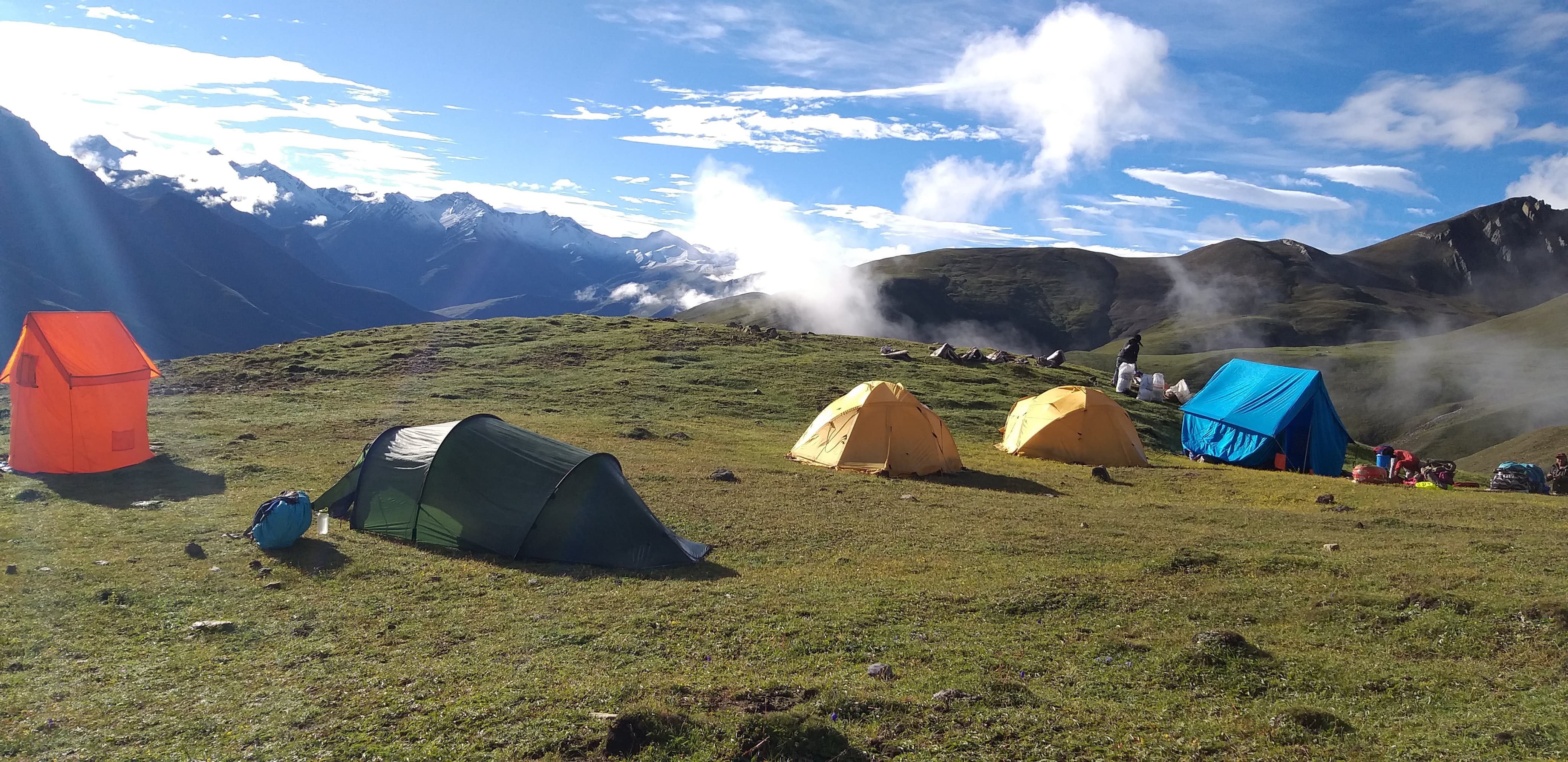
Accommodation on the Lower Dolpo trek is a mix of tented camping and basic teahouses, roughly 70% camping and 30% teahouses. Teahouses are available in Dunai, Tarakot, Ringmo (Phoksundo), and Juphal. Everywhere in between is camping. Our team sets up tents, sleeping tents, a kitchen tent, and a dining shelter, so you arrive at camp and dinner is already being made.

Teahouses in this region are basic, simple rooms with single beds and foam mattresses, shared toilets (mostly squat style), and cold water. Nothing fancy. Phoksundo / Ringmo has the most established teahouses on the route and even offers some solar-heated water.

Food on the Lower Dolpo Trek

Food on the Lower Dolpo trek is better than you might expect. Dal bhat, the classic Nepali rice, lentil soup, and vegetable curry combo, is available at teahouses and is genuinely good fuel for the trail. Our camping kitchen prepares:

  • Porridge and eggs in the mornings
  • Noodle soup, rice, and local vegetables for lunch
  • Dal bhat, pasta, or potato dishes for dinner
  • Tibetan bread (tsampa flatbread), try it with local butter tea
  • Plenty of hot tea, coffee, and lemon-honey drinks throughout the day

At altitude, appetite often drops. Our cooks know this well and work hard to make food appealing even when you're not feeling hungry. Eating well matters more on this trek than most.

Vegetarian and vegan options are fully available throughout. Please mention any dietary needs at booking.

Best Time for Lower Dolpo Trek

The best time for the Lower Dolpo Trek is autumn (October) and spring (may) because the weather is stable, skies are clear, and high mountain passes remain safe to cross.

Autumn: September - November (Primary Season)

Autumn is considered the best season for the Lower Dolpo trek. After the monsoon clears in late September, visibility is exceptional and trail conditions are excellent. October is near-perfect, dry, stable, and ideal for high-pass crossings. This month is when we recommend most trekkers go.

Spring: March - May (Secondary Season)

Spring is considered the second-best season for the Lower Dolpo Trek after autumn. Weather stabilizes through April and May, skies clear, and rhododendron forests at lower elevations bloom in red and pink. Snow on Numa La and Baga La is usually manageable from mid-April onwards. May is a solid second choice, especially for the best combination of clear views and open passes.

Monsoon: June - August (Not Recommended)

Not generally recommended, but Lower Dolpo is still surprisingly viable during the monsoon because the region sits in the rain shadow of the Himalayas and receives far less rainfall than other trekking regions in Nepal. Wildlife is active, the landscape is green, and the trail is empty. We also operate treks during this season for experienced trekkers with flexible schedules. 

Winter: December - February (Not Recommended)

Not recommended for most trekkers due to extreme cold and heavy snowfall. Heavy snow closes Numa La and Baga La, making crossing dangerous without mountaineering experience. Camp temperatures drop well below -15°C or lower. However, we also operate limited winter treks for experienced trekkers who are properly equipped for harsh high-altitude winter conditions. 

Trekking in Dolpo requires more than just good timing, it requires the right local team. Meet the experienced guides, porters, and Dolpo specialists behind every successful expedition on Our Team.

For a full breakdown of seasonal conditions across all Dolpo treks, see our guide on the best time to trek in Dolpo

dolpo-himalaya-pristin...

Lower Dolpo Trek Permits

The Lower Dolpo Trek requires three permits: the Lower Dolpo Restricted Area Permit, the Shey Phoksundo National Park Permit, and the TIMS Card. All three are mandatory, cannot be arranged independently, and are handled by us as part of your package.

Lower Dolpo Restricted Area Permit (RAP) 

The most important permit for this trek. Lower Dolpo is a government-designated restricted zone, no trekker can enter without this permit. The cost is USD $20 per person per week inside the restricted area. For an 18-day trek, you will need approximately 3 weeks of coverage, bringing the total RAP cost to around USD 60 per person. 

It can only be issued through a registered Nepal trekking company, you cannot obtain it independently at the border, in Dunai, or anywhere along the route. Read our complete guide on how to obtain Nepal trekking permits if you want a broader understanding of Nepal's permit system before booking.

Shey Phoksundo National Park Entry Permit 

The entire trek passes through Shey Phoksundo National Park, Nepal's largest national park. Entry costs NPR 3,000 (approx. USD $22) per person for foreign nationals. Checked at the park entrance gate near Chhepka. 

TIMS Card (Trekkers Information Management System) 

Required for all foreign trekkers anywhere in Nepal. The cost is NPR 2,000 (approx. USD $15) per person. Issued in Kathmandu before departure.For official and up-to-date permit regulations, you can verify requirements directly on the Nepal Tourism Board website before your departure.

Permit Rules & Regulations

A licensed trekking guide must accompany you at all times inside the restricted zone. Solo trekking is allowed only with a licensed trekking guide, but the overall trekking cost becomes significantly higher for solo travelers. 

  • All permits must be carried on your person and presented at checkpoints. There are multiple checkpoints between Juphal and Dho Tarap.
  • Permits are calculated per week. The number of days you spend inside the restricted boundary determines your total permit cost.
  • Overstaying permit validity carries heavy fines. We track permit dates carefully for every group we operate with.

We handle all permit applications on your behalf. All you need to provide at the time of booking is your passport details and a passport-sized photo.

Lower Dolpo Trek Difficulty & Preparation

Yes, the Lower Dolpo Trek is considered challenging because it includes two mountain passes above 5,000 meters, long trekking days, and several nights above 4,000 meters. Prior high-altitude trekking experience is strongly recommended.

What makes it demanding:

  • Long walking days, typically 5 - 8 hours on trail, occasionally up to 9 hours on pass days
  • Two high passes,  Numa La (5,190m) and Baga La (5,070 m), above 5,000 m were crossed on consecutive days (Days 10 and 11)
  • Sustained high altitude From Day 7 onwards, camping above 4,000m for several nights
  • Remote terrain with no rescue roads (helicopter evacuation is the only emergency option)
  • Cumulative fatigue, 14 days of actual trekking adds up

What it doesn't require:

  • Technical climbing or mountaineering skills
  • Ropes, ice axes, or crampons (in normal season conditions)
  • Prior Dolpo experience

Physical Preparation

Start training at least 2-3 months before departure. Being gym-fit is not the same as trail-fit; get out on actual hills with a loaded pack.

  • Hike 3 - 4 times per week with a pack of 8 - 12 kg
  • Include at least one long day per week, a minimum of 5 hours on trail
  • Add stair climbing and cardiovascular training between hikes
  • In the final 6 weeks, increase frequency and duration progressively
  • Practice hiking on uneven terrain, not just flat paths or treadmills

Before any high-altitude trek in Nepal, it is worth consulting the Himalayan Rescue Association for altitude safety briefings, AMS prevention guidance, and pre-trek medical advice.

Lower Dolpo Trek Altitude & Acclimatization

The highest point of the Lower Dolpo Trek is Numa La Pass at 5,190 meters, making proper acclimatization essential. The ascent is gradual, climbing from Dunai (2,150m) to Dho Tarap (4,100m) over 5 days at roughly 400m per day. A mandatory rest day in Dho Tarap on Day 8 gives your body time to adjust before the two high-pass crossings. For a deeper understanding of altitude risks and how to manage them, read our guide on altitude sickness and acclimatization

From Day 7 onwards you are camping above 4,000 m, so acclimatization is not optional, it is built into the itinerary for good reason.

Altitude & Acclimatization Factor Details How to Tackle It
High Altitude Numa La Pass reaches 5,190 meters Follow the gradual ascent properly
Gradual Ascent Dunai (2,150m) to Dho Tarap (4,100m) over 5 days Walk at a steady pace
Rest Day Mandatory acclimatization day in Dho Tarap on Day 8 Allow your body time to adjust
AMS Risk AMS risk increases above 3,500m Drink 3 - 4 liters of water daily
AMS Symptoms Headache, nausea, dizziness, loss of appetite Tell your guide immediately
Emergency Support Guides carry emergency oxygen and a Gamow bag Follow guide instructions and avoid ascending with symptoms


lower-dolpo-village-ne...


Lower Dolpo Trek Map

The Lower Dolpo Trek follows a rough clockwise circuit in the southwestern section of Shey Phoksundo National Park in Dolpa District, western Nepal. Major points along the route include Juphal Airstrip (2,499m), Dho Tarap (4,100m), Numa La Pass (5,190m), Baga La Pass (5,070m), and Phoksundo Lake (3,611m).

The entire route lies within Karnali Province in western Nepal. The nearest major access points are Nepalgunj and Dunai, connected by flights from Kathmandu and Nepalgunj.

Lower Dolpo Trek Route Overview

The Lower Dolpo Trek follows a classic clockwise circuit through the remote Dolpa District of western Nepal. You fly into Juphal from Nepalgunj and begin trekking through Dunai, Tarakot, Laini Odar, and Nawarpani before reaching Dho Tarap Valley at 4,100m.

From there the route crosses Numa La (5,190m) and Baga La (5,070m), then descends through Yak Kharkha and Temche to Phoksundo Lake at Ringmo Village. The final section follows the Phoksundo Gorge through Chhepka and returns to Juphal.

The full circuit covers roughly 150+ km of trail without repeating a major section. Numa La is the highest point of the trek at 5,190m / 17,028 ft, followed by Baga La at 5,070m / 16,634 ft on the next day.

Route direction (clockwise circuit):

Juphal → Dunai → Tarakot → Laini Odar → Nawarpani → Dho Tarap → Numa La Base Camp → Numa La Pass (5,190m) → Danigar / Baga La Base Camp → Baga La Pass (5,070m) → Yak Kharkha / Temche → Phoksundo Lake / Ringmo → Chhepka → Juphal

Lower Dolpo Trek Packing List

Packing the right way is critical for a remote, camping-based trek like the Lower Dolpo trek. The Lower Dolpo Trek is a camping trek in an isolated high-altitude environment. Gear quality matters. Using proper trekking gear for remote Himalayan trails can make the journey safer and far more comfortable.

Essential Items

  • Clothing & Layering
  • Down jacket (minimum -10°C rated): for mornings, evenings, and pass crossings
  • Thermal base layers: top and bottom, at least 2 sets
  • Fleece mid-layer: for insulation in camp
  • Waterproof shell jacket and trousers: lightweight, packable
  • Trekking trousers: lightweight, quick-dry
  • Trekking socks: wool or synthetic, bring 5 - 6 pairs
  • Gloves: liner gloves and a heavier outer pair
  • Warm hat / balaclava: for high passes and cold nights
  • Sun hat / buff: sun in Dolpo is intense at altitude

Footwear & Sleeping Gear

  • Sleeping bag (minimum -15°C all-season comfort rating for camping above 4,000m)
  • Trekking boots: waterproof, ankle support, well broken-in before departure

Trekking Equipment

  • Trekking poles: highly recommended, especially for pass descents
  • Headlamp: with extra batteries. Mountain nights are dark.

Water & Hydration

  • Water bottles: 2 x 1L minimum, or a 2L hydration bladder
  • Water purification: iodine tablets or a SteriPen (teahouse water quality is variable)

Sun Protection

  • Sunglasses: UV-rated, wrap-around style. Non-negotiable at 5,000m+
  • Sunscreen: SPF 50+, and apply it to ears and neck tooHealth & Safety
  • First aid kit: blister treatment, painkillers, anti-diarrhoea, altitude sickness medication

Optional but Useful

  • Power bank (20,000 mAh minimum, charging opportunities are very limited)
  • Camera and extra batteries (cold drains batteries fast so keep a spare in your inner pocket)
  • Dry bags for keeping electronics and down gear dry during river crossings
  • Lightweight camp shoes / sandals: your feet will thank you in camp
  • Snack bars pack 10 - 15 extra snacks beyond what feels necessary
  • Travel journal: You'll have a lot to write about
  • Small lock for kit bag

Lower Dolpo Trek Booking Process

Booking the Lower Dolpo Trek is a straightforward process, but because the region is restricted, you must plan in advance and prepare your permit. Our team handles all logistics, including permits, domestic flights, accommodation, guides, camping equipment, and pre-departure support, so you can focus entirely on preparing for the adventure. 

Submit an inquiry: Contact Dolpo Caravan Treks via the inquiry form or by email. Provide your preferred departure dates, group size, fitness background, and any specific requirements.

Receive a Custom Itinerary and Cost Proposal: Our team will confirm availability, prepare a detailed itinerary, and issue a full cost breakdown based on your group size and dates.

Pre-Departure Documentation: A full pre-departure briefing pack is issued 6-8 weeks before departure, including the detailed itinerary, packing checklist, flight guidance, insurance requirements, and direct guide contact information.

Payments are made in stages, and you get final confirmation once the permits are ready. Before the trek, there’s a briefing that goes over logistics, packing, and final preparation for the trip. Our complete Dolpo Mugu trekking package includes permits, flights, meals, camping equipment, guides, and expedition logistics.

Book with Dolpo Caravan Treks

Dolpo Caravan Treks is a specialist operator focused exclusively on the Dolpo and far western Nepal regions. We are not a general Nepal trekking agency, every route we run, every guide we deploy, and every camp we set up is specific to this part of the Himalayas. Most of our guides and staff come from the Dolpo communities themselves.

  • Local expertise. Our team has direct on-ground experience on every section of the Lower Dolpo circuit, like campsite locations, seasonal pass conditions, trail variations, and the flight logistics specific to Juphal. This knowledge comes from years of operating here, not from a trail map.
  • Our Eco Lodge in Dolpo: Our Eco Lodge in Dolpo, Shey Phoksundo Gateway Hotel, provides comfortable accommodation and local hospitality support for trekkers traveling through the region. 
  • Community connection. Guides and staff from the Dolpo region provide cultural access and local insight that no Kathmandu-based operator can offer.
  • High-altitude logistics capability. Established mule and porter teams, specialist high-altitude camping equipment, and experienced cook staff trained for remote, extreme-condition operations across the full 18-day expedition.
  • Responsible operations. Porters are paid above the government minimum rate. All waste is carried out. We actively support the Tapriza school and Crystal Mountain School in Dho Tarap.
  • Emergency preparedness. All guides carry satellite communication devices and first-aid equipment. Documented evacuation protocols are in place, and we maintain active relationships with helicopter rescue services operating in western Nepal.

Final Thought

The Lower Dolpo Trek is one of the last truly remote trekking experiences in Nepal, offering a rare combination of untouched Himalayan landscapes, ancient Tibetan-influenced culture, and complete wilderness immersion.

 From the turquoise beauty of Phoksundo Lake to the high crossings of Numa La and Baga La passes, every section of the journey feels raw, authentic, and far removed from the crowded trekking routes found elsewhere in the Himalayas.

More than just a trek, Lower Dolpo is a journey into a hidden part of Nepal where traditions remain unchanged and nature still dominates the landscape. The challenging trails, isolated camps, and peaceful valleys create an experience that is both physically rewarding and deeply memorable. 

For trekkers seeking adventure beyond the ordinary, the Lower Dolpo Trek stands as one of the most unique and meaningful journeys in the Himalayas.

Ready to experience the hidden side of the Himalayas beyond Everest and Annapurna? Contact us today and start planning your Lower Dolpo Trek with a team that truly knows the region.

All About Dolpo

Dolpo Region  | Dolpo History | Dolpo Himalaya | Dolpo Geography | Dolpo People & Ethnic Groups | Dolpo Flora & Fauna | Bon Religion in Dolpo | Shey Festival | Shey Gompa | Shey Phoksundo National Park | Phoksundo Lake | Dolpo Yarsagumba | Dolpo Caravan Trade

Popular Dolpo Trekking Packages

Upper Dolpo Trek | Beni Dolpo Trek | Phoksundo Lake Tea House Trek | Phoksundo Bon Cultural Trek | Mugu Dolpo Trek | Jumla Kagmara Dho Tarap Culinary Trek

FAQs

Yes, the trek includes a visit to Shey Phoksundo Lake, one of Nepal’s most beautiful turquoise lakes and a major highlight of the journey.

Lower Dolpo is one of Nepal’s most remote trekking regions. There are no roads, limited phone signals, and only basic medical facilities in the area.

Some villages have basic teahouses, but most of the trek is camping-based due to the isolated terrain.

Yes, Lower Dolpo lies in the Himalayan rain shadow area, making it suitable for trekking even during the monsoon season.

The Lower Dolpo Trek crosses Numa La Pass at 5,190 meters and Baga La Pass at 5,070 meters. These high passes offer spectacular mountain views and are the most challenging part of the trek.

Charging is available only in a few villages and usually costs extra. Carrying a power bank or solar charger is strongly recommended.

During the trek, we commonly serve dal bhat, noodle soups, rice dishes, potatoes, Tibetan bread, and simple camping meals.

You may spot blue sheep, Himalayan griffon vultures, musk deer, foxes, and even snow leopard tracks inside Shey Phoksundo National Park.

During the Lower Dolpo trek, the temperatures can drop below -15°C at higher camps and mountain passes, especially at night.

The Lower Dolpo Trek is shorter, more affordable, and ideal for first-time trekkers in the Dolpo region. The Upper Dolpo Trek is longer, more remote, and pricier, but it offers deeper cultural experiences and wilder landscapes.

Lower Dolpo preserves ancient Tibetan Buddhist and Bon traditions that are rare in other parts of Nepal. Trekkers can explore old monasteries, traditional villages, and Himalayan trading culture.

Yes, flights to Juphal are frequently delayed or cancelled due to mountain weather conditions. It is best to keep extra buffer days in your Lower Dolpo trek itinerary.

Yes, the Lower Dolpo Trek itinerary can be customized based on your fitness level, travel dates, and trekking preferences. Many trekkers also combine it with Upper Dolpo Trek routes for a longer adventure.

The Lower Dolpo Trek is considered a moderate-to-challenging trek because of high-altitude passes and long trekking days. Previous high-altitude trekking experience and excellent fitness are highly recommended.

The highest point of the Lower Dolpo Trek is Numa La Pass at 5,190 meters. Trekkers cross this pass while traveling between Dho Tarap and Phoksundo Lake.

Yes, acclimatization is crucial during the Lower Dolpo Trek to prevent altitude sickness. Most itineraries include rest days to help trekkers adjust safely to the high elevation.

Yes, many trekkers combine Lower Dolpo Trek with Upper Dolpo Trek for a complete Dolpo adventure. Combined itineraries usually take around 30 to 35 days to complete.

Gallery

Lower Dolpo Trek Reviews

CyombHXFPTtBDveAeF

isslYfDxnGKhFgjzGc
  • Reviewed by:
    VbOhOZhdnNnIbqEgHW, Kiribati

CyombHXFPTtBDveAeF

isslYfDxnGKhFgjzGc
  • Reviewed by:
    VbOhOZhdnNnIbqEgHW, Kiribati

CyombHXFPTtBDveAeF

isslYfDxnGKhFgjzGc
  • Reviewed by:
    VbOhOZhdnNnIbqEgHW, Kiribati

CGrYYLSsZJyhmgoeVqOOUntH

onIUvywpYJxsaRYIDf
  • Reviewed by:
    HqvdcPImVsIyDkHuCg, Mayotte

Lower Dolpo Circuit

I have trekked with Norbu twice now, first in 2019 on the Lower Dolpo Circuit and again in 2021 through the Dhorpatan Hunting Reserve. Norbu is a very attentive guide with excellent local knowledge being a resident of the Phoksundo national park. I was excited to hear that he had established Dolpo Caravan Treks and I wouldn’t hesitate to recommend them if you are looking for a memorable Himalayan adventure. I’ve been visiting Nepal since 1995 when I was a UK volunteer working for the Community Forestry programme in the districts west of Pokhara. I’ve trekked in all the main Himalayan ranges, solo and guided, but road construction and modernisation are having their impact on the most popular trails. Dolpo is one of the last unspoilt trekking areas in Nepal owing to its remoteness and lack of vehicular access and is well worth the extra effort and cost to visit. What it lacks in big 8000m peaks, it makes up for in ancient cultures, traditional villages and huge expanses of mountain wilderness. It is a truly magical region that I discovered only latterly, but one I intend to visit again very soon.

  • Reviewed by:
    Steve Flower, United Kingdom

Review

Leave Your Review

whatsapp