
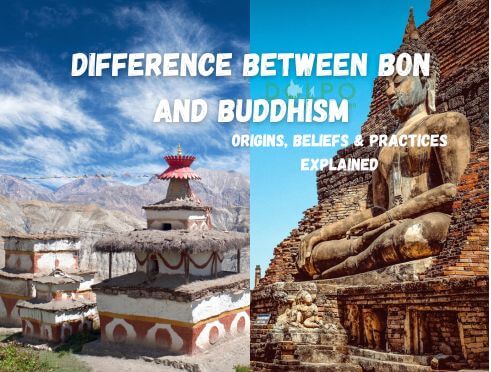
Difference Between Bon and Buddhism: Origins, Beliefs & Practices Explained
If you’ve trekked through Dolpo or Mustang, you’ve likely seen prayer flags, spinning wheels, and chanting monks but did you know not all of them follow Buddhism? Many belong to an ancient Himalayan faith called Bon.
Both Bon and Buddhism shape the culture, art, and spiritual life of Tibet and western Nepal, but they come from very different origins.
This guide breaks down everything trekkers should know about the difference between Bon and Buddhism from their founders and teachings to the rituals you’ll witness on your Himalayan journey.
Introduction to Bon and Buddhism
If you walk through Nepal’s high mountain areas like Dolpo and Mustang, you will find two main religions that have shaped the local culture. These religions have lived side by side for many years, but they are different in where they come from, what they believe, and how people practice them every day.
What is Bon?
Bon is Tibet’s indigenous pre-Buddhist religion, believed to have originated thousands of years ago in Zhangzhung, an ancient kingdom near Mount Kailash.
Its followers revere Tonpa Shenrap Miwoche as the founder a spiritual teacher who preached truth, compassion, and harmony with nature long before the historical Buddha appeared in India.
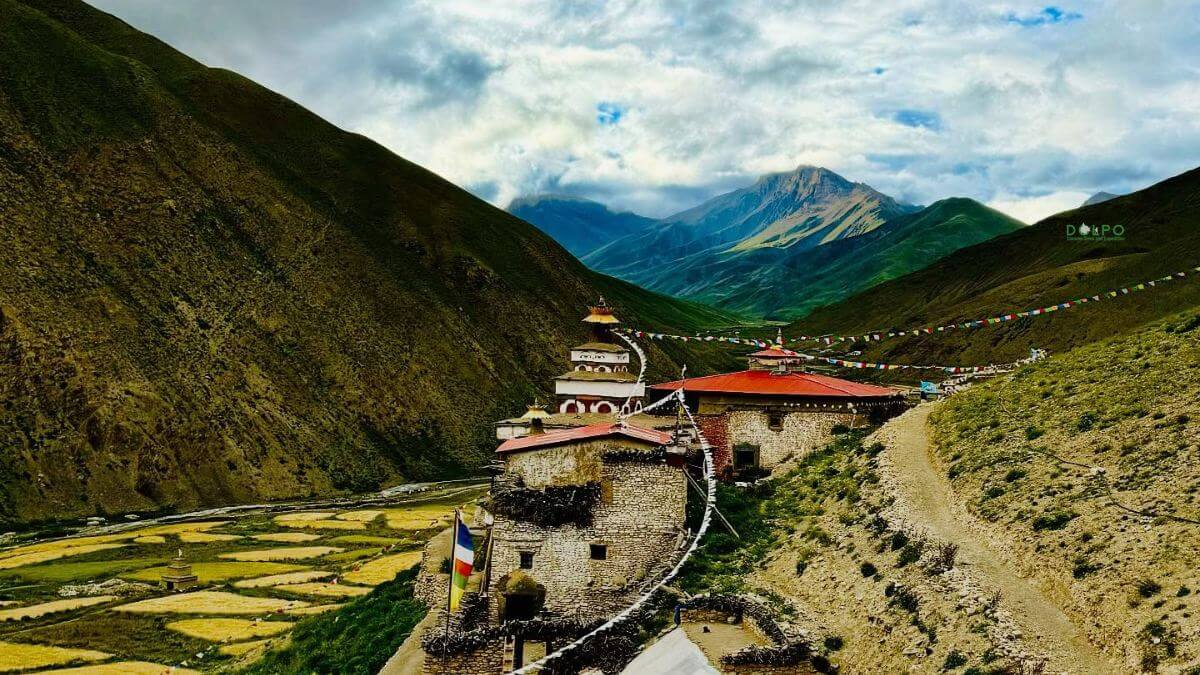
Bon is deeply animistic and shamanic. It honors nature deities, ancestral spirits, and the balance of the five elements earth, water, fire, air, and space. In remote Dolpo and Mustang, locals still perform Bon rituals to protect their homes and herds, believing that every mountain and river carries divine energy.
Planning to trek in Dolpo? You'll witness Bon traditions in their most authentic form, preserved in remote villages where time seems to stand still.
What is Buddhism?
Buddhism, on the other hand, began in India around the 6th century BCE with Siddhartha Gautama the Buddha. His teachings on the Four Noble Truths and the Eightfold Path offer a way to overcome suffering and achieve enlightenment (nirvana).

When Buddhism spread north to Tibet in the 7th–8th centuries CE, it mingled with Bon practices. The result was Tibetan Buddhism, a rich blend of Indian philosophy and local spiritualism.
Why people compare Bon and Buddhism
Both religions coexist peacefully in the Himalayas. They share sacred symbols like stupas, prayer flags, and mantras, yet their meanings differ.
Many trekkers visiting Dolpo or Humla are surprised to learn that Bon monasteries spin prayer wheels anticlockwise and chant different mantras. Understanding these distinctions adds depth to any cultural trek in Nepal or Tibet.
If you want to see these ancient traditions up close, you can trek in the Himalayan regions with Dolpo Caravan where Bon and Buddhist communities have lived side by side for hundreds of years.
How Bon and Buddhism Started
The origins of Bon religion and how Buddhism developed reveals why these traditions, despite their similarities, maintain separate identities.
Where Bon religion came from
According to Bon texts, Tonpa Shenrab descended from a celestial realm called Olmo Lung Ring, teaching humans how to live ethically and harmoniously with nature.
The faith flourished in western Tibet’s Zhangzhung Kingdom, which existed long before the Tibetan Empire. Bon priests performed rituals to control weather, heal sickness, and communicate with spirits a tradition still seen in Dolpo’s remote valleys.
When and How Buddhism Began
Buddhism emerged in Northern India, where Prince Siddhartha left his palace life in search of truth. After achieving enlightenment under the Bodhi tree, he taught how desire and ignorance cause suffering.
His followers spread the Dharma across Asia reaching Tibet centuries later via trade and royal patronage.
When Bon and Buddhism Became Different Religions
When King Songtsen Gampo introduced Buddhism to Tibet, Bon was already established. Over time, Buddhist monasteries gained royal support, while Bon evolved to preserve its identity.
By the 11th century, Bon had its own scriptures, monastic system, and philosophy making it a distinct religion recognized even by the Dalai Lama today.
Ancient Bon – The Old Faith of Tibet Before Buddhism
In Dolpo, Bon never disappeared. Locals still perform sky burials, smoke offerings, and oracular rituals rooted in Bon cosmology.
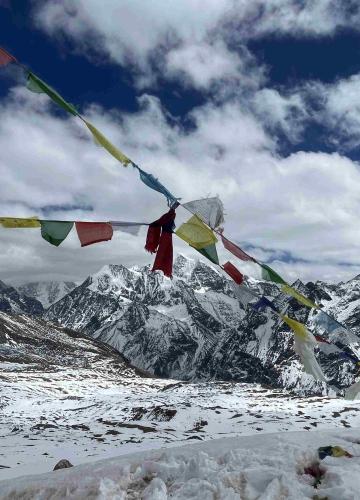
If you’re trekking through Shey Phoksundo National Park or visiting Thasung Tsoling Monastery, you can witness Bon monks chanting Om Ma Tri Mu Ye Sa Le Du, surrounded by juniper incense and blue prayer flags fluttering in the wind.
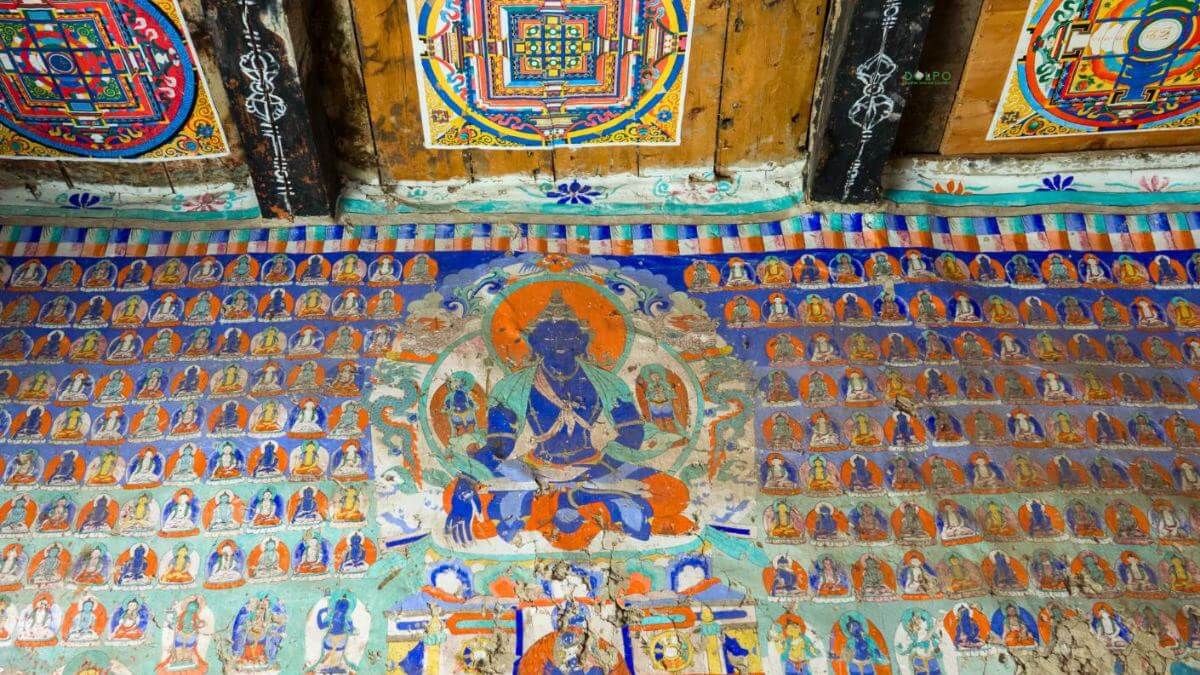
To see real Bon culture, trekking in Dolpo offers a chance to visit areas where these ancient traditions are still alive and visitors are welcome.
Main Beliefs and Teachings
While both Bon and Buddhism share some philosophical ground, the difference between Bon Buddhist religion becomes clearer when examining their fundamental teachings and worldviews.
Founders – Tonpa Shenrap and Lord Buddha
- Bon Religion Founder: Bon’s founder is Tonpa Shenrap Miwo, who according to Bon tradition, lived long before the Buddha. He is seen as a holy teacher who brought spiritual knowledge to the Himalayan region. Bon followers believe he taught many kingdoms, including Tibet, and shared rituals, rules, and ways to live in harmony with nature and spirits.
- Buddhism Founder: Siddhartha Gautama (later known as the Buddha) is the founder, who attained enlightenment and taught the path to liberation (nirvana).He lived in India around the 6th century BCE. Born a prince in Lumbini, Nepal, he left his royal life to find the truth about suffering. After meditating under the Bodhi tree, he found enlightenment and taught a path based on personal experience to reach freedom from suffering.
What Both Believe About Life, Death, and Rebirth
Despite different origins, Bon beliefs compared to Buddhism show remarkable parallels regarding existence and rebirth.
Both Bon and Buddhism accept:
- Cyclic existence (birth, death, rebirth), sometimes called samsara.
- The inevitability of suffering (dukkha) associated with being bound to cycles.
- The possibility of liberation from that cycle (though the precise goals, methods, and conceptualization differ).
The Idea of Karma and Nirvana in Both Religions
Karma: In both systems, there is a sense of cause and effect, good actions lead to better rebirth, and bad actions to worse ones. But in Bon, the interrelation with spirits, deities, cosmic forces, and land may play a more direct role.
Liberation / Eternal state: Buddhism aims for nirvana (cessation of suffering, extinguishing desire). Bon aims for a kind of harmony, spiritual balance, and sometimes uses the term zhīwa or liberation in its own terms (called "Yeshen" or primordial state). The goal is not always framed identically to the Buddhist nirvana often more relational with deities and the spiritual matrix of the world.
These spiritual differences Bon and Buddhism manifest practically when you trek through regions practicing these faiths. Buddhist practitioners focus on meditation and ethical conduct, while Bonpos additionally perform elaborate rituals to maintain balance with local spirits.
How Bon and Buddhism explain the universe and spirit
The cosmological views reveal deeper Bon Buddhism differences explained.
Bon worldview: Bon teaches that the universe began from a cosmic egg made of five elements earth, water, fire, air, and space. Bon sees the universe full of many gods, spirits, ancestors, and natural forces like mountains and rivers. These spirits are real and active, and people perform rituals to keep good relationships with them and bring harmony.
Buddhist (Tibetan) worldview: In Buddhism, beings are reborn in different realms (like humans, animals, gods) based on karma, but even gods are still trapped in the cycle of rebirth until they reach enlightenment.
Buddhism also believes in gods and protector spirits, but it teaches that everything, including these gods, is temporary and controlled by karma (actions) and emptiness (no fixed self). Buddhism does not believe in a creator god. Instead, everything happens because of causes and conditions, and everything changes all the time.
Curious about these philosophical differences in practice? Join our Phoksundo Bon cultural treks where experienced guides explain religious practices you'll witness in mountain villages.
Scriptures, Texts & Holy Books
The written traditions of Bon and Buddhism reveal their separate history of Bon vs Buddhist traditions and provide guidance to followers on different paths.
Bon’s sacred texts and stories
Bon possesses extensive scriptures organized into different collections. The most important texts include:
- The Nine Ways of Bon (Bon Theg-pa Rim-dgu) organizes teachings into progressively advanced levels, from basic rituals to highest philosophical insights. These texts were supposedly hidden during Buddhist persecution periods and rediscovered later as "terma" (treasure texts).
- Gzi Brjid (Brilliant Splendor) tells the life story of Tonpa Shenrab, similar to how Buddhist texts record Buddha's life. This extensive biography describes miracles, teachings, and the establishment of Bon religion.
- Gzer Mig (Penetrating Eye) contains philosophical teachings about the nature of reality, mind, and the path to enlightenment in Bon terms.
Buddhist Holy Books and Teachings
Buddhist scriptures are voluminous, collected over 2,500 years across different traditions.
The Tripitaka (Three Baskets) forms Buddhism's foundational texts:
- Tantras: Esoteric meditation practices and rituals
- Commentaries by great Indian and Tibetan masters
- The Tibetan Canon (Kangyur and Tengyur): Translations of Buddha's teachings and commentaries filling hundreds of volumes
How Their Writings Guide Followers Differently
The practical difference between Bon and Buddhism emerges in how followers use these texts.
Bon books guide rituals, meditation on gods, protection ceremonies, and explain their view of the universe. Bon followers learn prayers, rituals, and how to work with spirits, along with some philosophy and healing methods.
Buddhist scriptures teach ethics, meditation, wisdom, and ways to escape the cycle of rebirth. Buddhists study texts to understand ideas, support meditation, and follow strict rules for monks. They focus more on personal experience than on ceremonies.
Rituals, Prayers, and Symbols
The most visible difference between Bon and Tibetan Buddhism appears in daily religious practices, making these traditions easy to distinguish once you know what to look for.
Daily prayers and meditation in Bon vs Buddhism
Both Bon and Buddhism value daily spiritual practice, but they do it differently.
Bon: Rituals are very important. People do prayers, divination, purification, and ask for help from Bon gods and ancestors. Their meditation often includes visualizing and calling on these deities and spirits.
Bon daily practices include prayers to Tonpa Shenrab and Bon gods, meditating on protective spirits, making offerings to nature and ancestors, performing special Bon rituals, and walking around sacred places anti-clockwise.
Buddhism: Buddhism focuses more on meditation like calming the mind (shamatha) and insight meditation (vipasyana). They also recite mantras and do tantric practices. Buddhist rituals like offerings and mandalas come from tantric traditions.
Buddhist daily routines include morning prayers, bowing to Buddha statues, reciting texts like the Heart Sutra, meditating on breath or compassion, making offerings, and walking around stupas clockwise.
Tip: One easy way to tell Bon practitioners apart is if you see them walking around a monastery or stupa counter-clockwise they are following Bon tradition!
Main mantras and How They Are Used
Each mantra is taught and preserved through generations, tied to specific deities or practices, and serves as a tool for spiritual transformation or invocation.
Bon mantras:
- “Om Ma Tri Mu Ye Sa Le Du” a Bon mantra used to invoke specific deities or energies.
- Mantras invoking Shenlha Okar (White Light Deity)
- Protective mantras for specific purposes
Buddhist mantras:
- “Om Mani Padme Hum” is associated with Avalokiteshvara, compassion, and widely used in Tibetan Buddhism.
- "Om Tare Tuttare Ture Soha": Invoking Green Tara, protector from dangers
- "Gate Gate Paragate Parasamgate Bodhi Soha": From the Heart Sutra, about transcendent wisdom
Religious Symbols | Swastika & Wheels
Both Bon and Buddhism use similar symbols like swastikas, eternal knots, windhorses, and cosmic wheels, but the meanings or directions can be different.
The swastika (called Yungdrung in Bon) is in both religions, but faces different ways:
- In Buddhism, the swastika faces right and stands for Buddha’s teachings and good luck.
- In Bon, it faces left and symbolizes eternity and Bon’s ancient roots.
The Wheel symbol also appears in both:
- Buddhism uses an eight-spoked wheel representing the Eightfold Path.
- Bon has a similar wheel but with a different meaning related to Bon’s teachings.
Other symbols include prayer flags both use them, but the colors and prayers vary. Stupas are found in both religions but look a bit different. Some Bon protector gods became part of Tibetan Buddhist culture.
When trekking, pay attention to these details. They tell stories about regional variations Bon and Buddhism and how communities practice their faith.
How They Celebrate Festivals And Do Ceremonies
Bon and Buddhism have different ceremonies and festivals, often connected to local spirits, deities, and important religious events.
Bon ceremonies may center around local spirits, mountains, deities, ancestral appeasement, seasonal rites, and protectors. Bon Losar happens about a month before the Buddhist New Year and honors Tonpa Shenrab and unique protector deities.
Buddhism has its core festivals like Losar (Tibetan New Year), Saga Dawa (celebrating Buddha’s birth, enlightenment, and death), Gunla, Vesak, Dumje (a Sherpa festival) and others tied to Buddha’s life events. In Himalaya, these often overlap or synchronize with local Bon or indigenous festivals.
Visiting during festival times offers a great way to see how Bon and Buddhism differ in their cultural and religious practices, beyond just their beliefs.
Want to experience authentic religious festivals? Our seasonal trekking itineraries align with major Buddhist and Bon celebrations in remote mountain regions. Contact Dolpo Caravan Trek to book your Dolpo Trek.
Monks, Teachers, and Followers
The religious communities of Bon and Buddhism share organizational structures while maintaining distinct identities and practices.
Who leads Bon and Buddhist Temples
Bon monasteries are led by Bonpo teachers or abbots, such as the heads of Menri, Triten, and Yungdrung monasteries. Bon leadership also includes hereditary priests and Shen priests, a tradition not found in Buddhism.
Buddhist monasteries (gompas) are led by:
- Abbots (Khenpos), senior monks managing the monastery
- Rinpoches, recognized reincarnated masters
- Lamas, teachers who may or may not be monks
- Tulkus, reincarnated high lamas guiding communities
Both Bon and Buddhism have similar monastic structures, but Bon’s hereditary priesthood is a key difference since Buddhist monasticism rejects family inheritance of religious roles.
Monks, Priests, and How They Live
Bon clergy include celibate monks and nuns, plus married priests who also lead rituals. They wear white or red robes and follow strict vegetarian diets.
Buddhist monks and nuns follow monastic codes Vinaya rules, strict celibacy rules, wear maroon robes, and focus on study, meditation, and simple living. Vegetarianism is encouraged but optional.
Bon’s mix of celibate and married priests (Ngakpa) helps it survive in small communities, while Buddhist monastic life is more uniform and strict. Both share spiritual devotion but differ in lifestyle.
Rules and Moral Codes They Follow
In Buddhism, monastics follow the Vinaya (monastic code) strictly, which covers dozens to hundreds of rules.
In Bon, while ethical precepts exist, some Bon clergy (especially hereditary ones) may not follow the same celibacy or strict monastic rules; the structure is less uniform across all Bon traditions.
The Bon deities vs Buddhist ones influence ethical practice differently. Bonpos consider maintaining good relationships with local spirits part of ethical living, while Buddhists focus more exclusively on mental cultivation and compassion.
What normal people (non-monks) do in each religion
Lay Bon followers may consult Bon priests for rituals (birth, death, illness, protection), make offerings, observe fasts or ritual days, and recite Bon prayers.
Lay Buddhists do merit-making (offerings, visiting temples, recitation, prostrations), meditation, and ethical living in daily life.
Interested in homestays with local families? Experience daily religious life firsthand in villages where Bon or Buddhist traditions shape every aspect of community life.
Bon and Buddhism in Different Regions
Geography has shaped how these religions developed and maintained their identities, creating fascinating regional variations Bon and Buddhism that trekkers can observe throughout the Himalayas.
Bon in Tibet, Nepal, and Bhutan
Bon has important centers in Tibet, Nepal, and Bhutan, showing how it has survived over time. These regions tell the story of how Bon continues to live despite challenges.
In Tibet, Bon is mainly found in certain places like Menri and Yungdrung monasteries. Eastern Tibet (Kham) and areas near Mount Kailash in Western Tibet keep Bon traditions alive, though Buddhist culture is stronger in central Tibet.
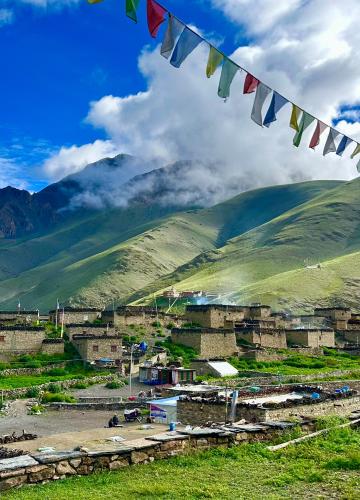
In Nepal, Bon is the strongest in remote Himalayan areas like Dolpo, where villages such as Ringmo, Dunai, and Tarap still practice Bon. Upper Mustang has Bon communities living alongside Buddhists. In Kathmandu, Triten Norbutse Monastery supports modern Bon revival and outreach.
In Bhutan, Buddhism is the main religion, but Bon influences exist quietly within local culture and rituals, blending with Buddhist practices.
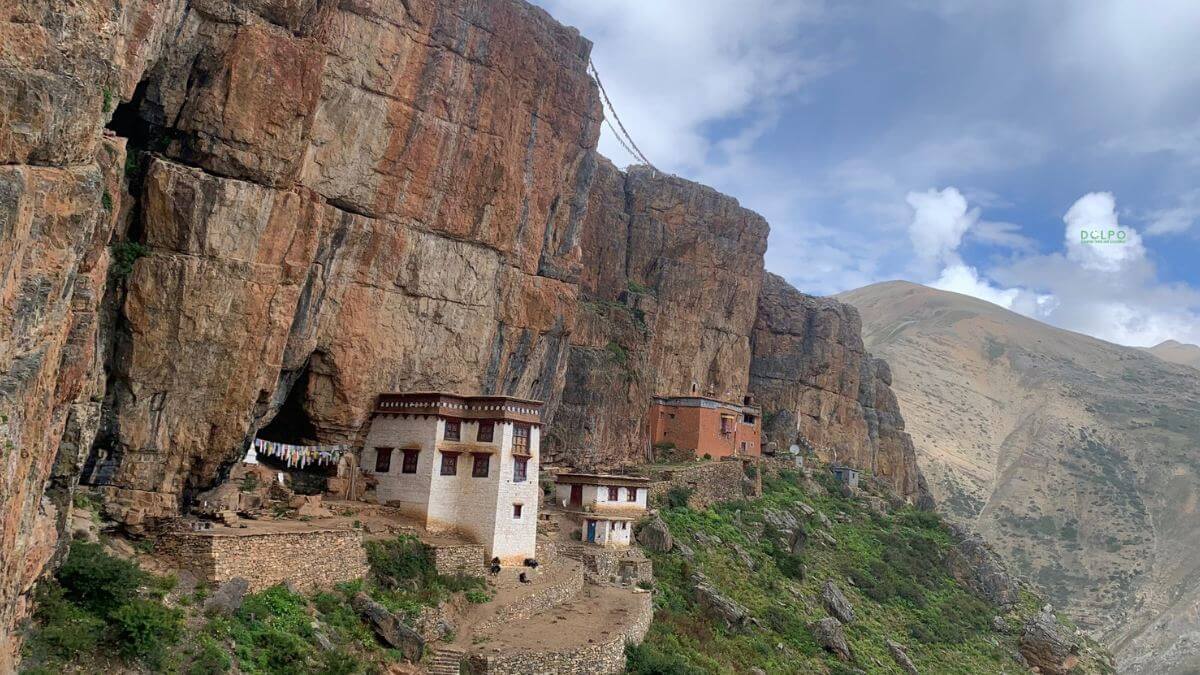
Buddhism across the Himalayas and beyond
This global spread contrasts sharply with Bon's concentrated geographical presence, highlighting the difference between Bon and Buddhism in scale and influence.
Key Himalayan areas include:
- Nepal, the Buddha’s birthplace, with strong Tibetan Buddhism in the mountains and Newar Buddhism in Kathmandu
- Bhutan, where Vajrayana Buddhism is the state religion
- Tibetan regions like the Tibetan Autonomous Region and nearby provinces
- Ladakh and Sikkim, important centers of Tibetan Buddhist culture
Beyond the Himalayas, different forms of Buddhism are practiced:
- Theravada Buddhism in Southeast Asia
- Mahayana Buddhism in East Asia, with its own unique styles
- Growing Buddhist communities in Western countries
How local culture changed both religions
Buddhism and Bon mixed with local beliefs and traditions in the Himalayas, sharing gods, rituals, and symbols.
Buddhism:
- Added local gods as protectors
- Used shamanic healing
- Built temples with local styles
- Included local festivals
Bon:
- Reorganized like Buddhism
- Adopted some Buddhist ideas
- Kept shamanic practices
- showcasedd its ancient roots
Modern Status, Similarities, Misconceptions
The practice helps you appreciate what you witness while avoiding common misunderstandings about these living traditions.
Modern Bon: Revival, Recognition, Demographics
Bon has recently revived with restored monasteries and global recognition. It is officially one of Tibet’s religions, but remains smaller than Buddhism.
Around 200,000–300,000 people follow Bon, mainly in Tibet, Dolpo (Nepal), and abroad.
Key points:
- His Holiness Lungtok Tenpai Nyima leads Bon worldwide.
- Triten Norbutse Monastery in Kathmandu is a Bon center.
- Bon is studied more and recognized by UNESCO.
- Challenges include fewer resources, remote communities, and pressure from Buddhism.
- Younger Bon followers often move to cities.
- Bon teachings spread online, with English translations and growing interfaith talks.
- Tourism supports Bon areas.
Bon keeps its old traditions while adapting to modern life.
Similarities & Overlapping Practices
The similarities and differences Bon Buddhism create fascinating overlaps that confuse casual observers.
- Bon and Buddhism share many similarities, like monks, rituals, meditation, mantras, and symbols, which can confuse outsiders.
- Both have prayer flags, wheels, robes in different colors, and belief in karma, rebirth, and liberation. They also focus on compassion and non-violence.
- Some Bon groups even follow Buddhist monastery styles. These similarities grew through centuries of interaction, making it hard to separate the original Bon from Buddhist influence.
Why Bon is Sometimes Mistaken for Buddhism
Because outwardly many practices look alike, many travellers or casual observers assume Bon is a branch of Tibetan Buddhism. But as we’ve seen, Bon is not Buddhism - it has its own identity, history, and theology.
This confusion happens for a few reasons:
History:
- Bon and Buddhism have lived together for centuries, sharing some ideas and traditions.
- Bon changed over time and adopted some Buddhist ways of organizing monasteries.
- Some Bon texts show Buddhist influence.
- People from both religions have married and traded with each other.
Similarities:
- Both use similar ritual objects and monastery styles.
- Both practice meditation and study philosophy.
- Both have monks and symbolic images that look alike.
Politics and misunderstanding:
- In China, Bon is sometimes grouped as a part of Buddhism.
- Western people have often mixed them up because of limited knowledge.
- Some Tibetan Buddhists once looked down on Bon as less important.
Despite this, scholars and Bon followers say clearly that Bon is a separate, ancient religion that existed before Buddhism came to Tibet, even if they have influenced each other over time.
Common Misconceptions: “Bon is not Buddhism”.
- Misconception 1: Bon is just “pre-Buddhist Tibetan shamanism.” While Bon has shamanic roots, it evolved into a highly refined religious tradition, not just a folk ritual.
- Misconception 2: "Bon copied everything from Buddhism" Reality: Though mutual influence occurred, Bon maintains distinct texts, deities, rituals, and cosmology rooted in pre-Buddhist Tibet.
- Misconception 3: Bon practitioners worship evil spirits or demons. In fact, Bon has protector deities and rituals to pacify harmful spirits, much like Buddhism’s protective deities.
- Misconception 4: "All Tibetan culture is Buddhist" Reality: Much Tibetan culture, including deities, rituals, and worldviews, originated in Bon and was absorbed into Tibetan Buddhism.
- Misconception 5: Bon has no philosophy or ethics. On the contrary, Bon has its own moral and metaphysical framework.
- Misconception 6: "Bon is dying out" Reality: While facing challenges, Bon maintains dedicated communities and is experiencing revival through international recognition.
Core Differences Between Bon and Buddhism
| Aspect | Bon Religion | Buddhism |
| Founder | Tonpa Shenrap Miwo (pre-Buddhist Tibet) | Siddhartha Gautama (6th century BCE, India) |
| Origin | Ancient Zhangzhung, Western Tibet | Northern India, spread to Tibet later |
| Core Goal | Liberation through harmony with nature and spiritual balance | Liberation from suffering (Nirvana) through Eightfold Path |
| Deities & Pantheon | Many gods, protectors, and ancestral spirits | Non-theistic; Buddhas and Bodhisattvas |
| Main Texts | Nine Ways of Bon, Gzi Brjid, Gzer Mig | Tripitaka, Sutras, Tantras |
| Mantra Example | “Om Ma Tri Mu Ye Sa Le Du” | “Om Mani Padme Hum” |
| Ritual Direction | Counter-clockwise circumambulation | Clockwise circumambulation |
| View of Karma | Action tied with nature and spirits | Moral law of cause and effect |
| Monastic Tradition | Both monastic and hereditary priests | Structured monastic orders, Vinaya rules |
| Modern Presence | Practiced in Tibet, Dolpo (Nepal), Bhutan | Global spread, millions of followers |
Final Thoughts
Understanding Bon and Buddhism makes your visit to Nepal and Tibet more meaningful. Both are living traditions with different beliefs and practices that shape the culture.
Bon is an ancient religion still practiced today, influencing Buddhist culture in the Himalayas. When trekking in places like Dolpo and Mustang, asking if a site is Bon or Buddhist can reveal important stories.
Bon and Buddhism have coexisted peacefully for centuries, each with unique chants and rituals. Both teach ways to find peace and reduce suffering. Respect and curiosity will help you appreciate the rich spiritual life behind every ritual and monastery in the mountains.
Ready to witness these living traditions? Explore our Dolpo Cultural Trek or Upper Mustang Trek to witness living Bon monasteries and Tibetan Buddhist shrines in harmony.
FAQs
What is the difference between Bon and Tibetan Buddhism?
Bon focuses on connecting with spirits and nature through rituals, while Buddhism focuses on achieving enlightenment by overcoming suffering.
Is Bon a form of Buddhism or a separate religion?
No. Bon is an independent ancient religion of Tibet that existed before Buddhism arrived. However, over centuries, both influenced each other deeply.
Who founded Bon religion and how does that differ from the founder of Buddhism?
Bon's legendary founder is Tonpa Shenrab Miwoche, a mythical sage from ancient times tied to Tibetan shamanism. Buddhism's founder, Siddhartha Gautama (the Buddha), was a historical figure from 5th-century BCE India who taught ending suffering through the Eightfold Path.
What are the key beliefs in Bon vs Buddhism (karma, rebirth, liberation)?
Both share beliefs in karma, rebirth, and liberation from the cycle of life, but Bon includes a unique three-world cosmology with gods and spirits, emphasizing harmony with nature. Buddhism focuses on the Four Noble Truths and nirvana without Bon's ancestral or elemental emphases.
How do rituals in Bon differ from Buddhist rituals?
Bon rituals use anti-clockwise movements, invocations of local spirits, and sometimes animal offerings for protection and balance. Buddhist rituals involve clockwise paths, mandalas, and mantras for compassion and meditation, making Bon more shamanic and earthy.
Are Bon sacred texts different from Buddhist scriptures?
Yes, Bon's texts like the Kangyur and Tengyur cover unique cosmology and rituals from pre-Buddhist myths, structured like Buddhist canons but in Tibetan. They differ from Buddhist sutras, which center on the Buddha's teachings, though Bon's were canonized to mirror them.
How does Bon influence Buddhist culture in Tibet and surrounding regions?
Bon shaped Tibetan Buddhism by adding rituals, deities, and practices like mountain worship and sky burial to Buddhist traditions. In Tibet, Bhutan, and Nepal, this blend appears in shared festivals, art, and medicine, creating a unique spiritual mix.
Do Bon practitioners follow Buddhist monastic rules?
Bon has its own Vinaya rules similar to Buddhism's, with monks wearing robes and following celibacy, but adapted for Bon's focus on purity and spirit rituals. They emphasize elemental harmony over pure Buddhist meditation.
Why do Bon devotees circumvent temples anti-clockwise while Buddhists go clockwise?
Bon's anti-clockwise path follows primal energies and the moon, linking to shamanic roots and ancient spirits. Buddhists go clockwise to mimic the sun and dharma's positive flow, promoting enlightenment and merit.
What modern similarities do Bon and Buddhism share?
Both promote meditation, ethics, and compassion to ease suffering, with shared mindfulness and non-violence practices. They now collaborate on Himalayan environmental efforts and global teachings on inner peace and tolerance.



Leave Your Comment