
Dolpo Trek Safety Guide: Tips for a Safe Trek in Nepal
Dolpo trek safety is the most important thing to understand before you set foot on one of Nepal's most remote and rewarding trails. This guide covers everything a trekker needs to know, from altitude risks and acclimatization protocols to seasonal windows, gear, and emergency evacuation. Whether you are planning Lower or Upper Dolpo, the information here will help you assess your readiness and prepare at every level.
By the time you finish reading, you will know how high the trail actually goes, what acute mountain sickness looks and feels like, which season gives you the best conditions, what gear is non-negotiable, and how to get emergency help when there is no mobile signal for days in any direction. If you want to trek Dolpo safely, this is the right place to start.
Quick Safety Summary for the Dolpo Trek
- Dolpo is one of the most remote trekking regions in Nepal, so safety preparation is essential.
- Altitude sickness is the biggest risk, especially in Upper Dolpo above 5,000m.
- Proper acclimatization, slow ascent, and hydration help reduce AMS risk.
- The safest trekking seasons are mid-September to early November and mid-April to early June.
- A licensed guide is legally required for Upper Dolpo trekking.
- Carry essential safety gear like a pulse oximeter, water purifier, first aid kit, and a -15°C sleeping bag.
- Mobile networks are unreliable in remote areas, so satellite communication is important.
- Weather can change quickly, especially near high passes
- Travel insurance should include helicopter rescue above 5,000 meters.
- Experienced local guides improve safety and emergency response.
Why Safety Planning Is Critical for the Dolpo Trek
Dolpo is harder to prepare for than many Nepal treks because the region is very remote. Rescue services, hospitals, and mobile networks are limited in Upper Dolpo. This means a single bad decision at altitude can become a life-threatening situation with no fast way out.
Upper Dolpo pushes into high terrain above 5,000m with multi-day stretches between settlements. Trekkers planning the full Upper Dolpo trek should prepare carefully for long remote sections and high-altitude passes.
The Lower Dolpo Trek, while more accessible with a ceiling around 4,500m, still carries meaningful risk for unprepared trekkers. The table below shows the core risk gradient between the two zones.
| Risk Factor | Lower Dolpo | Upper Dolpo |
| Max Elevation | ~4,500m | ~5,200m |
| AMS Risk | Moderate | High |
| Rescue Access | Moderate | Very Limited |
| Mobile Network | Partial | None |
| Required Guide | Recommended | Legally Mandatory |
| Seasonal Flexibility | Moderate | Narrow |
Understanding this landscape before you book is not optional, and it is the foundation of every preparation decision that follows.
Planning Dolpo becomes safer with the right local support. Explore our Dolpo trekking packages and choose the itinerary that matches your experience and fitness level.
Altitude Safety on the Dolpo Trek
Altitude is the single biggest threat to Dolpo trek safety. The Nepal Himalayas do not forgive shortcuts in acclimatization, and Dolpo's elevation profile makes that clear from the first day above Juphal.
How High Does the Dolpo Trek Get?
The Dolpo trek reaches elevations above 5,000 meters in Upper Dolpo. Lower Dolpo begins at roughly 2,100m near Juphal Airport and ascends to approximately 4,500m through Shey Phoksundo National Park, passing the glacial-blue Phoksundo Lake at 3,611m. Upper Dolpo climbs considerably higher across three demanding passes:
- Kagmara La: 5,115m
- Numa La: 5,190m
- Baga La: 5,070m
Recognizing Acute Mountain Sickness (AMS)
Acute Mountain Sickness (AMS) happens when your body struggles to adjust to high altitude and lower oxygen levels. Recognizing it early is one of the most critical Dolpo Trek safety skills you can develop.
If symptoms worsen after 24 hours of rest at the same altitude, descend. Never ascend with any AMS symptom active. No summit or schedule is worth your life on a remote trail where evacuation takes hours. You can also read our detailed Dolpo altitude sickness guide to better understand early symptoms and prevention methods.
Acclimatization Tips for the Dolpo Trek
The safest way to avoid altitude sickness is to climb slowly and give your body time to adjust. Rest days built into your itinerary are important safety measures, not schedule padding. For Dolpo trek altitude safety, recommended acclimatization stops include the following:
- Dunai (2,140m): A full arrival rest day before climbing higher
- Phoksundo Lake (3,611m): One complete rest day before the upper section
- Pre-pass camps: Sleep below each major pass and cross early in the morning when conditions are stable
Drink at least 3-4 liters of water every day during the trek. Avoid alcohol and sleeping tablets above 3,000 m, both suppress breathing during sleep, which is exactly when your body needs to work hardest to adapt. Following proper acclimatization and AMS tips greatly improves trekking safety above 4,000 meters.
Altitude Medication: What Trekkers Carry
Trekkers on the Dolpo trek commonly carry Diamox (acetazolamide) to support acclimatization, along with dexamethasone and nifedipine for altitude emergencies. However, all medication should be prescribed by a doctor before departure, as dosage and suitability depend on individual health history.
Common medicines trekkers carry for high-altitude trekking:
- Diamox (acetazolamide)
- Dexamethasone
- Nifedipine
(Note: Consult your doctor well before departure, carry what is prescribed for your situation, and know when each medicine is appropriate versus when descent is the only correct response.)
Physical Fitness and Difficulty Level
The Dolpo trek requires trekkers to hike 6-8 hours daily over steep, rocky, and often unmarked terrain at altitude. This makes it one of Nepal's most physically demanding routes and requires at least three months of dedicated preparation.
Heavy backpacks make trekking much harder at high altitude. A personal carry of 8-10kg is the ceiling most trekkers can sustain over multiple high-altitude days. Use porters wisely and avoid carrying unnecessary gear.
Prior altitude experience above 4,000m is strongly recommended before Upper Dolpo. Completing the Annapurna Circuit Trek or an Island Peak approach first gives you a real sense of how your body responds to elevation. That information is genuinely valuable for safe trekking in Dolpo.
Best and Off-Seasons for Safe Trekking in Dolpo
The best season for the Dolpo trek is post-monsoon, from mid-September to early November, when trails are stable, skies are clear, and high passes are safely crossable. Pre-monsoon (mid-April to early June) is also viable, while monsoon and winter carry serious risk.
Season selection is one of the most overlooked elements of Dolpo trek safety planning. Dolpo receives less rainfall than Everest and Annapurna because it lies in a rain-shadow region. But the rain shadow does not make Dolpo season-proof.
| Season | Window | Safety Verdict |
| Post-Monsoon | Mid-Sept to Early Nov | Best |
| Pre-Monsoon | Mid-April to Early June | Good |
| Monsoon | July - August | Risky |
| Winter | Dec - February | Avoid |
Planning a Dolpo trek in any season? Dolpo Caravan Treks provides experienced local guides, safe itineraries, and expert support for every journey. Contact Us to plan your adventure safely.
Dolpo Trek Precautions: Gear and Packing for Safety
The most critical gear for Dolpo trek safety includes a -15°C sleeping bag, a pulse oximeter, and a four-layer clothing system. This is because temperatures drop well below freezing at high camps, and rescue takes hours.
A proper kit is one of the most concrete and controllable Dolpo trek precautions a trekker can take. The gear section below focuses on items that have direct safety implications. Choosing the right trekking equipment for Nepal is especially important in remote regions like Dolpo.
Clothing and Layering System
The Dolpo trek requires a four-layer clothing system: a moisture-wicking base layer, an insulating mid-layer, a waterproof hardshell, and a down jacket rated to -10°C or more.
Dolpo's temperature swings are severe. Warm afternoons at lower elevations transition to freezing nights at high-altitude camps. A functional layering system is your primary thermal protection.
Key accessories:
- Warm hat covering ears
- Gloves (inner liner gloves plus waterproof shell mittens)
- Gaiters for snow and scree on high-altitude sections
Essential Safety Items
The non-negotiable safety items for the Dolpo trek are a pulse oximeter, a water purification filter with chemical backup, a fully stocked first aid kit, and a sleeping bag rated to -15°C for Upper Dolpo. A complete trekking gear checklist for Nepal can help trekkers avoid missing important safety items.
To make the journey safer and more comfortable, Dolpo Caravan Treks helps trekkers prepare with proper safety guidance, experienced Dolpo guides, first aid support, satellite communication devices, and detailed equipment recommendations before the trek begins.
The team carefully monitors acclimatization schedules, trail conditions, and weather changes throughout the journey to support safe trekking in Dolpo.
Recommended Read: Group vs Private Dolpo Trek
Guide Requirement and Safe Trekking in Dolpo
Upper Dolpo is a restricted trekking zone under Nepal's Department of Immigration regulations. Solo trekking is allowed but with a licensed trekking guide. Beyond compliance, a Dolpo-experienced guide is a genuine Dolpo trek safety asset. Understanding why Dolpo is a restricted region helps trekkers prepare permits and logistics correctly.
Experienced guides understand local weather, trail risks, and emergency routes. They manage logistics, including food sourcing, camp setup, and porter communication, so your energy goes toward safe trekking in Dolpo rather than operational problems.
Recommended Read: Is It Possible for Dolpo Trek without Guide?
Major Safety Risks During the Dolpo Trek
The four major safety risks on the Dolpo trek are remote communication failure, sudden weather deterioration, contaminated food and water, and delayed emergency evacuation. All of these require specific preparation before entering the region.
Remote Communication Risk
Upper Dolpo has no reliable mobile network. Once you move beyond lower-elevation villages, a satellite communicator is your only link to the outside world. Before departure:
- Register your complete itinerary and daily camp schedule with your trekking agency
- Leave a full route copy and emergency contacts with a trusted person at home
- Agree on a daily check-in protocol with your agency via satellite device
- Confirm your insurer has a 24-hour emergency coordination line and your satellite device ID registered with them
A missed check-in should trigger a pre-agreed escalation sequence, confirm that protocol with your agency before you leave Kathmandu.
Weather Risk
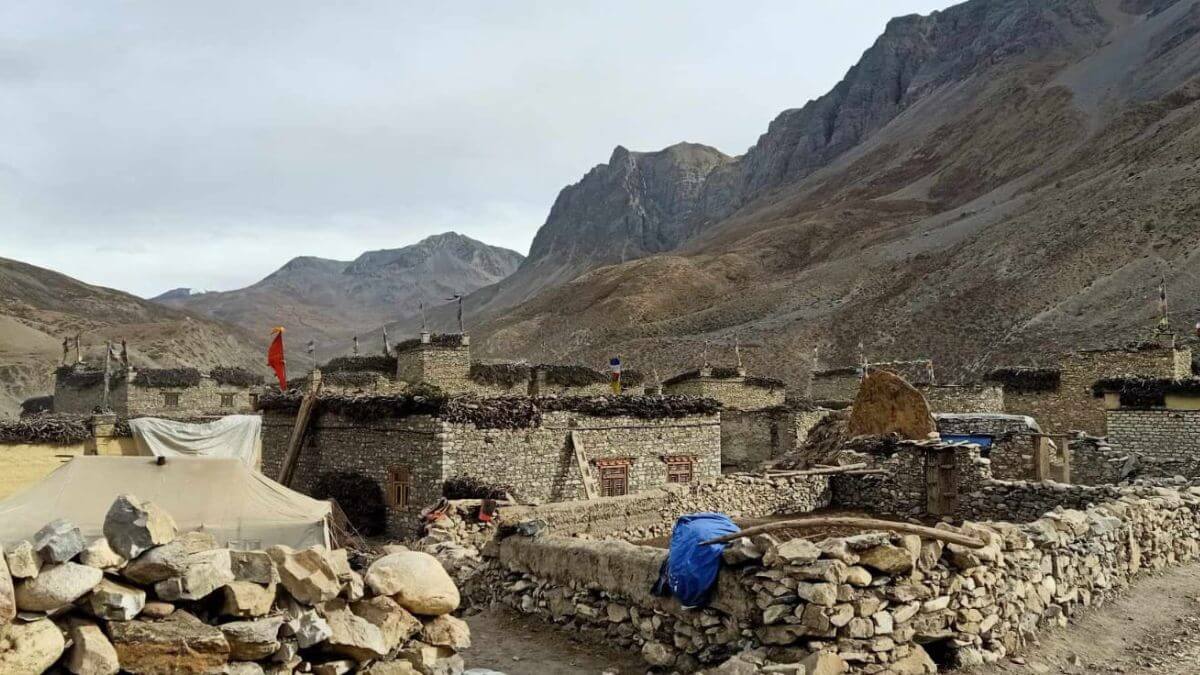
The most dangerous weather risks on the Dolpo trek are sudden snowstorms that close high passes, freezing overnight temperatures below -15°C, strong winds on exposed ridgelines, and swollen river crossings after rainfall. All of these can develop within hours on this high-altitude route.
Always cross major passes before midday. Weather typically deteriorates in the afternoon. If clouds are building on a pass by 9am, the correct call is often to wait or turn back.
Food and Water Risk
Every water source on the Dolpo trek, including streams and Phoksundo Lake, must be treated with both a filter and chemical backup. Teahouse menus in Dolpo are limited, and food hygiene standards vary considerably. Dal bhat (rice and lentils) is the safest, most consistent option, cooked hot and freshly prepared at each stop.
Avoid raw vegetables, unpeeled fruit, and anything left unrefrigerated. Diarrheal illness at 4,500 m causes rapid dehydration that directly compounds altitude risk. Prevention is vastly easier than treatment in the field.
Emergency Evacuation Risk
Emergency helicopter evacuation from Upper Dolpo costs USD 3,000-6,000 and lands at Juphal Airport, Ringmo, or Dunai. Travel insurance must explicitly cover high-altitude evacuation above 5,000m. Many standard adventure policies cap at 4,500m and will not cover a rescue in Upper Dolpo.
Before departure, verify your travel insurance:
- Explicitly covers high-altitude helicopter evacuation above 5,000m
- Does not require large upfront payment before dispatch
- Includes a 24-hour emergency coordination line
The emergency evacuation costs fall entirely on the trekker without appropriate cover.
Experienced local guides make remote trekking much safer. Meet our experienced Dolpo trekking team and see how we support trekkers throughout the journey.
How Dolpo Caravan Treks Prioritizes Your Safety
Dolpo Caravan Treks prioritizes Dolpo trek safety by building every itinerary around structured acclimatization, licensed local guides, satellite communication, and pre-departure emergency planning. This is because remote high-altitude trekking demands preparation specific to this terrain, not a generic mountain approach.
- Licensed and experienced Dolpo trekking guides for every trip
- Carefully planned acclimatization days to reduce altitude sickness risk
- Satellite communication devices carried during remote sections
- First aid–trained guides prepared for mountain emergencies
- Emergency evacuation coordination support when needed
- Regular weather and trail condition monitoring throughout the trek
- Safe and hygienic food, water, and accommodation arrangements
- Pre-trek safety briefing covering AMS symptoms, gear, and emergency procedures
- Proper permit handling and compliance with Nepal government regulations
- Small group management for better care, communication, and support on the trail
The goal is straightforward: give every trekker the preparation and on-trail support to complete the route safely and return with the experience intact.
Final Thoughts
Dolpo is one of Nepal's most extraordinary trekking destinations, a high, remote landscape shaped by Tibetan Buddhist culture and untouched Himalayan terrain. The challenge is real. But Dolpo trek safety is not a matter of luck or exceptional toughness. It is a matter of honest preparation, the right support structure, and smart decision-making on the trail.
Altitude, weather, and remoteness are manageable risks when approached with knowledge and the correct gear. The single most valuable step you can take before departure is choosing a Nepal Tourism Board-registered agency with genuine, documented Dolpo experience, one that treats acclimatization, communication, and emergency planning as core parts of the itinerary rather than footnotes.
Dolpo Caravan Treks is built around exactly that principle, offering structured itineraries, licensed local guides, and end-to-end emergency preparedness for every departure into this remote region.
A safe Dolpo trek starts with good planning and trusted local support. Contact Dolpo Caravan Treks for expert guidance before your adventure begins.
FAQs
Is the Dolpo trek safe?
Yes, the Dolpo Trek is safe with proper preparation, acclimatization, and an experienced licensed guide. The biggest risks are altitude sickness, remote terrain, and changing weather conditions.
Can I do the Dolpo Trek without a guide?
No. Upper Dolpo is a restricted area under Nepal's Department of Immigration regulations. A licensed guide is legally required, as it helps with navigation, permits, safety, and emergency support in remote areas.
How difficult is the Dolpo Trek?
The Dolpo Trek is considered strenuous because of long walking days, steep trails, and high altitude passes above 5,000 meters. Good fitness and prior trekking experience are strongly recommended.
What altitude sickness risks exist in Dolpo?
Altitude sickness is one of the biggest risks during the Dolpo Trek, especially above 3,500 meters. Slow ascent, hydration, and proper acclimatization are essential for safe trekking.
How do trekkers get emergency rescue in Dolpo?
Emergency rescue in Dolpo is usually done by helicopter evacuation. Since mobile networks are unreliable, satellite communication devices are strongly recommended during the trek.
What is the best season for safe trekking in Dolpo?
Autumn (September to November) and Spring (April to June) are the safest seasons for trekking in Dolpo. These months usually offer stable weather, clearer skies, and safer trail conditions.
Is Upper Dolpo more difficult than Lower Dolpo?
Yes, Upper Dolpo is more challenging because it reaches higher elevations and has more remote trails with limited facilities. Lower Dolpo is comparatively easier but still requires good preparation.
What fitness level does the Dolpo Trek require?
Trekkers should be able to walk 6-8 hours daily on steep and rocky trails at high altitude. Cardio training and hiking preparation for at least 2-3 months are highly recommended.
What safety gear is essential for the Dolpo Trek?
Essential safety gear includes a warm sleeping bag, waterproof clothing, trekking boots, water purifier, first aid kit, pulse oximeter, and altitude medication prescribed by a doctor.
Is the Dolpo Trek suitable for beginners?
Lower Dolpo can suit fit beginners with proper guidance and preparation. Upper Dolpo is better suited for experienced trekkers because of its remoteness and high-altitude challenges.

Leave Your Comment