
Accommodation in Dolpo: Tea Houses vs Camping
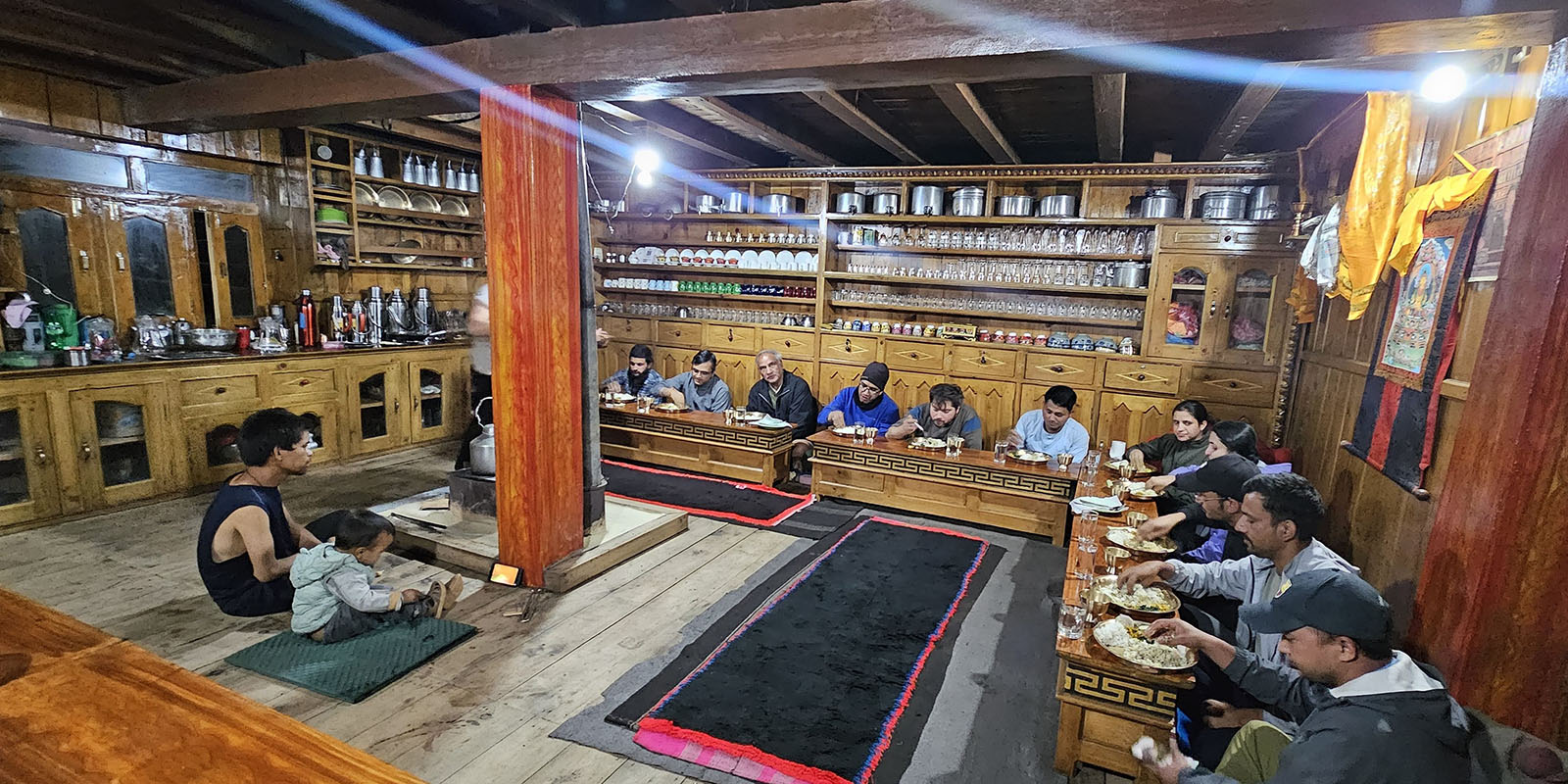
Accommodation in Dolpo ranges from simple tea houses in Lower Dolpo to organized camping expeditions in Upper Dolpo. Lower Dolpo's main villages have simple family-run lodges with basic rooms and local meals. Upper Dolpo has limited seasonal tea houses and almost no permanent lodges, so a full expedition camping setup with tents, guides, cooks, and porters is the only way to trek the region.
Dolpo is one of Nepal's most remote trekking regions, lying north of the Dhaulagiri massif in Nepal's trans-Himalayan zone, sharing a cultural and geographic border with Tibet. There are no heated lodges, no reliable Wi-Fi, and no guaranteed hot showers anywhere on the trail.
This guide from Dolpo Caravan Treks covers everything you need to know about accommodation in Dolpo, from tea houses in Lower Dolpo to camping expeditions in Upper Dolpo, so you can plan your trek with realistic expectations.
Quick Guide to Accommodation in Dolpo for Trekkers
- Lower Dolpo has basic tea houses in main villages like Juphal, Dunai, and Ringmo.
- Camping is required even on Lower Dolpo's more remote stretches.
- Upper Dolpo has very limited accommodation infrastructure.
- Most Upper Dolpo routes rely on organized camping logistics.
- Homestays are available in select villages, most notably Dho Tarap in Upper Dolpo
- Shared bathrooms are the norms, but there are no reliable hot showers.
- Electricity is unreliable; solar charging is available in larger villages only
- A sleeping bag rated to -15°C is essential regardless of route.
Why Accommodation in Dolpo Is Different From Other Treks in Nepal
Dolpo is one of Nepal’s most remote trekking regions, so accommodation works very differently compared to Everest, Annapurna, or other treks. Three factors drive this difference:
- Extreme Remoteness: Most villages don't have road connections, so everything comes in on a mule, a porter's back, or a plane, which makes food and construction materials expensive.
- Long Distances Between Settlements: The trails are long, and you will easily walk a whole day through the wild without seeing a single village or lodge.
- Harsh climate and restricted-area regulations: The short farming season limits how much surplus food local families can offer trekkers.
- Restricted-area permits (required for both Upper and Lower Dolpo) also shape how agencies structure logistics, especially in Upper Dolpo's most remote corridors.
This combination of isolation, climate, and regulation shapes every aspect of the trekking experience in Dolpo, including where you sleep, what you eat, and how far you can go without a support team behind you.
Want to experience Dolpo the right way? Dolpo Caravan Treks offers expert-guided tea house and camping treks across both Upper Dolpo and Lower Dolpo.
Upper Dolpo vs Lower Dolpo: accommodation at a glance
Lower Dolpo supports basic lodge trekking in several villages, while Upper Dolpo depends more heavily on organized expedition logistics.
| Accommodation | Lower Dolpo | Upper Dolpo |
| Tea Houses/Lodges | Available in main villages | Extremely limited; cannot be relied upon |
| Camping | Required on remote stretches | Required for the majority of the route |
| Infrastructure level | Basic but functional | Expedition-level logistics required |
Lower Dolpo allows for a lighter, more flexible approach. Upper Dolpo demands full expedition planning from day one, there is no hybrid option.
Tea Houses vs Camping in Dolpo
Accommodation in Dolpo is divided between tea houses and camping. Tea houses and camping offer very different trekking experiences in Dolpo. Tea houses provide simple local accommodation with shared dining spaces, while camping expeditions offer greater logistical support and flexibility in remote mountain terrain.
Tea House Accommodation in Lower Dolpo
Lower Dolpo has basic tea houses and Lower Dolpo trekking lodges in its main villages, but camping is still required for much of the route as settlements become sparse on higher and more remote stretches.
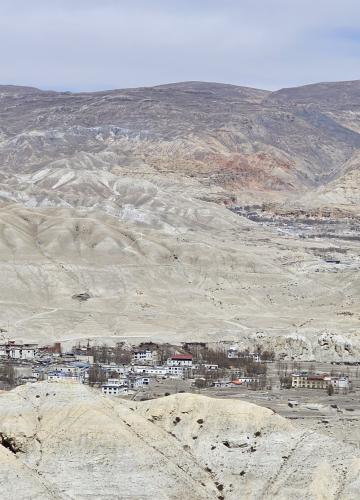
Tea houses in Lower Dolpo are found in the main villages along the route, including Juphal, Dunai, Tarakot, and Ringmo near Phoksundo Lake. These are simple family-run lodges. Expect a wooden bed with a thin mattress, a shared dining area where everyone eats together, and a short menu built around what is locally available, such as dal bhat, noodle soup, eggs, potatoes, and tea.
Do not expect luxury. But do expect warmth, the kind that comes from eating a hot meal at a communal table, watching village life unfold outside the window, experiencing the region’s culture, and being welcomed into a community that sees very few outsiders. That is something no hotel can replicate.
A tea house trek in Dolpo is best suited for trekkers who want a lower-cost adventure with more local interaction and less logistical complexity than a full camping expedition.
Camping Experience in Upper Dolpo
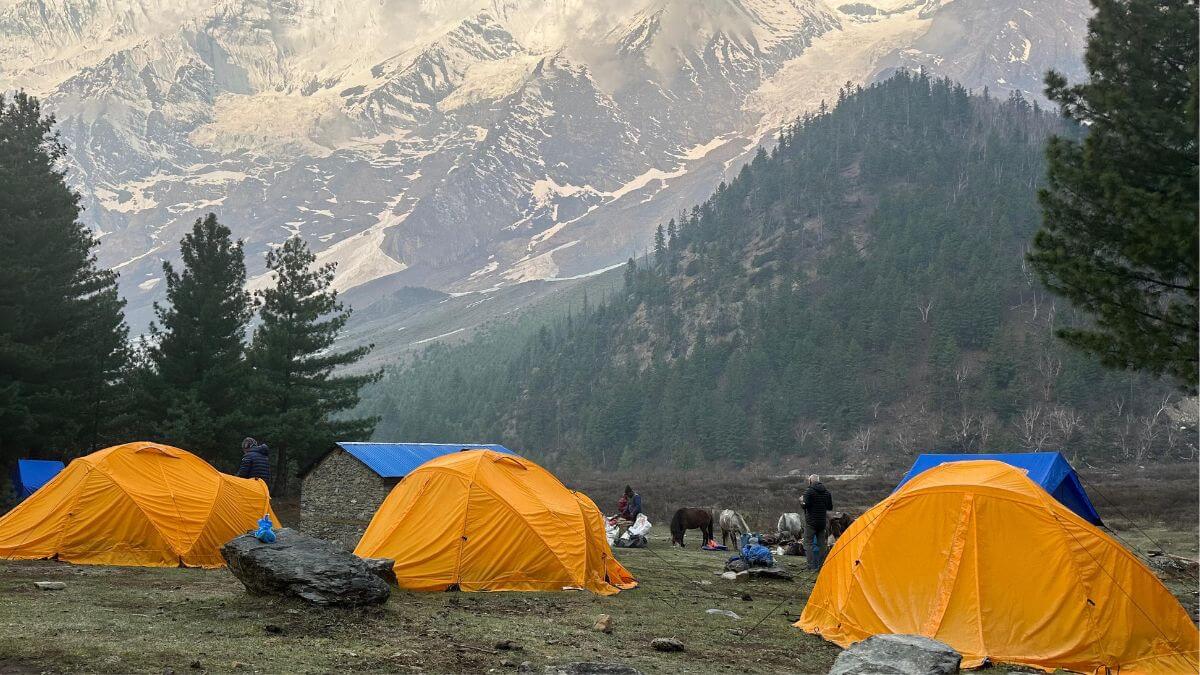
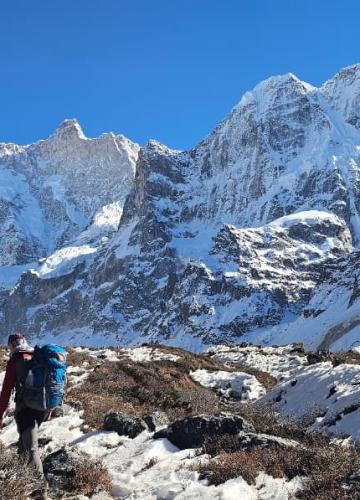
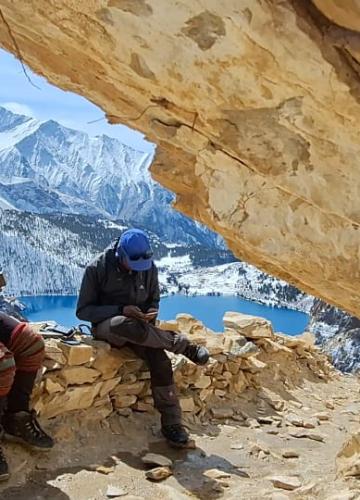
Camping in Upper Dolpo feels more like a true Himalayan expedition than a standard lodge trek. The dolpo trek camping experience involves sleeping in fully supported expedition camps managed by guides, cooks, and porters who handle meals, logistics, and gear transport across one of Nepal’s most remote landscapes.
Food on camping treks is considerably more varied than tea house fare. Cook teams prepare fresh hot meals at every camp, adapting menus to altitude and trekker needs. This logistical support makes the experience physically safer in such a remote environment.
Tea House vs Camping in dolpo: Comparison Table
In Dolpo, tea houses are available on Lower Dolpo's established village routes, while camping is mandatory across most of Upper Dolpo, where permanent lodges are almost nonexistent.
| Feature | Tea Houses | Camping |
| Route Availability | Lower Dolpo villages; very few seasonal options in Upper Dolpo | Entire Dolpo region; essential for Upper Dolpo |
| Accommodation | Basic room; shared bathroom | Private sleeping tents with sleeping pads; separate dining and kitchen tents |
| Meals | Simple Nepali and Tibetan local menu; limited variety | Freshly cooked by trek chef; varied menu |
| Cost | Budget-friendly | Higher; covers guides, cooks, porters, camping gear, and logistics |
| Privacy | Shared communal spaces; social atmosphere | Private camp setup; total wilderness isolation |
| Cultural Experience | High; daily interaction with local Tibetan Buddhist communities | Moderate; limited village contact on remote routes |
| Suitable For | Budget trekkers, first-time Dolpo trekkers | Experienced trekkers, Upper Dolpo expeditions |
The best accommodation in Dolpo depends on your budget, trekking route, and experience level. Tea houses work well for Lower Dolpo, being affordable, culturally rich, and accessible for first-timers. Camping is not an upgrade in Upper Dolpo, it is the only option. Plan accordingly, and make sure your agency is experienced in both.
Which Option Is Best for You?
The best option depends on your route, budget, and experience level. Tea houses suit budget-conscious trekkers on Lower Dolpo routes; camping is the only viable option for Upper Dolpo.
Best for budget trekkers: Tea houses in Lower Dolpo cost significantly less because you're not paying for a full support crew, camping equipment, or agency logistics. Accommodation and meals are paid locally. This makes Lower Dolpo the more accessible choice for trekkers who are watching their spending.
Best for remote exploration: Camping is the only way to access Upper Dolpo's most dramatic landscapes, the Shey Phoksundo Lake basin, the high passes, the sacred Shey Gompa, and the uninhabited valleys beyond Dho Tarap. If your goal is true wilderness immersion, camping is not a compromise, it is the experience. Camping on Dolpo trek routes is ideal for experienced trekkers seeking remote valleys, high mountain passes, and complete wilderness immersion.
Ready to plan your trek? Talk to our team, we'll match you with the right route and style based on your fitness level, budget, and goals.
Homestay Experience in Remote Dolpo Villages
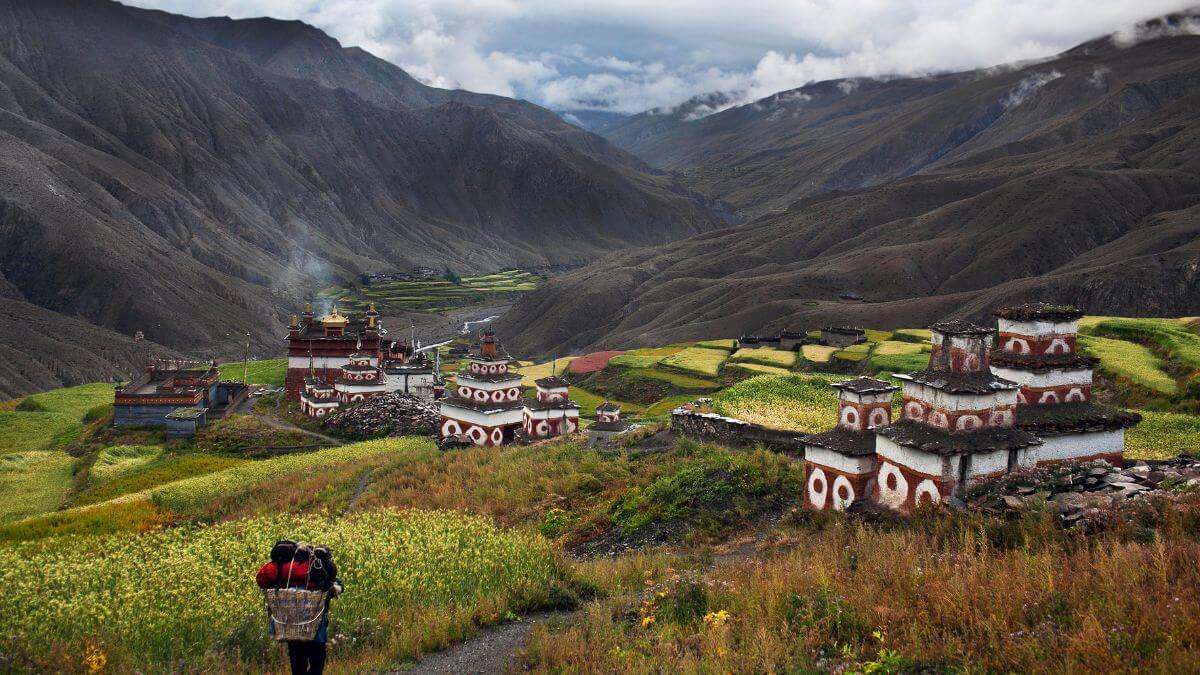
Homestays in Dolpo place you inside a working Tibetan Buddhist household. You sleep on simple bedding, eat home-cooked meals, and live alongside a family whose daily rhythm has remained unchanged for generations. Unlike tea houses, these are not commercial setups; they are personal invitations into one of Nepal's most isolated communities.
Cost: Homestays are informal and priced by arrangement, typically USD 10–20 per night, including meals. They are not widely advertised and are best arranged through a local agency with established village relationships.
What to Expect in Dolpo Homestays
Homestays in Dolpo are genuinely rustic. Expect:
- Mud-brick and stone construction: With low ceilings and wooden interiors
- Sleeping on wooden platforms: Your own sleeping bag essential
- Traditional Tibetan meals: tsampa (roasted barley flour), butter tea, potato dishes, and occasionally meat
- Shared family living spaces: you eat and socialise where the family does
- No private bathroom: facilities are minimal or outdoor
The cultural exchange is the real value. Conversations around a yak-dung fire, observing daily rituals, and being welcomed into a home that sees very few outsiders. This is what makes Dolpo different. Homestays are not widely advertised and are best arranged through a local agency that has established village relationships.
Recommended Read: Is It Possible for Dolpo Trek without Guide?
Final Thoughts
Tea houses and camping in Dolpo are not competing options. They serve different routes and trekking styles. Tea houses in Lower Dolpo keep costs lower and provide close interaction with local village life. Camping in Upper Dolpo supports longer journeys through remote mountain terrain with organized logistics and full support teams.
If you are doing Lower Dolpo on a budget, tea houses are the practical choice: simple, affordable, and culturally rich. Upper Dolpo, on the other hand, requires more planning, support, and preparation due to its remoteness and lack of infrastructure.
Dolpo Caravan Treks specializes in both, from basic tea house treks through Lower Dolpo to fully equipped camping expeditions across Upper Dolpo high passes. We know which lodges to trust, which campsites work at altitude, and how to manage logistics in one of Nepal’s most demanding trekking regions.
Need help choosing the right accommodation in Dolpo? Contact us for expert advice on routes, accommodation, permits, and trek planning.
FAQs
Is camping mandatory in Upper Dolpo?
Yes, camping is mandatory in Upper Dolpo, as it is a restricted trekking area with almost no permanent trekking lodges along its high routes.
Are there tea houses in Dolpo trek?
Yes, there are tea houses in Lower Dolpo, and very limited seasonal tea houses are in Upper Dolpo. Villages like Juphal, Dunai, Ringmo, and Tarakot have basic family-run tea houses offering simple rooms and meals.
What Type of Accommodation in Dolpo Should You Expect?
Accommodation in Dolpo is simple, remote, and designed for basic trekking needs rather than comfort. Lower Dolpo offers family-run tea houses and trekking lodges, while Upper Dolpo mainly relies on fully supported camping expeditions with tents, cooks, guides, and porters.
Can beginners do a camping trek in Dolpo?
Beginners with good physical fitness can manage Lower Dolpo's tea house trek. Upper Dolpo camping treks are better suited to experienced trekkers due to high altitude (passes above 5,000 m), remote terrain, and multi-week duration. Prior high-altitude trekking experience is strongly recommended for Upper Dolpo.
Is electricity available in Dolpo trek?
Electricity is limited throughout Dolpo. Some larger villages like Juphal and Dunai have solar power. On camping treks, agencies provide solar charging panels for essential devices. Do not rely on consistent charging anywhere in the region.
Do Dolpo tea houses have hot showers?
No. Most tea houses offer a bucket of hot water on request, sometimes for an extra fee. Purpose-built hot showers do not exist on the trail. On camping treks, agency teams can arrange bucket showers at camp.
Which sleeping bag is best for Dolpo trek?
A sleeping bag rated to at least -15°C (5°F) is recommended for both teahouse and camping treks in Dolpo. High-pass camping sections in Upper Dolpo can drop to -15°C or colder at night, so -15°C-rated bags are safer for that terrain.
Are homestays available in Dolpo villages?
Yes, homestays are available in Dolpo villages, mainly in Dho Tarap in Upper Dolpo.
Which is better: tea houses or camping in Dolpo?
Tea houses work well for Lower Dolpo and suit budget-conscious trekkers. Camping is required for Upper Dolpo and provides better logistics, meals, and warmth for remote high-altitude routes. Most experienced Dolpo trekkers consider camping a more complete experience.

Leave Your Comment