
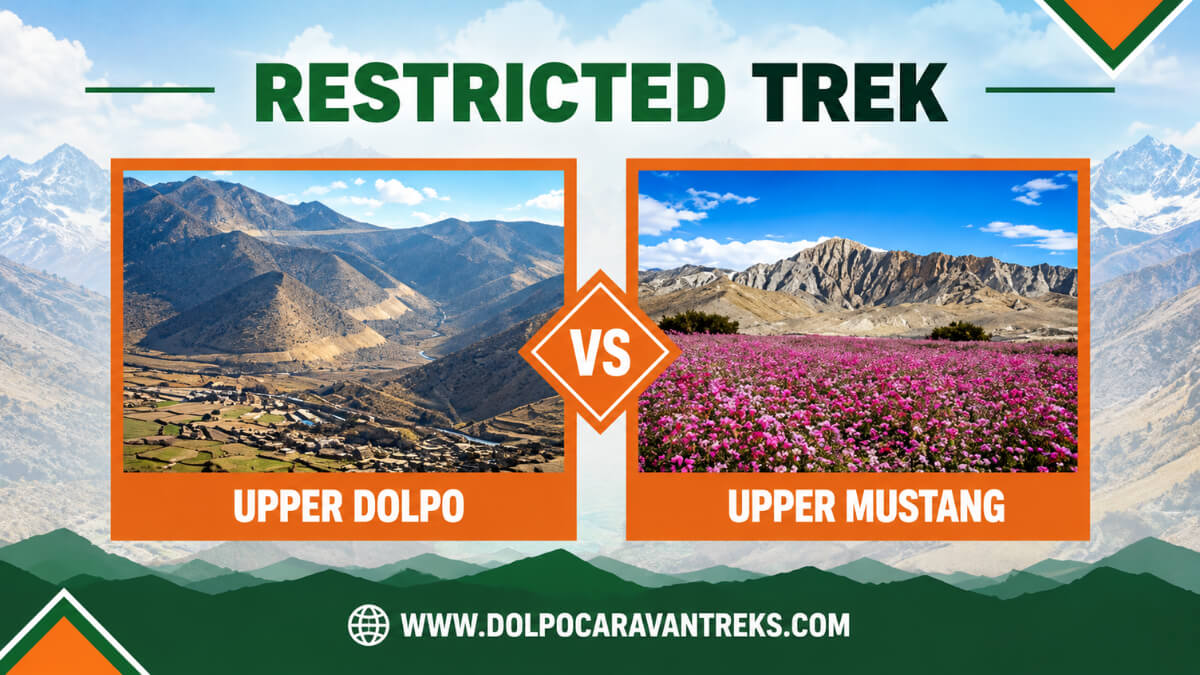
Upper Dolpo vs Upper Mustang Trek: Which Is Better for Your Adventure?
Choosing between the Upper Dolpo vs Upper Mustang trek is harder than it looks on paper. Both routes are located in a restricted area of Nepal along the Tibetan Plateau border, both promise centuries of untouched Buddhist culture, and both come with non-refundable permit fees that punish a wrong guess.
Booking the wrong trek for your fitness, budget, or schedule can leave you exhausted, or wishing you had chosen differently. If you're wondering which is better Upper Dolpo or Upper Mustang, this guide compares the real differences in cost, trek difficulty level, trek distance, culture, scenery, and the best season to trek so you can choose the Upper Dolpo vs Upper Mustang trek that best fits your adventure.
| Quick Answer: The Upper Dolpo vs Upper Mustang trek comparison depends on your trekking style and experience. Upper Dolpo suits experienced trekkers who want raw wilderness, minimal infrastructure, and 23 to 27 days of mostly camping-based trekking far from any crowd. Upper Mustang suits trekkers who want a shorter 15-day to 20-day trip with teahouse comfort, easier access through Jomsom, and the walled city of Lo Manthang. Dolpo demands more fitness and budget; Mustang is more accessible, faster to complete, and friendlier for a first restricted-area trek. |
Upper Dolpo vs Upper Mustang Trek: Quick Comparison
| Feature | Upper Dolpo Trek | Upper Mustang Trek |
| Region | Dolpa District, Shey Phoksundo National Park | Mustang District, Annapurna Conservation Area |
| Trek duration | 23–27 days | 15–20 days |
| Max altitude | Approx. 5,100–5,450 m across high passes | Approx. 3,800–4,200 m |
| Difficulty | Difficult / strenuous | Moderate |
| Trail style | Mostly camping, some basic teahouses | Teahouse-based, road/jeep access available |
| Entry point | Flight: Kathmandu–Nepalgunj–Juphal | Flight or jeep: Pokhara–Jomsom, then Kagbeni |
| Annual visitors | Roughly 500–700 | Several thousand |
| Best season | Spring (Mar–May), Autumn (Sep–Nov) | Spring and Autumn, plus monsoon (rain-shadow area) |
| Core culture | Dolpo-pa people, Bon religion, Tibetan Buddhism | Loba people, Kingdom of Lo, Tibetan Buddhism |
Still deciding which restricted-area trek is right for you? Explore more expert trekking guides and handcrafted Himalayan adventures with Dolpo Caravan Treks and plan your journey with local specialists.
What Is the Upper Dolpo Trek
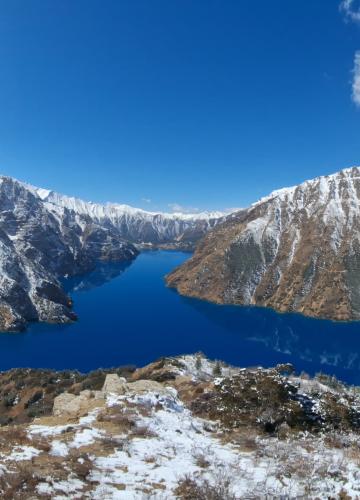
The Upper Dolpo trek is a 23-to-27-day restricted-area expedition through Dolpo District in far-western Nepal, following ancient salt-trade trails past Shey Phoksundo Lake and across the high Trans-Himalayan plateau bordering Tibet. It sees only 500 to 700 foreign visitors a year, making it one of the least-touched trekking regions in the country, and it only opened to foreigners in 1989.
What makes this trek unique is how little it has changed. Villages like Saldang, Tarap, and the area around Shey Gompa still run on subsistence farming, yak caravans, and a mix of Bon religion and Tibetan Buddhism that predates most of Nepal's better-known trekking routes. Dolpo lies inside Shey Phoksundo National Park, home to snow leopards, blue sheep, and some of the highest-altitude alpine meadows on Earth. Because the region sees a fraction of the foot traffic of Everest or Annapurna, teahouses are scarce, and most itineraries rely on camping crews carrying tents, kitchen equipment, and food for the full three-plus weeks.
What Is the Upper Mustang Trek
The Upper Mustang Trek is a 15 to 20-day restricted-area journey through the former Kingdom of Lo (Lo Manthang), a high-altitude desert region in north-central Nepal that remained closed to outsiders until 1992. Trekkers typically fly or drive from Pokhara to Jomsom, then walk or jeep north through Kagbeni, the checkpoint that marks the start of the restricted zone, before continuing through Chele, Ghami, and Tsarang (Charang) to the walled capital of Lo Manthang.
The landscape looks nothing like the rest of Nepal. Rather than pine forest and glacier views, Upper Mustang delivers red-rock canyons, wind-carved cliffs, and cave systems etched into the Kali Gandaki Gorge, all sitting in the rain shadow of the Annapurna and Dhaulagiri ranges. The Loba people who live here speak a Tibetan dialect, follow Tibetan Buddhism, and until 2008 were governed locally by a Raja recognized as the King of Lo, a lineage still respected culturally even after Nepal became a federal republic. The three-day Tiji Festival in Lo Manthang, a ritual dance drama that drives away evil spirits, draws trekkers who plan their trip around it.
Upper Dolpo vs Upper Mustang Difficulty: Which Trek Is Harder
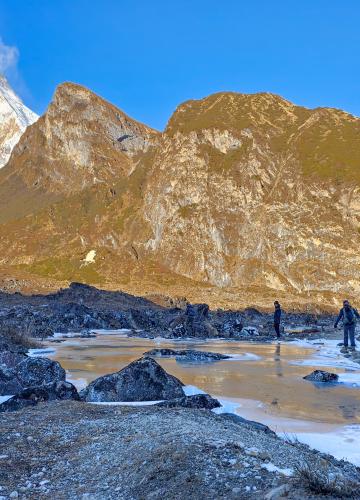
When comparing the Upper Dolpo vs Upper Mustang trek, Upper Dolpo is the more physically demanding option by a wide margin. The route crosses five high passes, several sitting above 5,000 meters, and involves six to eight hours of walking a day on rough, often unmarked terrain for over three weeks. These raises the risk of altitude sickness / AMS risk and requires solid acclimatization planning, previous high-altitude trekking experience, and a strong baseline fitness level.
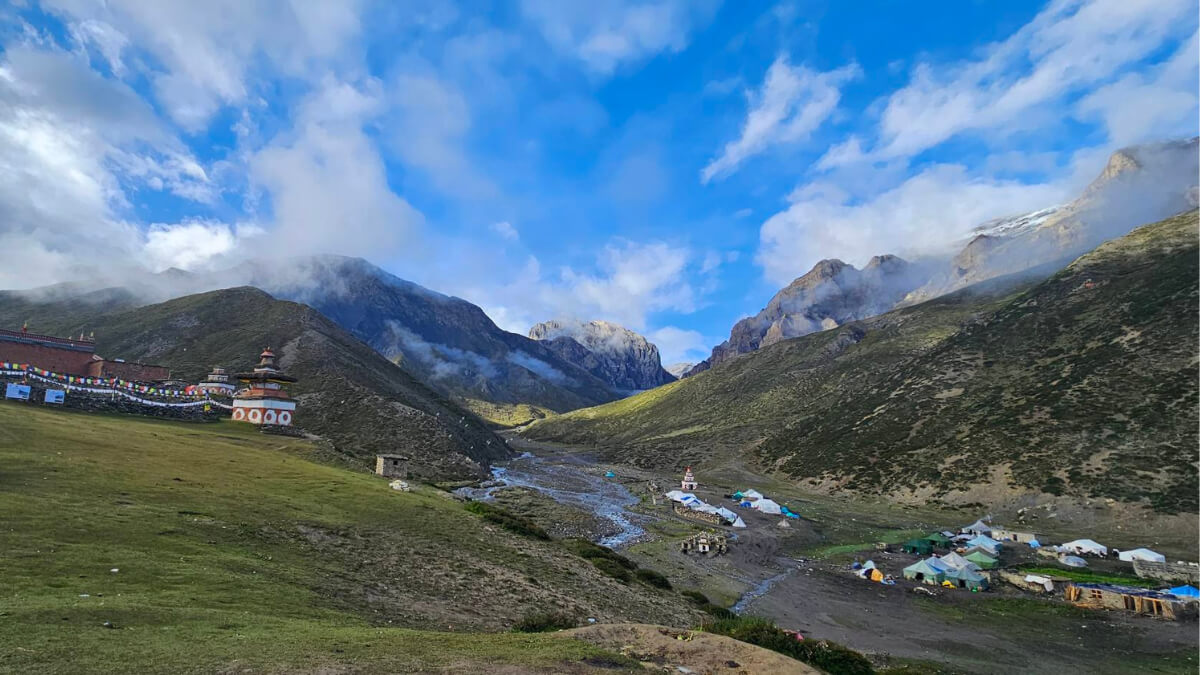
Upper Mustang is graded moderate. The highest points sit around 3,800 to 4,200 meters, well below the altitude where AMS becomes a serious concern for most healthy adults, and the trail itself is wide and broken into shorter daily walks of five to six hours. The bigger physical challenges here are the strong afternoon winds and dusty, exposed terrain rather than altitude or technical passes. Upper Mustang safely alongside a licensed guide, making it a more accessible choice in the Upper Dolpo vs Upper Mustang trek comparison.
Meet our expert trekking guides in Nepal and see how their knowledge, safety expertise, and local insight help create unforgettable journeys through Upper Dolpo and Upper Mustang.
Cost Comparison: Permits, Packages, and Daily Expenses
When comparing Upper Dolpo vs Upper Mustang costs, permit rules for both treks changed in 2026, and the numbers now favor Upper Mustang for shorter trips.
Upper Dolpo permits still use the older flat-fee structure:
| Permit | Cost |
| Shey Phoksundo National Park Entry Permit | NPR 3,390 for foreigners (including 13% VAT; approx. USD 20-25), NPR 1,695 for SAARC nationals, and NPR 113 for Nepalese citizens. |
| Lower Dolpo restricted area permit | USD 20 per person/week + USD 5/extra day |
| Upper Dolpo restricted area permit | USD 500 per person for first 10 days + USD 50/extra day |
That puts baseline Upper Dolpo permit costs at roughly USD 570 or more per person before guide, porter, camping, or flight costs are added.
Upper Mustang permits switched to a daily rate model in 2026:
| Permit | Cost |
| Restricted Area Permit (RAP) | USD 50 per person per day inside the zone |
| Annapurna Conservation Area Permit (ACAP) | NPR 3,390 per person (including 13% VAT; approx. USD 20–25). |
A 10-day Upper Mustang itinerary now runs about USD 500 in RAP fees, while a shorter 5-day visit costs closer to USD 250, a meaningful drop from the old flat-rate system.
Where the two treks really diverge is total package cost. Upper Dolpo's longer duration, camping logistics, remote flights, and higher food costs (everything has to be flown or muled in) typically push full-service packages to USD 3,000–5,000 per person. Upper Mustang, with its shorter itinerary and teahouse infrastructure, usually runs USD 2,000–4,000 for a 17-day package and considerably less for a jeep tour.
Culture and Scenery: Dolpo vs Mustang
Both regions sit at the edge of the Tibetan Plateau, but the culture and landscape feel distinct once you're on the ground.
Upper Dolpo is shaped by isolation. The Dolpo-pa people practice a blend of Bon, Nepal's pre-Buddhist shamanistic religion, and Tibetan Buddhism, visible in villages like Saldang and at monasteries such as Shey Gompa. The scenery shifts from alpine pine forest around Shey Phoksundo Lake to stark high-altitude desert near the passes, framed by the Kanjiroba Himal.
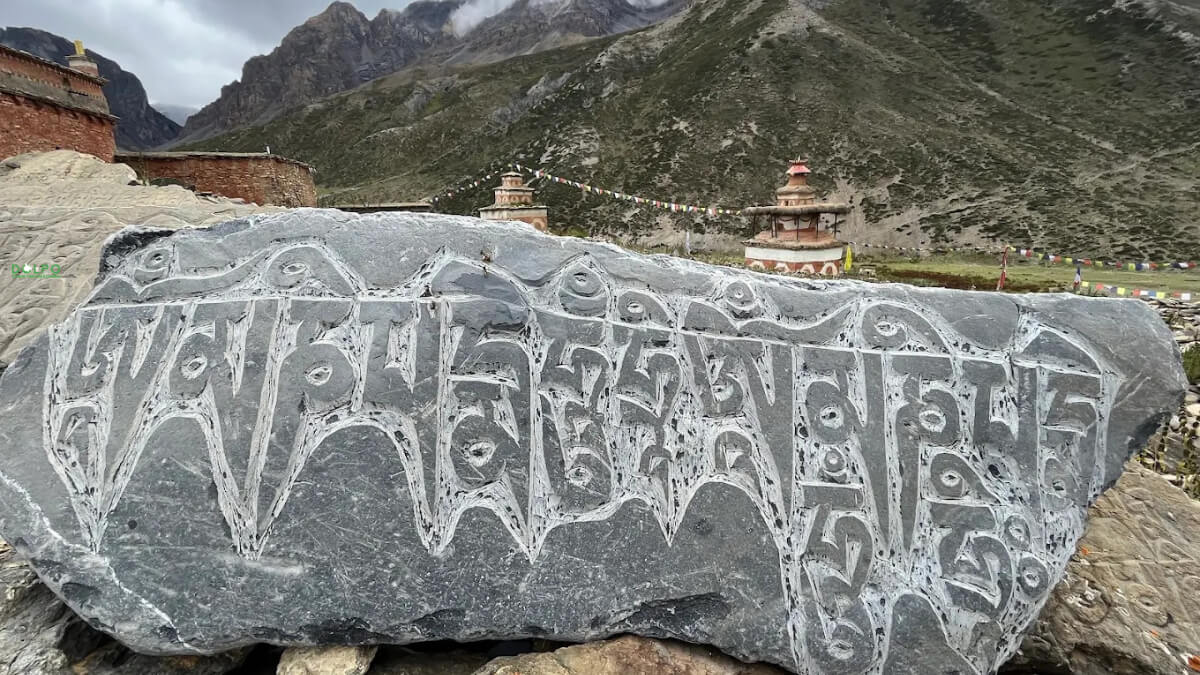
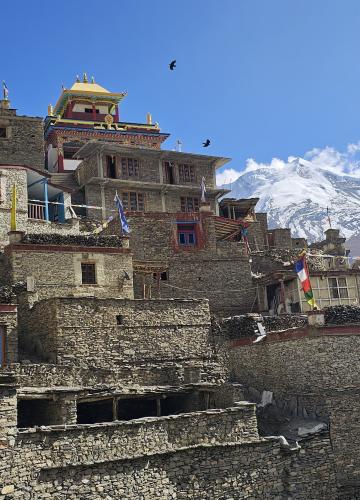
Upper Mustang is shaped by trade history and royal lineage. Lo Manthang's walled city, whitewashed monasteries, and ochre-colored cliffs reflect centuries as a trans-Himalayan region trading post between Tibet and the Kali Gandaki Valley. The Loba culture is closely tied to Tibetan Buddhism, and villages like Tsarang and Ghami still hold festivals rooted in that history.
If your priority is dramatic, otherworldly scenery in fewer days, Mustang delivers that efficiently. If your priority is depth of cultural immersion and true remoteness, Dolpo goes further, at the cost of comfort and time.
Upper Dolpo vs. Upper Mustang: Camping or Teahouse Trekking?
The teahouse vs camping trek experience is one of the biggest differences in the Upper Dolpo vs Upper Mustang trek, affecting both comfort and overall cost. Upper Dolpo is still largely a camping trek. Basic teahouses exist in a handful of villages, but most itineraries rely on a full camping crew, tents, and a kitchen team carrying supplies for weeks at a time, since the region simply doesn't have enough guesthouse infrastructure to support daily trekker traffic.
Upper Mustang runs almost entirely on teahouses. Lodges along the Jomsom-to-Lo Manthang route offer a bed, basic meals, and shared bathrooms, and some villages even have hot showers and charging points for a small fee. That infrastructure is a direct result of higher visitor numbers and the route's connection to the wider Annapurna Conservation Area.
If camping in a tent for three weeks isn't appealing, that alone may be the deciding factor between these two treks, regardless of how the cost or culture comparisons come out.
Permits and Solo Trekking Rules in 2026
Nepal changed a rule in March 2026 that affects both treks directly. Previously, restricted-area permits required a minimum of two foreign trekkers per application, forcing solo travelers to either find a trekking partner or pay for a second "ghost" permit under a name that wasn't theirs. As of March 22–23, 2026, the Department of Immigration, Nepal, removed that two-person minimum across Nepal's restricted districts, meaning a solo trekker can now apply for an Upper Dolpo or Upper Mustang permit alone.
What hasn't changed is the licensed guide requirement. Both treks still require a licensed guide booked through a registered Nepali trekking agency. Independent, guideless trekking remains illegal in both regions, and trekking without a valid permit can result in steep fines or deportation. Because permit policies have changed more than once in recent years, it's also a good idea to check the latest updates from the Nepal Tourism Board or your trekking agency before finalizing your itinerary.
Best Time to Trek Upper Dolpo and Upper Mustang
Spring (March to May) and autumn (September to November) are the strongest windows for both treks, offering the clearest mountain views and the most stable weather for the flights into Juphal or Jomsom.
Where they differ is the monsoon season. Upper Dolpo sits partly exposed to monsoon weather, and June through August often brings landslide risk and difficult trail conditions, along with a higher chance of flight delays into Juphal. Upper Mustang, by contrast, sits almost entirely in the rain shadow of the Annapurna and Dhaulagiri massifs and receives very little rainfall even during monsoon, making it one of the few regions in Nepal that's genuinely trekkable from June to August. Trekkers with fixed summer travel dates and no flexibility should lean toward Mustang for that reason alone.
Upper Dolpo Trek or Upper Mustang Trek: Which Should You Choose?
Once you know how the two treks compare on cost, difficulty, and culture, the decision usually comes down to what you're willing to trade off: time and comfort against remoteness and challenge. Here's how to match the trek to your situation.
Choose Upper Dolpo if:
♦ You have three or more weeks and previous high-altitude trekking experience
♦ You're comfortable camping for extended periods without teahouse comforts
♦ Deep cultural immersion and true remoteness matter more to you than convenience
♦ You want a trek that sees a few hundred visitors a year, not a few thousand
Choose Upper Mustang if:
♦ You have 15 to 20 days
♦ You'd rather sleep in a teahouse bed than a tent
♦ You're doing your first restricted-area trek, or trekking with a group that includes beginners
♦ You want to time your trip around the Tiji Festival or need flexibility to trek during the monsoon months
Why Choose Dolpo Caravan Treks?
Choosing the right trekking company can make all the difference when planning your Upper Dolpo trek vs Upper Mustang trek. At Dolpo Caravan Treks, we combine local expertise, experienced guides, and personalized service to ensure your Upper Dolpo or Upper Mustang adventure is safe, seamless, and unforgettable.
♦ Specialists in Restricted Area Treks: We have extensive experience organizing treks to both Upper Dolpo and Upper Mustang, ensuring every detail is handled professionally.
♦ Experienced Local Guides: Our licensed guides have in-depth knowledge of the trails, local culture, and mountain conditions, providing a safe and enriching trekking experience.
♦ Complete Permit Assistance: We manage all the required permits and paperwork, making the planning process simple and hassle-free.
♦ Customized Trek Itineraries: Whether you're looking for a challenging camping expedition or a comfortable teahouse trek, we tailor the itinerary to suit your interests, fitness level, and schedule.
♦ Quality Logistics and Support: From transportation and accommodation to meals and camping equipment, we arrange every aspect of your journey for a smooth travel experience.
♦ Safety Comes First: We prioritize your well-being with proper acclimatization plans, experienced staff, and reliable support throughout the trek.
♦ Transparent Pricing: Our packages include clear pricing with no hidden costs, so you know exactly what to expect before you book.
Final Thoughts
Choosing between the Upper Dolpo vs Upper Mustang trek isn't about finding one trek that's better than the other; it's about finding the one that best matches your travel goals. Upper Dolpo is ideal for trekkers seeking a remote, physically demanding expedition with deep cultural immersion, while Upper Mustang offers a shorter, more accessible adventure through Nepal's spectacular high-desert landscapes and ancient Tibetan-influenced settlements. Both promise unforgettable scenery, rich traditions, and a rare opportunity to experience some of the Himalayas' most preserved regions.
Before making your decision, compare the Upper Dolpo and Upper Mustang treks based on your available time, fitness level, trekking experience, preferred accommodation style, and budget. Careful planning will help you choose the trek that delivers the most rewarding experience.
Our recommendation: If this is your first restricted-area trek in Nepal, we usually recommend Upper Mustang. If you've already completed Everest Base Camp, Manaslu, or Kanchenjunga, Upper Dolpo offers a more remote and rewarding challenge.
Whether you choose Upper Dolpo or Upper Mustang, the right preparation makes all the difference. Connect with our trek planning experts to get personalized recommendations, permit assistance, and a customized itinerary for your Himalayan adventure.
FAQs
Is Upper Dolpo or Upper Mustang harder?
Upper Dolpo is significantly harder. It crosses five passes above roughly 5,000 meters over 23 to 27 days, compared to Upper Mustang's moderate grading and 3,800-4,200 m maximum altitude.
How much does Upper Dolpo cost compared to Upper Mustang?
Upper Dolpo permits alone run about USD 570 or more per person, and full packages typically cost USD 3,000–5,000 due to camping logistics. Upper Mustang's 2026 daily permit rate makes shorter trips cheaper, with full packages generally running USD 2,000–4,000.
Can I trek Upper Dolpo or Upper Mustang solo in 2026?
Yes. Since March 2026, Nepal no longer requires a minimum of two trekkers per restricted-area permit. A licensed guide from a registered agency is still mandatory for both treks under current regulations recognized by the Nepal Tourism Board and the Government of Nepal.
How difficult is the Upper Dolpo Trek?
Upper Dolpo is graded difficult to strenuous, with several passes above 5,000 meters and 23 to 27 days on rough, remote terrain. It calls for prior high-altitude experience and strong fitness, not just general trekking fitness.
How difficult is the Upper Mustang Trek?
Upper Mustang is graded moderate, with a maximum altitude around 3,800 to 4,200 meters and shorter daily walks on a well-marked trail. Strong winds and dust are bigger challenges here than altitude.
Which trek has better mountain views?
If you are comparing the Upper Mustang vs Upper Dolpo treks, Upper Dolpo offers more classic Himalayan scenery, including Shey Phoksundo Lake and the Kanjiroba Himal. Upper Mustang offers a starker, high-desert landscape of canyons and cliffs that feels closer to the Tibetan Plateau.
What's the maximum altitude reached on each route?
Upper Dolpo's highest passes reach roughly 5,100–5,360 meters (peaking at the Kang La Pass). Upper Mustang tops out around 3,800–4,200 meters (reaching up to 4,280 meters if crossing the Chogo La Pass), depending on the exact route taken.
Can I combine Upper Dolpo and Upper Mustang into one trip?
Some operators offer extended traverses linking the two regions, but these require significant time (often a month or more), strong fitness, and separate permits for each district. It's a serious undertaking best discussed directly with your trekking agency.
Do I need travel insurance for these treks?
Yes, for both. Given the extreme altitude, complete remoteness, and lack of hospital infrastructure in either region, registered trekking agencies strictly require valid travel insurance covering high-altitude helicopter evacuation before organizing your trip and processing your permits.

Leave Your Comment