
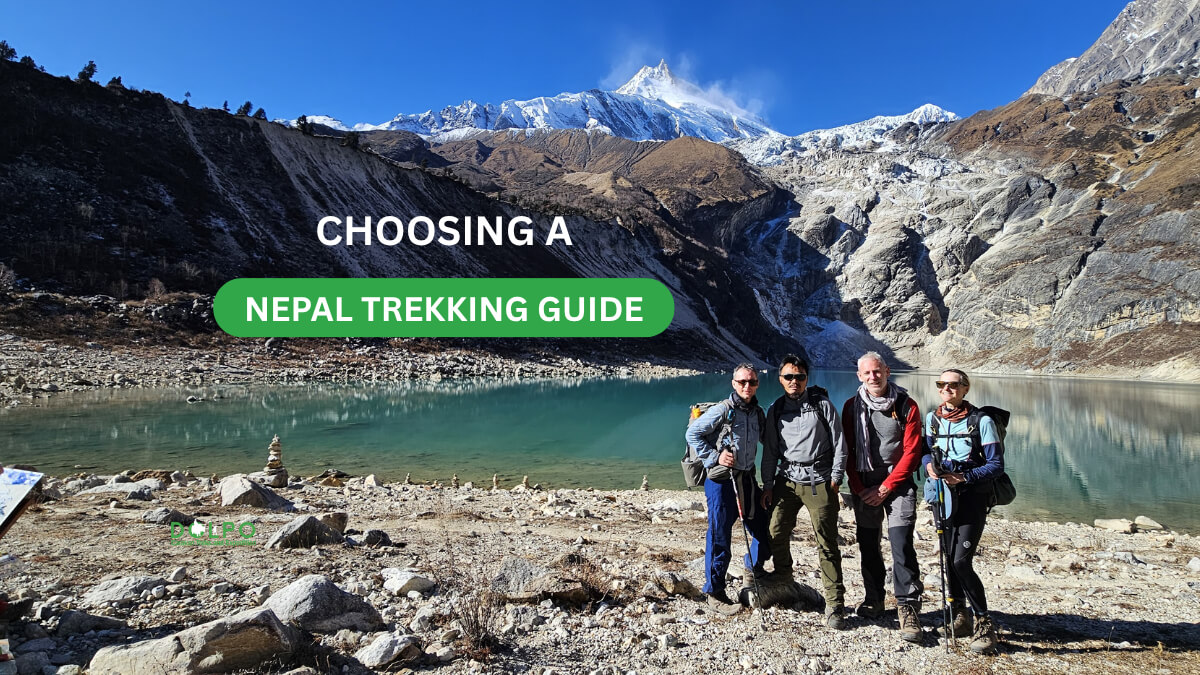
Choosing a Nepal Trekking Guide: How to Find the Right Guide
A bad choice of trekking guide can turn a great trek into a stressful one. Without the right experience, things like permits, route changes, safety, and even the daily pace can become difficult to manage, especially on remote routes.
This matters more as the trail gets remote. For example, Upper Dolpo and Lower Dolpo have fewer lodges, limited infrastructure, and less support if something goes wrong. Even on other popular routes, the right guide can make the whole experience much smoother.
The solution is to look beyond a guide’s basic credentials. Check their license, experience on your route, knowledge of permits, safety skills, and ability to communicate clearly. A little research before booking can save you a lot of trouble on the trail.
Key Takeaways
♦ Choose a licensed guide with proven trekking experience.
♦ Make sure they know your exact route and its challenges.
♦ For Dolpo, prioritize guides with first-hand regional experience.
♦ Confirm they can handle permits, TIMS, and logistics.
♦ Ask about altitude safety, emergencies, and evacuation plans.
♦ Check the agency’s registration, TAAN affiliation, and reviews.
♦ Compare prices and clarify what the package includes.
♦ Choose a guide who puts safety, communication, and your pace first.
Why Choosing the Right Trekking Guide Matters in Nepal
A good guide keeps you safe, keeps things moving smoothly, and connects you with the culture around you instead of just walking you past it. This matters even more in remote areas like Dolpo, where help isn't just a phone call away.
Watch for these:
♦ Understands altitude not from a textbook, but from actually seeing how it affects trekkers, and knows when a rest day matters more than the schedule
♦ Has walked your route recently, not just read about it years ago
♦ Handles logistics without things falling apart porters, food, camping gear, all coordinated properly
♦ Sorts out TIMS (Trekkers' Information Management System) and permit paperwork so you don't have to
♦ Brings real local knowledge the kind that gets you into a monastery or a family's home, not just past it
♦ Stays calm and communicates clearly if something actually goes wrong
Looking for the right guide for your trek? Explore our trekking packages to see what’s included and find the right fit for your journey.
Is a Guide Mandatory for Trekking in Nepal in 2026?
Yes. A licensed guide is mandatory in restricted areas of Nepal, like Upper Dolpo and Lower Dolpo.
Independent solo trekking has largely disappeared since Nepal's mandatory guide rule came in. TIMS cards now go only through registered agencies, and checkpoints check both your guide's license and your card. What you specifically need still depends on the region though some places want TIMS only, some want a national park permit too, and restricted areas like Dolpo add another layer on top of that.
Is a Guide Mandatory for Upper Dolpo Trek?
Yes, and there's genuinely no way around it here. Upper Dolpo is a restricted area, so the Restricted Area Permit only gets issued to trekkers travelling with a licensed guide from a registered agency.
Even if the rule didn't exist, this isn't a place to go it alone. You're crossing passes above 5,000 metres, the weather can turn with almost no warning, and villages are spread far enough apart that help isn't close if you need it.
Is a Guide Mandatory for Lower Dolpo Trek?
Yes, a licensed guide is mandatory for the Lower Dolpo Trek because the region is classified as a restricted area by the government of Nepal.
And while it's less restrictive than Upper Dolpo, the logistics are still serious. Teahouses are limited, camping is common on remote sections, and food, fuel, and supplies need to be planned ahead. It's far more remote and self sufficient than mainstream teahouse routes like the Annapurna Circuit or Everest Base Camp.
Planning a Lower Dolpo trek? Explore our Lower Dolpo Trek for the route, itinerary, permits, and logistics involved.
What About Other Trekking Regions in Nepal?
Rules aren't identical everywhere, so it's worth checking your exact route rather than assuming. Everest and Annapurna now run mostly on conservation permits instead of TIMS. Langtang, Manaslu, and far western routes still need both TIMS and a licensed guide. Regulations have shifted more than once over the past couple of years, so it's always worth confirming current requirements with a registered agency before you book.
Recommended Read: Nepal Wellness Tourism Dolpo
How to Choose a Trekking Guide in Nepal
Choosing the right trekking guide starts with matching their skills and experience to your specific route. Here are the key things to check before making your decision.
If you’re also comparing trekking agencies before choosing a guide, this guide on how to choose a trekking company in Nepal is a useful place to start.
1. Choose a Guide Based on Your Trekking Route
Before you look at individual guides, work out what your trek actually demands:
| Think about | Why it matters |
| Destination | Every region needs different skills |
| Duration and difficulty | Longer, harder treks need more experienced hands |
| Restricted area or not | Changes who's legally allowed to guide you |
| Teahouse or camping | Camping demands much stronger logistics |
| How remote it is | Less room for mistakes the further you go |
A guide who's excellent on Annapurna won't automatically be right for Upper Dolpo. Match their experience to your actual route, not just "Nepal" as a broad category.
2. Check the Guide's Credentials and Experience
Look for a proper license through Nepal's Ministry of Tourism, an agency registered with TAAN (Trekking Agencies' Association of Nepal), real experience on your specific route, solid local and cultural knowledge, and comfortable communication in a language you actually understand well.
Don't be shy about asking directly how many times has this guide done your exact route, and how recently was the last one?
3. Prioritize Dolpo Specific Experience
For Dolpo, general Nepal trekking experience just isn't enough on its own. Look for a guide who has actually worked in Upper Dolpo or Lower Dolpo, not someone whose experience is limited to popular Himalayan routes.
| General Nepal experience | Dolpo-specific experience |
| Familiar with popular trails | Experienced with remote Dolpo routes |
| Standard teahouse logistics | Comfortable managing remote camping and logistics |
| Used to more developed infrastructure | Experienced with limited infrastructure |
| Familiar with common trekking routes | Familiar with restricted area trekking |
| More predictable day-to-day support | Used to greater logistical planning |
Look specifically for guides who've done Upper Dolpo or Lower Dolpo before not just guides who've "trekked in the Himalayas" somewhere.
4. Understand Permits and Trekking Requirements
Your guide should be able to explain, clearly and without hesitation, what permits your route needs, whether TIMS applies, whether a restricted area permit is required, any national park or conservation fees, and exactly what your package covers versus what costs extra.
For Dolpo, restricted area permits take time to process, so this isn't something to leave until the last minute.
5. Evaluate Safety and Emergency Preparedness
Ask how the guide and agency actually handle emergencies communication in areas with no signal, what happens if weather forces a route change, how they recognise and respond to altitude sickness, what the evacuation process looks like, and whether your travel insurance genuinely covers high altitude evacuation. That last one trips people up more often than you'd think.
It’s also worth understanding the common risks before you set off, especially on remote routes. This guide to Dolpo trek safety covers some of the key things trekkers should be prepared for.
Recommended Read: Nepal Flood 2026 Effect on Dolpo
How to Choose a Trekking Guide for Dolpo
Dolpo requires more than general trekking experience, especially because of its remote terrain and limited infrastructure. Here's what to look for when choosing a guide for Upper or Lower Dolpo.
If you want a better feel for what trekking here is actually like, this guide to trekking in the Dolpo region is worth a look before planning your route.
Upper Dolpo Trek
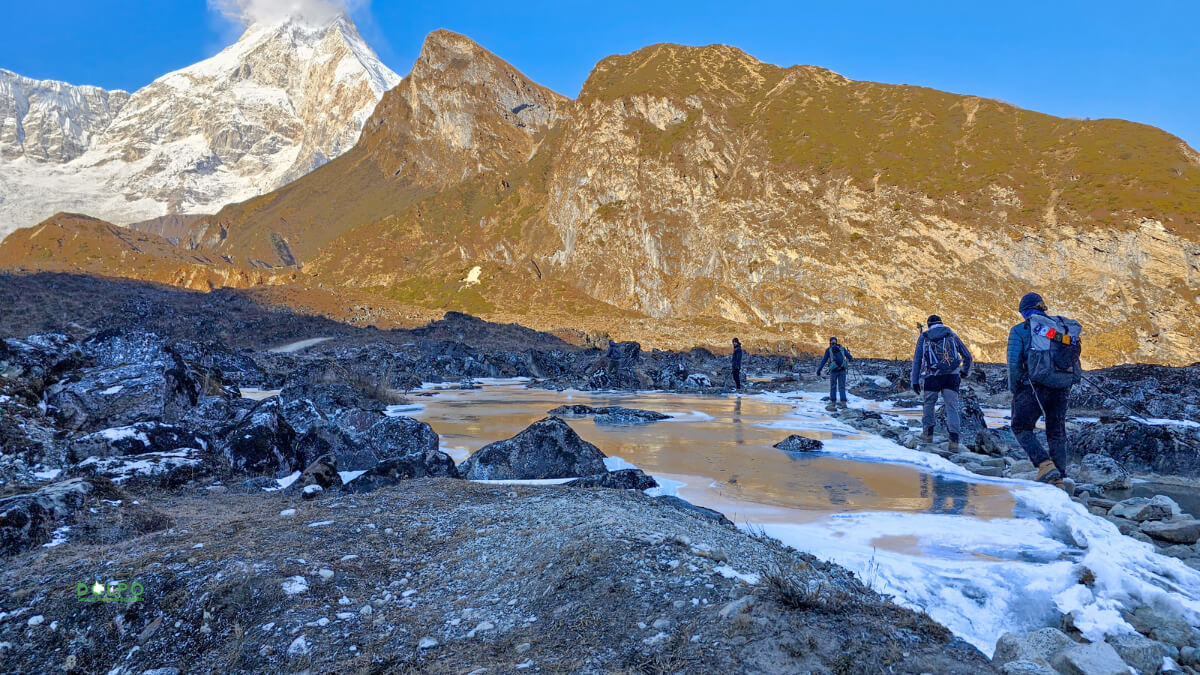
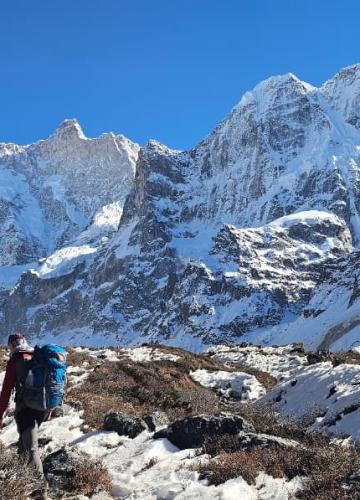
Look for restricted area experience, real high altitude exposure, and strong camping logistics. With passes above 5,000 metres and long gaps between villages, this isn't the trek to hand to someone who's still learning as they go.
Lower Dolpo Trek
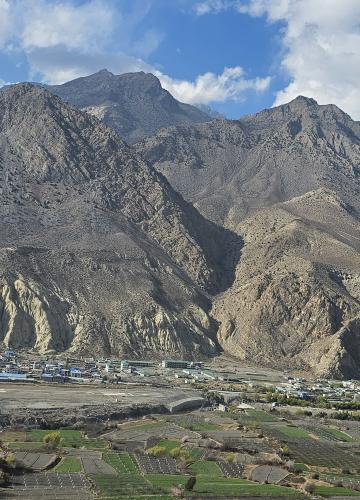
Look for route specific knowledge, genuine remote trekking experience, and solid safety planning. It's more accessible than Upper Dolpo, but the infrastructure along the way is still limited enough that experience matters a lot.
Why Dolpo Specific Experience Matters
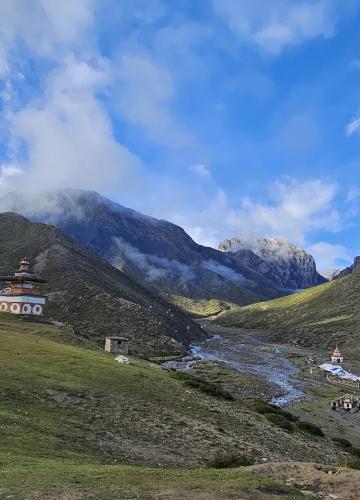
Dolpo just doesn't behave like Nepal's mainstream treks. The trails are quieter, the infrastructure is thinner, and there's far less room to improvise if something doesn't go to plan. A guide's real, lived familiarity with the terrain is what keeps the trip safe, not just enjoyable.
Planning a trek in Dolpo with an experienced local team? Learn more about Dolpo Caravan Treks and see how the team can help you plan your journey.
How Much Does It Cost to Hire a Trekking Guide in Nepal?
Expect to pay somewhere between $25 and $100 per day for a licensed guide, depending on the region, their experience, and whether you're hiring independently or through an agency package.
What pushes the price up or down: how remote the region is, whether the guide speaks extra languages, the season you're trekking in, and whether food, stay, and permits are already included in the rate.
Dolpo tends to cost more than mainstream routes the restricted area permit fees alone add up, plus the Juphal flight and the extra planning that camping based logistics require. A properly put together package should cover the guide's fee, permits and TIMS, accommodation or camping, meals, and porters where needed. Always ask exactly what's included before you commit vague pricing is usually the first sign something's being cut.
How to Avoid Fake Trekking Agencies in Nepal
Check the agency's registration before you hand over any money.
♦ Confirm Nepal Tourism Board registration and TAAN membership a legitimate agency will share this without hesitation
♦ Ask for the guide's license details directly rather than just trusting the agency's word
♦ Read the itinerary and pricing carefully vague plans or prices that seem too good to be true usually mean permits or insurance are being cut somewhere
♦ Check independent reviews and past trekker references they'll tell you far more than any agency website will
Choosing Dolpo Caravan Treks as Your Trekking Partner
Dolpo Caravan Treks brings years of Himalayan experience, strong local connections, and first hand knowledge of the region. Here’s what sets the team apart:
♦ Years of Himalayan trekking experience across the team, not just in Dolpo
♦ Guides who are Dolpo natives this is home ground for them, not just another route
♦ Experience across other regions too, including Manaslu, Nar Phu Valley, Makalu Base Camp, and Kanchenjunga Base Camp
♦ Real cultural context on the villages and monasteries you'll pass, not a rehearsed script
♦ Tourism income that actually stays with local guides, porters, and families
♦ Proper credentials a registered agency, TAAN affiliated, and set up to handle Dolpo's restricted area permits
♦ Itineraries built around the trekker, including extra acclimatisation days when they're genuinely needed
Final Thoughts
A good trekking guide in Nepal needs proper licensing, route specific experience, a clear understanding of permits, and strong safety preparedness.
In Upper Dolpo and Lower Dolpo, that experience isn't just a nice to have. It can make a real difference in keeping a demanding trek safe, smooth, and manageable from start to finish.
Contact Dolpo Caravan Treks to start planning your Dolpo trek with a team that knows the region firsthand.
FAQs
Is a guide mandatory for trekking in Nepal in 2026?
Yes, on nearly every major route, including Dolpo, a licensed guide is required.The rules are especially strict in restricted areas like Upper Dolpo.
Is a guide mandatory for Upper Dolpo Trek?
Yes, Upper Dolpo is a restricted area, so you need a licensed guide to trek there. The required restricted area permit is also arranged through an authorized agency.
Do I need a guide for Lower Dolpo Trek?
Yes, a licensed guide is required for the Lower Dolpo Trek as well. You’ll also need the required TIMS and national park permits for the trek.
How much does it cost to hire a trekking guide in Nepal?
A trekking guide in Nepal usually costs around $25–$100 per day, depending on the route and experience. Dolpo generally costs more because of the remote terrain, permits, and extra logistics involved.
How can I verify a licensed trekking guide in Nepal?
Ask the guide or agency for their license details before booking your trek. You can also check whether the agency is registered with NTB(Nepal Tourism Board) and affiliated with TAAN.
Is Nepal safe for trekking now?
Yes, especially with a licensed guide and a registered agency handling your permits and safety planning. Proper acclimatisation and insurance that covers evacuation still matter, wherever you go.
What should I look for in a trekking guide for Dolpo?
Look for someone with real experience on the route you’re planning, not just general trekking experience. A good guide should also understand permits, altitude, local conditions, and what to do if plans change.
What is the best time to trek in Dolpo?
The best time for Dolpo trekking is generally spring and autumn, when the weather is clearer and the trails are easier to manage. For Upper Dolpo especially, choosing the right season makes a big difference because of its high passes and remote terrain.

Leave Your Comment