
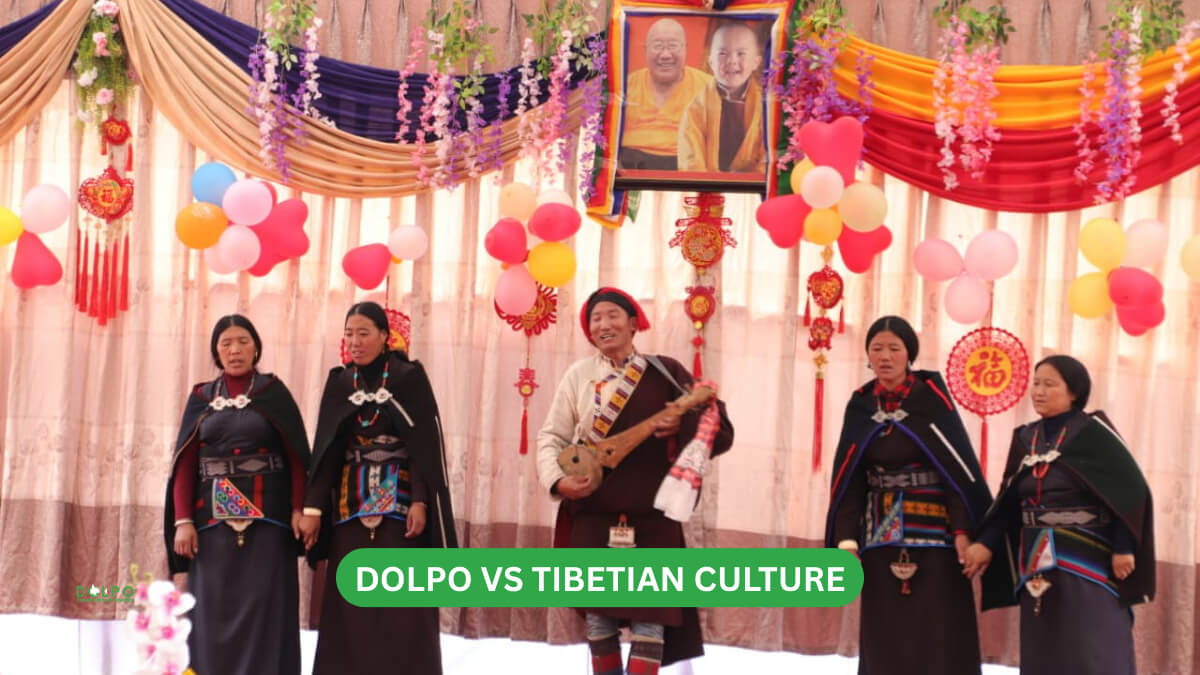
Dolpo vs Tibetan Culture: What's the Real Connection?
If you have read anything about Dolpo before, you have probably come across the phrase "culturally Tibetan." It gets used a lot, and for good reason, but it also raises a fair question: is Dolpo basically Tibet, just on the Nepal side of the border? Or is there a real difference between Dolpo vs Tibetan culture once you look past the shared roots?
As a trekking company founded by people from Dolpo and Phoksundo, we get asked some version of this question often, usually from travelers who are deciding between the two, or who want to understand what they are actually walking into before they commit to a multi week trek. This guide lays out where Dolpo and Tibetan culture genuinely overlap, and where Dolpo has developed its own identity over centuries of isolation.
Dolpo vs Tibetan Culture: Quick Facts
Before we get into the detail, here are the core Dolpo vs Tibetan culture facts side by side.
| Dolpo | Tibet | |
| Country | Nepal | China (Tibet Autonomous Region) |
| Language | Dolpo Shö and Kham dialects, related to Tibetan but distinct | Standard Tibetan and regional dialects |
| Dominant religion | Bon and Tibetan Buddhism, closely intertwined | Tibetan Buddhism, with Bon present in some regions |
| Ethnic identity | Dolpo pa, part of the broader Bhotia or Bhote grouping | Tibetan |
| Access today | Nepal issued Restricted Area Permit through a registered agency, licensed guide required, solo trekkers permitted since March 2026 | Separate Chinese travel permit system for foreign visitors |
| Historical link | Politically part of Tibet until the late 18th century, then a Lo protectorate before becoming part of unified Nepal | N/A |
A quick terminology note before we go further: you will often see the Dolpo people referred to as Bhotia or Bhote, a broader term applied across Nepal to communities of Tibetan origin. Dolpo pa refers specifically to the people of Dolpo. The two terms are related but not interchangeable, and Bhote has occasionally carried a disrespectful tone when used by outside groups, so we use Dolpo pa where we mean the Dolpo community specifically.
Upper Dolpo vs Tibetan Culture: The Most Tibetan Part of Nepal
Dolpo is not culturally uniform, and this is where a lot of general descriptions oversimplify things. The region splits into Upper, Middle, and Lower Dolpo, and each has a different cultural makeup.
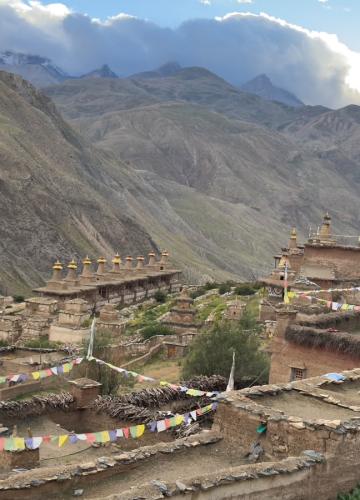
Upper Dolpo is where the comparison to Tibetan culture holds most strongly. Villages here are among the highest permanently inhabited settlements on earth, and the isolation has kept Tibetan Buddhist and Bon traditions largely intact. This is the part of Dolpo where you will find monasteries like Shey Gompa, communities that speak Tibetan influenced dialects as their first language, and a way of life built around yak herding, barley farming, and the salt trade with Tibet that has continued for centuries.
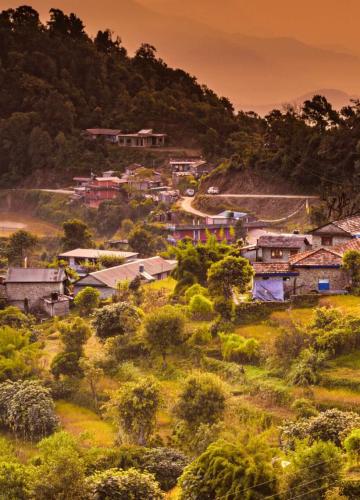
Middle Dolpo tells a different story. The Kaike Rural Municipality area is home to the Tarali Magar people, who speak Kaike, a dialect found nowhere else in Nepal, and who blend Tibetan Buddhist and Bon practices with Hindu influence.
Lower Dolpo leans further toward Hindu tradition, with Nepali as the primary spoken language. So when people ask about Upper Dolpo vs Tibetan culture specifically, the honest answer is that Upper Dolpo is the closest thing to a living continuation of pre modern Tibetan village life you will find on a Nepal trekking permit. The rest of Dolpo is more of a cultural blend.
If this kind of firsthand cultural experience sounds like your trip, our team knows these villages personally and would be glad to help you plan it.
Is Dolpo Part of Tibet?
No, not today. Dolpo sits inside Nepal, in Dolpa district of Karnali Province, bordered to the north by the Tibet Autonomous Region of China. Geographically and politically, it is Nepali territory.
Historically, the line was less clean. Until the late 18th century, Dolpo was politically tied to Tibet. It later became a protectorate of the kingdom of Lo, what is now Mustang, before Nepal's unification redrew the borders and folded Dolpo into the country as it exists today. Even the name reflects this history. Tibetans traditionally referred to Dolpo as "Sbas Yul," meaning hidden country, a name that captures both its remoteness and its long standing connection to Tibet.
| So the short version: Dolpo is not part of Tibet, and has not been for over two hundred years. But it sits in the same rain shadow zone as the Tibetan plateau, shares deep historical ties with Tibet, and its culture developed from the same roots. That is the core of the Dolpo vs Tibetan culture question, geography and politics point one way, culture points another. |
Language: Dolpo Dialects vs Standard Tibetan
When people compare Dolpo language vs Tibetan language, the short answer is that they come from the same family but are not identical. People in Upper Dolpo speak Dolpo Shö, sometimes called simply the Dolpo language, along with related dialects like Kham. These are Tibetan family languages, closely related to standard Tibetan, but they developed their own pronunciation and vocabulary over generations of isolation. A Tibetan speaker and a Dolpo Shö speaker would recognize the connection between the two languages, but they are not identical, in the same way that dialects separated by geography and time tend to drift from a shared origin.
Because Dolpo's isolation limited outside contact for so long, these dialects have kept much of their older character, with relatively little influence from Nepali compared to other parts of the country.
Religion: Bon and Tibetan Buddhism in Dolpo
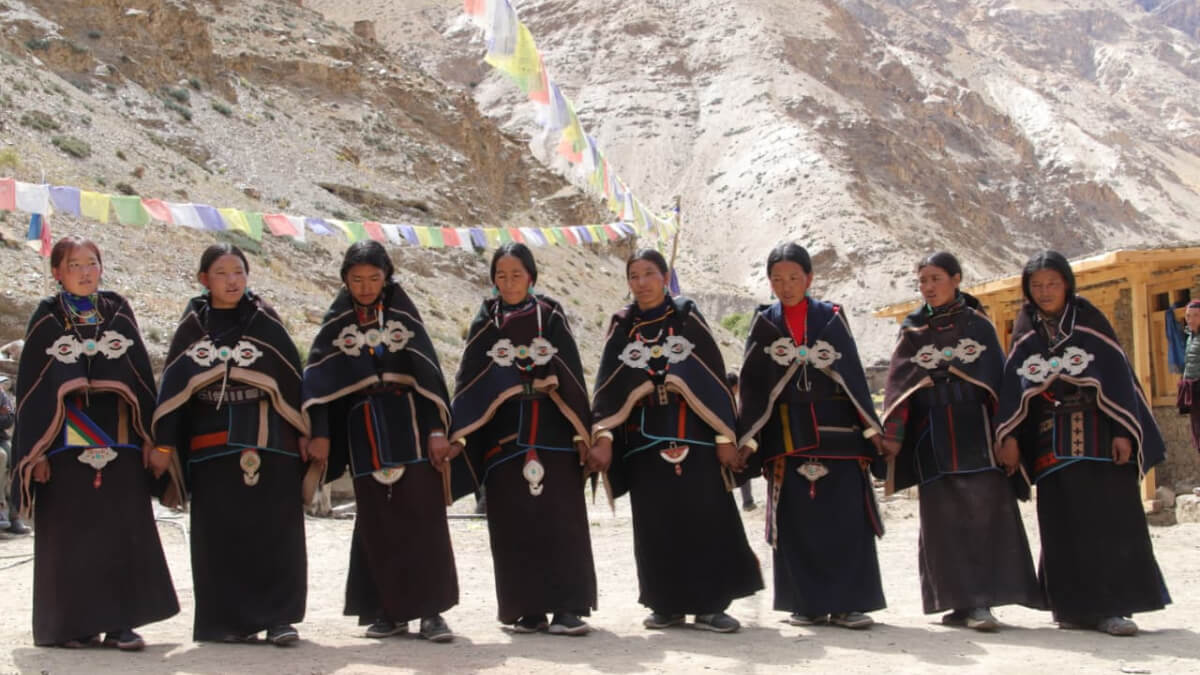
Religion is where Dolpo and Tibetan culture are most tightly connected, and also where some of the more specific, lesser known differences show up. Understanding Dolpo Bon religion vs Tibetan Buddhism is really understanding two related but distinct traditions that have coexisted in Dolpo for centuries.
Dolpo practices a close blend of Bon, the animist faith that predates Tibetan Buddhism, and Tibetan Buddhism itself. In many Dolpo villages the two are practiced side by side, and the line between them can blur enough that outsiders sometimes assume they are looking at one religion rather than two related but distinct traditions.
A few concrete differences are worth knowing if you want to actually understand what you are seeing on a trek, rather than just hearing "similar to Tibetan Buddhism" as a vague description:
♦ Bon practitioners in Dolpo turn prayer wheels counterclockwise, while most Tibetan Buddhists turn them clockwise.
♦ Bon followers traditionally pass temples and chortens by keeping them on their right side, the reverse of standard Buddhist circumambulation.
♦ Dolpo has several dedicated Bon monasteries, including Tso Gompa, alongside well known Tibetan Buddhist sites like Shey Gompa near Crystal Mountain.
♦ Crystal Mountain itself is a shared pilgrimage site, sacred to both Bon and Buddhist traditions, and every August pilgrims walk its base in a multi day circuit as part of Dolpo's religious calendar.
These are not minor trivia. If you are trekking through Dolpo and see a local walking a temple the "wrong" way by Tibetan Buddhist convention, they are very likely practicing Bon, not making a mistake.
Daily Life: Dolpo Today vs Tibet Today
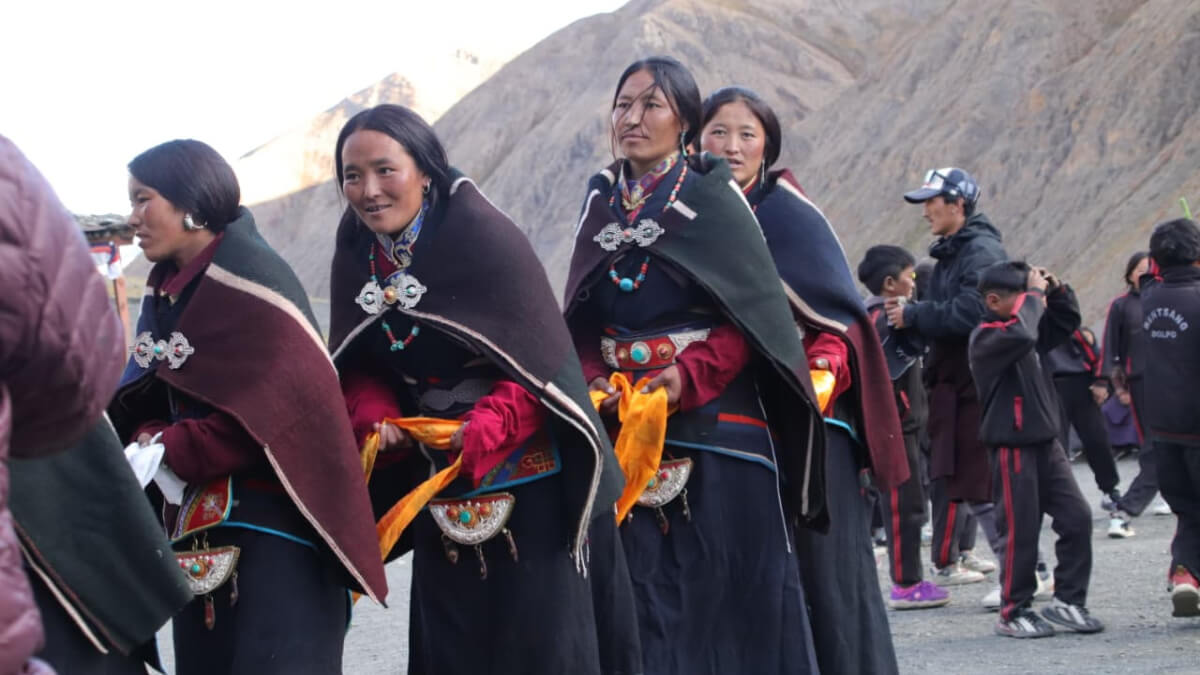
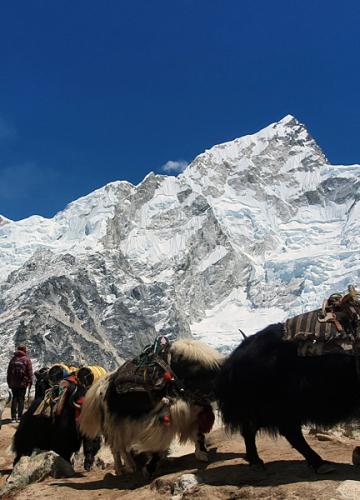
Life in Dolpo still runs on a rhythm that would be recognizable to residents from centuries ago. Villages sit at elevations between roughly 3,960 and 4,270 meters, largely cut off from road access, with barley as the main crop and yak herding as the backbone of the local economy. The salt trade with Tibet, once carried entirely by yak and sheep caravan, still continues today, even though trucks have replaced caravans on much of the Tibetan side of the route.
Access for outside visitors also works differently on each side of the border. To trek in Dolpo, you need a Nepal issued Restricted Area Permit through a registered agency like Dolpo Caravan Treks, plus a Shey Phoksundo National Park permit if your route passes through it. As of a March 2026 reform, solo trekkers can now obtain this permit without needing a second traveler, though a licensed guide from a registered agency remains mandatory either way. Visiting Tibet itself works through an entirely separate system, administered by Chinese authorities, with its own permit requirements for foreign travelers.
Dolpo was only opened to foreign trekkers in 1989. Before that, it remained one of the most isolated inhabited regions on earth, a status that shaped everything from its architecture to its ongoing reliance on basic survival on farming and trade.
Can You Experience Tibetan Culture Without Visiting Tibet?
Yes, and Dolpo is one of the clearest ways to do it. Because Upper Dolpo in particular preserved its Tibetan Buddhist and Bon traditions through centuries of isolation, a trek here gives you direct contact with monasteries, festivals, language, and daily village life that share deep roots with Tibet, without needing to arrange separate travel documentation for Tibet itself.
This is part of why our Phoksundo Bon Cultural Trek and Upper Dolpo Trek exist as dedicated routes. Both are built around the monasteries, villages, and pilgrimage sites where this cultural connection is easiest to see firsthand, guided by people who grew up inside that same tradition.
Trek Where Tibetan Culture Still Lives
Dolpo gives you a rare, close up view of Tibetan Buddhist and Bon tradition, shaped by centuries of isolation and carried forward by the people who still live it every day. Our guides grew up in these villages, not just visited them. Whether you are drawn to the monasteries, the language, or simply want to understand the real Dolpo vs Tibetan culture connection firsthand, contact us and we will help you plan a trek built around it.
Ready to see it for yourself? Connect with Dolpo Caravan Treks and we'll help you plan the trip.
FAQs on Dolpo vs Tibetan Culture
Is Dolpo the same as Tibet?
No. Dolpo is part of Nepal, in Dolpa district of Karnali Province. It shares deep cultural, linguistic, and religious roots with Tibet, and was politically tied to Tibet until the late 18th century, but it is not Tibet today.
What language do people in Dolpo speak?
Most people in Upper Dolpo speak Dolpo Shö or related dialects like Kham, which are part of the Tibetan language family but have developed their own distinct pronunciation and vocabulary. Middle Dolpo has its own dialect, Kaike, and Lower Dolpo leans more toward Nepali.
Is Dolpo Buddhist or Bon?
Both, closely intertwined. Many Dolpo villages practice Bon, the older animist faith, alongside Tibetan Buddhism, often in the same community and sometimes even within the same family.
Do I need a different permit to visit Dolpo vs Tibet?
Yes. Dolpo requires a Nepal issued Restricted Area Permit arranged through a registered trekking agency, along with a Shey Phoksundo National Park permit where applicable. Tibet has its own separate permit system administered by Chinese authorities for foreign visitors. The two are not interchangeable.
What are the main cultural differences between Dolpo and Tibetan societies?
Dolpo developed its own dialects distinct from standard Tibetan, blends Bon and Tibetan Buddhism more closely than many parts of Tibet do, and has remained largely subsistence based due to centuries of isolation. Politically and administratively, Dolpo has been part of Nepal for over two hundred years, while Tibetan society today sits within a different national and administrative structure entirely.

Leave Your Comment